
Lieferung heute & morgen

Qualitätsgarantie

Willkommens-Angebote freischalten: KOSTENLOSE Lieferung | Bis zu 80 % RABATT | Kostenlose 30-Tage-JoyPlus-Testphase
App herunterladen
A baby carrier can be practical in everyday life: it keeps your hands free, makes using public transport easier and allows you to stay close to your baby when a pushchair is impractical. The choice ranges from classic carriers and baby slings to baby carriers with hip seats or models designed for showers and pools.
However, product photos and marketing claims do not always show whether a carrier will remain suitable for both parent and child over time. Three common pitfalls are particularly frequent:
Before buying, always check the stated weight and height range. Some models are designed for approximately 3.5 to 15 kg and are marketed as baby carriers for 0 to 3 years. Others are intended for babies from around three months or for children weighing no more than 9 kg.
A baby carrier suitable from birth should clearly describe at least the following points:
If you are unsure, your baby has a low birth weight or has particular health needs, consult a medical professional before use. The stated age range alone is not a substitute for an individual assessment.
With a baby carrier with an M-position, the knees are positioned higher than the bottom. The panel should be adjusted so that it reaches from one knee crease to the other without causing pressure points. At the same time, your baby must sit upright and close to your body. Their face and airways must remain visible and unobstructed at all times.
For parents, an adjustable waist belt, wide shoulder straps and even weight distribution are important. A baby carrier with a hip seat can alter the carrying experience, but is generally somewhat more structured and heavier than a simple baby sling. Therefore, check the following:
A comfortable baby carrier is not identified by padding alone. What matters is whether, once correctly adjusted, the carrier causes neither the baby nor the person carrying them any pressure or pain.
For warm days, models with 3D mesh or air mesh are suitable because these materials support air circulation. Cotton can feel soft and is machine-washable in many models. Also pay attention to care instructions, such as hand washing, air drying or the permitted washing temperature.
When choosing a product, clear information such as EN 13209-2 or a stated inspection by SGS can provide useful guidance. Such information relates to the relevant product details and does not replace checking the carrier before every use.
Most importantly, a baby carrier is not fall protection or a rescue device. It must not be used while playing sport, cycling, cooking over an open fire or carrying out any other activity involving a risk of falling or exposure to heat. For use in water, only a model expressly designed for this purpose may be used in a shallow, supervised area. Never leave your baby unattended or use the carrier in deep or open water.
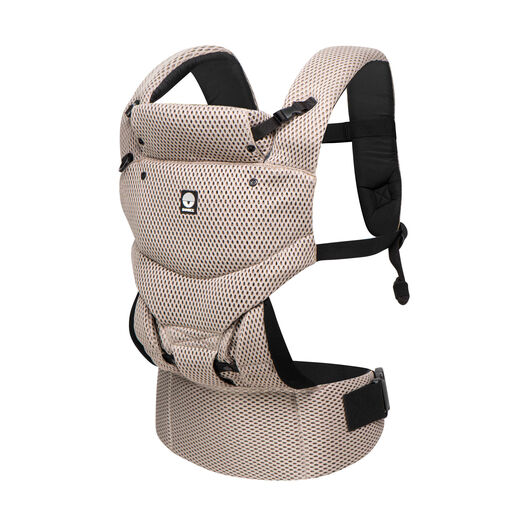
Why this product suits this profile: According to the product details, this model covers a range of 3.5 to 15 kg and offers several carrying positions for everyday use, walks and travel.
The specifications state that it has an adjustable seat, an M-position and a clearly defined weight range, rather than relying solely on general age-based marketing.
3D mesh, adjustable waist belt up to 143 cm and three described carrying positions.
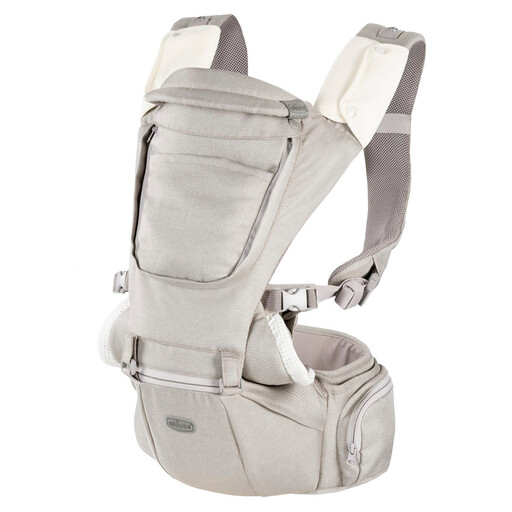
Why this product suits this profile: According to the product details, the 3-in-1 system combines a fabric carrier with a separately usable hip-seat base and is designed for 3 to 15 kg.
The individual ways to use the carrier and the maximum load are clearly specified. This makes it easier to assess whether the modular design suits your everyday routine.
Eight described carrying configurations, machine-washable cover and separately usable base.
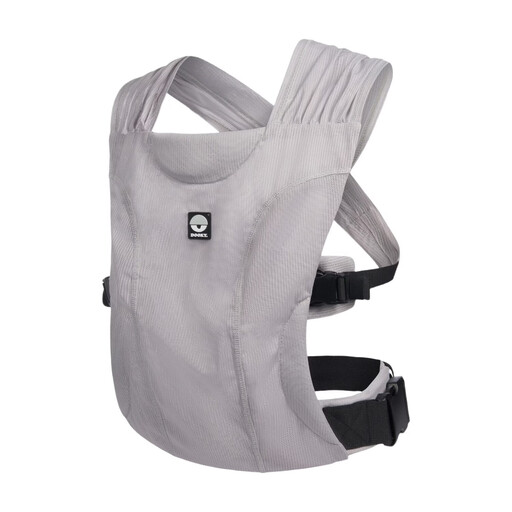
Why this product suits this profile: For parents looking for a carrier specifically designed for showers or shallow pool areas. The model is specified for 56 to 74 cm and approximately 3 to 12 months.
The quick-drying stretch material is expressly designed for showers and pools. It is not a rescue device and is not a carrier for deep or open water.
Quick-drying polyester-elastane material and clip fasteners; SGS-tested according to the product details.
We have put together a complete, regularly updated list of products that fully meet these strict selection criteria and the safety regulations applicable in the EU.
Before every use, check the buckles, seams, straps and fabric. Put the carrier on so that your baby sits upright and close to your body without feeling restricted. Their nose and mouth must remain visible and unobstructed. Small babies require adequate head support.
Avoid bending forwards sharply, jumping and activities involving a risk of falling. A carrier is not a sleep product either. If you experience pain, numbness or pressure points, stop using the carrier and check the adjustment.
This depends on the model. Some carriers are designed for babies weighing at least 3 kg or from birth, while others are only suitable from around three months. The decisive factors are minimum weight, height, head support and the information in the instructions for use.
Depending on your baby’s growth, models covering approximately 3.5 to 15 kg may be suitable until around their third year. A product with a maximum weight of 9 kg, on the other hand, will have a shorter useful life. Check the weight, height and fit regularly.
No. According to the warnings, the DOOKY Splash model is intended only for supervised showering and shallow water areas. It must not be used in deep water, the sea, lakes or rivers, and it is not a substitute for swimming ability or close supervision.