Joybuy Insights

How to Choose the Right Baby Carrier

A baby carrier gives parents free hands and their child the closeness they crave. But the market is overwhelming and full of marketing promises that often fall short. Choosing the wrong model not only leads to unnecessary expense but can also compromise your child's comfort and healthy development. As your Joybuy Product Recommendation Officer, I'll help you identify the crucial features and steer clear of common buying traps.

The 3 Most Common Pitfalls When Buying a Baby Carrier

Many parents invest in a carrier that ends up unused in a cupboard after just a few months. This is often due to design flaws that only become apparent in daily life.

  1. The "One-Size-Fits-All" Trap: Models that promise usability from birth to toddlerhood are tempting. In practice, however, the seat is often too wide for a newborn, which prevents an ergonomic posture. Conversely, the carrier may no longer provide enough support for a larger child.
  2. Neglecting Comfort for the Parent: A carrier might be perfectly shaped for the baby, but if the weight is poorly distributed across the parent's shoulders and back, it quickly leads to tension and pain. Insufficiently padded or non-crossable straps are a common cause.
  3. Unsuitable Material for the Season: A thickly padded carrier made of pure cotton may be ideal in autumn, but it becomes a burden in the height of summer. A baby carrier for summer needs breathable materials like mesh fabric to prevent overheating for both the child and the wearer.

What Really Matters in a Baby Carrier

To avoid a bad purchase, you should focus on three objective core parameters that are crucial for safety and comfort.

1. Ergonomics for the Child: The Spread-Squat Position

The most important feature of an ergonomic baby carrier is its support for the spread-squat position, also known as the M-position.

  • What does that mean? The baby's knees should be at or slightly above the level of their navel, so their legs are bent and spread slightly apart. The bottom sits deeper than the knees, forming the shape of an "M".
  • Why is this important? This posture promotes the healthy development of the hip joints and helps prevent hip dysplasia. The baby's back should be slightly rounded (a so-called C-shape), especially in newborns, to relieve pressure on the spine.
  • What to look for: The carrier's seat (the fabric panel between the child's legs) must extend from one knee pit to the other without overstretching them. Adjustable seat widths are a clear sign of quality here. Some manufacturers have their products recognised as "hip-healthy" by the International Hip Dysplasia Institute (IHDI).

2. Comfort for the Parent: Load Distribution and Adjustability

A good baby carrier distributes the child's weight evenly across the wearer's hips and shoulders, not just their back.

  • Wide hip belt: A sturdy, well-padded hip belt is the foundation. It transfers the majority of the weight from the shoulders to the hips, making it much easier to carry for longer periods. Models with integrated lumbar support offer additional stability.
  • Padded shoulder straps: The straps should be wide and sufficiently padded to prevent pressure points. The ability to wear the straps crossed (X-shape) further improves weight distribution and relieves strain on the neck area.
  • Easy adjustability: All straps should be easy to adjust, even while wearing the carrier, to ensure an optimal fit for different wearers and growing children.

3. Material and Versatility: From Front Carry to Back Carry

The material and the available carrying positions determine how flexibly you can use the carrier in your daily routine.

  • Materials: Breathable mesh panels are ideal for summer or for active parents. Soft cotton or a baby wrap-like fabric, on the other hand, offers a particularly cosy feel that is especially suitable for newborns.
  • Carrying Positions:
    • Front carry (facing in): The standard position for a baby carrier from birth. It offers security, closeness, and a correct ergonomic posture.
    • Front carry (facing out): Suitable for curious babies from around 5-6 months who can hold their head up independently. It's important to ensure an ergonomic sitting position is still maintained.
    • Back carry: Ideal for older and heavier children (from approx. 6-9 months), as the weight is easier to carry on the back.
    • Carrier with a hip seat: These models provide a firm seat base that supports the child's weight and relieves the parent's arm. They can often be used separately for short carrying periods.

Choose Your Perfect Fit

Instead of making a blanket recommendation, we have selected models that meet specific needs and avoid the common buying traps mentioned.
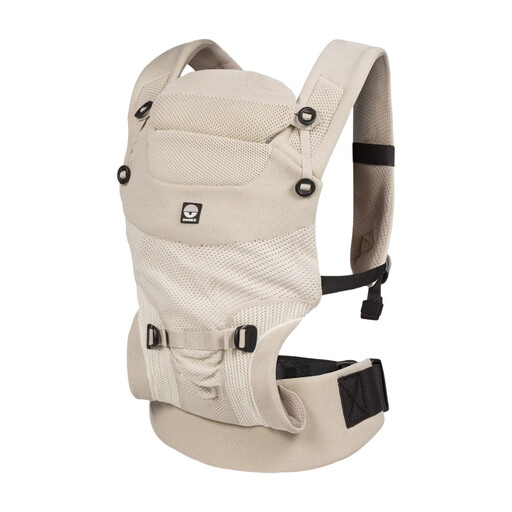
SUITABLE FOR: BUDGET-CONSCIOUS BEGINNERS
DOOKY Baby Carrier Terra Nova Beige

DOOKY Baby Carrier Terra Nova Beige

Why this model is a great fit: Ideal for parents looking for a functional and affordable first carrier. It covers the essential functions without breaking the bank and is suitable for everyday use from infancy to toddlerhood.

How it avoids the pitfall

Despite its wide weight range (3.5-15 kg), it explicitly supports the ergonomic M-position. The adjustable seat and leg supports help to avoid the "one-size-fits-all" trap by adapting to the growing child.

Key Advantage & Features

Offers three carrying positions (front facing in/out, back) and wide, padded shoulder straps for good carrying comfort at an attractive price-performance ratio.
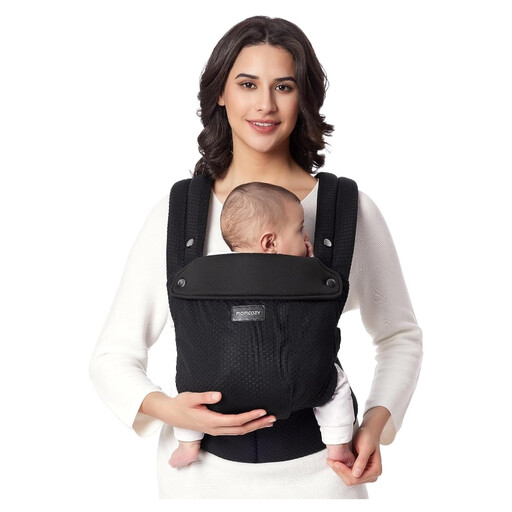
SUITABLE FOR: ACTIVE PARENTS & SUMMER USE
Momcozy Breathable Mesh Baby Carrier, Black

Momcozy Breathable Mesh Baby Carrier, Black

Why this model is a great fit: Perfect for walks in the park on warm days or for parents who tend to sweat easily. The lightweight design and breathable material ensure comfort on outings and summer holidays.

How it avoids the pitfall

This model directly addresses the "wrong material" trap. The large mesh fabric panel maximises air circulation and prevents heat build-up, which is a common problem with dense cotton fabrics in summer.

Key Advantage & Features

Maximum breathability thanks to mesh fabric. The X-shaped back design and integrated lumbar support distribute weight effectively, relieving strain on the parent's back.
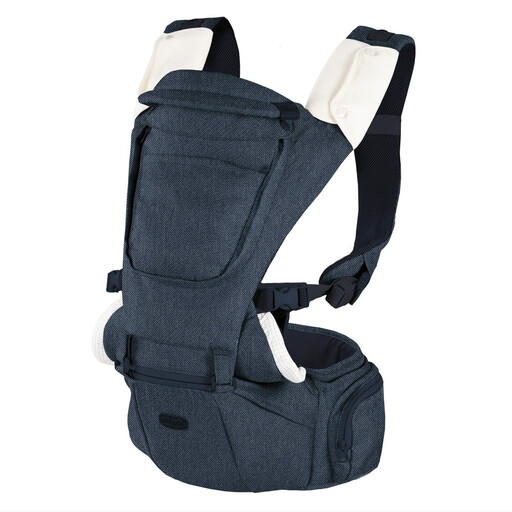
SUITABLE FOR: COMFORT & FLEXIBILITY-FOCUSED USERS
Chicco Baby Carrier Hip Seat Denim

Chicco Baby Carrier Hip Seat Denim

Why this model is a great fit: For parents who want maximum flexibility and a solution for different developmental stages. The detachable hip seat is especially practical for carrying a heavier child over short distances without straining your back.

How it avoids the pitfall

This 3-in-1 system solves the problem of poor comfort for the parent. The firm base of the hip seat acts as an extension of the hip, ensuring correct posture by optimally distributing the child's weight.

Key Advantage & Features

Multifunctional due to its 3-in-1 system (full carrier, hip seat only, carrier part only). Recognised as a hip-healthy product by the International Hip Dysplasia Institute (IHDI).

Looking for more options?

We have compiled a comprehensive, up-to-date list of products that fully meet these strict selection criteria and UK safety regulations.

Frequently Asked Questions (FAQ)

When can you start using a baby carrier?

Many ergonomic baby carriers can be used from birth (usually from a minimum weight of approx. 3.2 to 3.5 kg). It is important that the carrier has a newborn insert or that the seat can be adjusted narrowly enough to ensure the M-position and prevent the baby from "sinking" into the carrier. Always follow the manufacturer's weight and age recommendations.

How long can a baby stay in the carrier?

There is no fixed time limit. As long as the baby and the wearer are comfortable and the ergonomic posture is correct, the baby can remain in the carrier. Pay attention to your child's signals. Regular breaks, during which the baby can move and stretch freely, are recommended, especially for longer carrying periods.

How do I recognise an ergonomic baby carrier?

You can recognise an ergonomic baby carrier by three main features:

  1. Adjustable seat: It should be adaptable to the child's size to enable the M-position (knees higher than the bottom).
  2. Supportive back panel: It should support the baby's natural C-shaped spine without forcing it straight.
  3. Good weight distribution for the wearer: A wide, firm hip belt and well-padded shoulder straps are essential.