
Lieferung heute & morgen

Qualitätsgarantie

Willkommens-Angebote freischalten: KOSTENLOSE Lieferung | Bis zu 80 % RABATT | Kostenlose 30-Tage-JoyPlus-Testphase
App herunterladen
A baby carrier can be a real help around the house, on walks or when travelling. It keeps your little one close to your body and leaves your hands free. However, models differ significantly in seat width, weight range, carrying positions and ease of use. A low price or the label “ergonomic” alone doesn’t tell you much about how practical it will be in daily life.
A baby carrier for newborns needs to support more than just a low minimum weight. The adjustability of the seat, headrest and straps is also crucial. If the carrier doesn’t fit your baby’s body size, the posture may be unsuitable, even if the product claims general suitability.
So look out for:
A 3-in-1 baby carrier or one with eight positions sounds versatile. In practice, each position should be assessed individually. Not every carrying method is suitable for every age. Back carrying or outward-facing carrying may have specific requirements depending on the model.
A back-carrying baby carrier, for example, should only be used when your child is ready according to the manufacturer’s instructions. Also check that all buckles and connectors are correctly fastened in each configuration.
A soft stretchy material can feel nice. For longer wear in summer, however, fabric thickness, openings and adjustability are also important. A breathable baby carrier shouldn’t just be described with a marketing term; check the material details and the construction of the back panel.
With a baby carrier with M-position, your baby’s knees are higher than their bottom. The seat should be adjustable so that it supports your child properly from knee pit to knee pit, without digging in uncomfortably. The back and head need adequate, but not rigid, support depending on your child’s developmental stage.
The term ergonomic baby carrier is no substitute for concrete product data. Look for details on adjustable seat width, head support and approved carrying positions. If you’re unsure about the sitting position or have specific physical needs, it’s a good idea to seek advice from a medical professional. A baby carrier is not a substitute for medical care.
A baby carrier up to 15 kg can cover a longer period of use. However, the actual length of use depends on your child’s body size, seat adjustment and the durability of the straps. The maximum weight must never be exceeded.
Check:
Wide, padded shoulder straps and an adjustable hip belt can help distribute the load. It’s important that the hip belt fits snugly but not uncomfortably, and that the straps can be adjusted symmetrically. A baby carrier with a hip seat distributes some of the weight over a firm base. However, it can be heavier and less compact than a wrap or a sling.
A baby wrap offers flexible adjustment but requires a safe tying technique. A baby sling with a ring closure can be put on more quickly, but the fabric should be carefully spread across your back and shoulder.
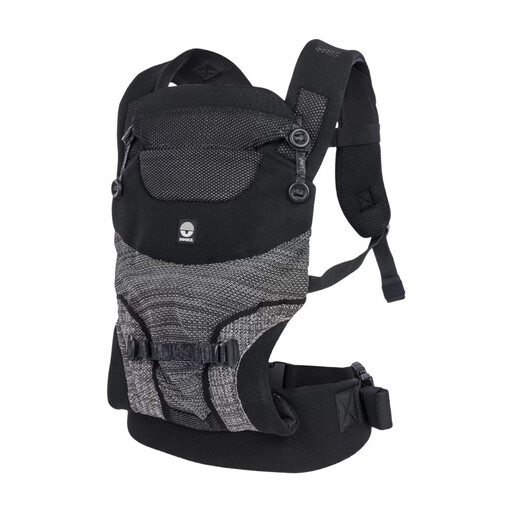
Why this product fits the profile: This model covers a stated range of 3.5 to 15 kg and offers three carrying positions: front-facing inwards, front-facing outwards and on the back.
The adjustable seat and leg support address the common difficulty of adapting a carrier across several developmental stages.
M-position, padded shoulder straps, adjustable hip belt and a stated use up to 15 kg. Tested according to EN 13209-2:2015 as per product information.
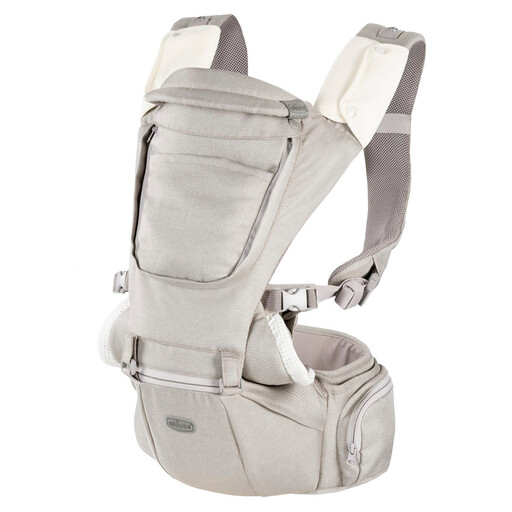
Why this product fits the profile: The 3-in-1 system combines a textile carrier, a firm hip seat and the option to use the base separately. According to the product information, it is suitable from 3 kg to 15 kg.
The individual usage options are clearly stated. Before each use, the base, textile part, buckles and fastenings must be checked.
Eight stated carrying configurations, machine-washable cover and recognition by the International Hip Dysplasia Institute as a hip-friendly product.
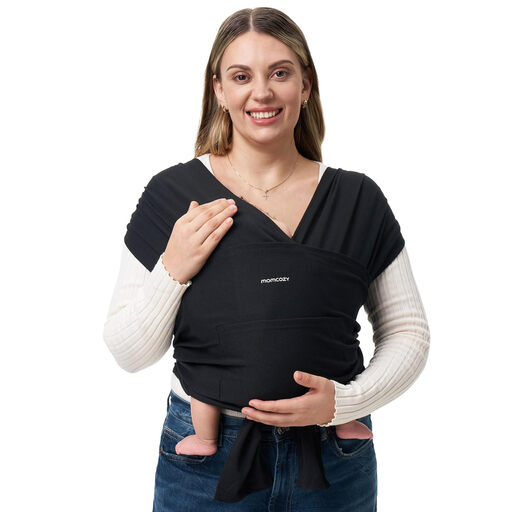
Why this product fits the profile: This baby sling is aimed at parents looking for a compact solution for short trips, breastfeeding breaks or travel. The double ring closure requires no tying technique.
The back support is pre-shaped and marked. This helps when putting it on, but does not replace the need to spread the fabric evenly across your back and shoulders.
OEKO-TEX-100 certified fabric according to product information, machine washable at 30 °C and designed for 3.6 to 15 kg.
We’ve put together a full, regularly updated list of products that fully meet these strict selection criteria and the safety regulations in force in the EU.
Regardless of the model, parents should check the carrier before putting it on:
This depends on the specific model. The key factors are minimum weight, body size, seat adjustment and the instructions. For the products mentioned, the stated starting points vary by model: 3 kg, 3.5 kg or 3.6 kg. Also check whether a newborn setting is required.
Many models are designed for up to 15 kg, which can roughly cover the period up to toddler age. The actual length of use depends on your child’s body size, seat width and the comfort of the person carrying them. A weight limit of 15 kg must never be exceeded.
That depends on how you want to use it. A baby carrier is usually quick to put on and offers defined settings. A wrap can be adjusted very flexibly but requires practice. A sling with a ring closure is compact and straightforward, but distributes the weight asymmetrically over one shoulder. What matters most is safe use, a suitable body size and your intended purpose.