
Lieferung heute & morgen

Qualitätsgarantie

Willkommens-Angebote freischalten: KOSTENLOSE Lieferung | Bis zu 80 % RABATT | Kostenlose 30-Tage-JoyPlus-Testphase
App herunterladen
A baby carrier can be a practical addition to daily life – whether you’re out for a walk, travelling, doing chores around the house, or in situations where a pushchair is awkward. However, carriers differ significantly in terms of age suitability, weight range, seat width, materials and the support they offer parents.
If you only focus on colours, low prices or marketing claims like “ergonomic”, you risk overlooking important details. The following criteria will help expectant parents, mums and dads make an informed choice when selecting a baby carrier.
A baby carrier labelled “from birth” must match your child’s actual weight and body size. Claims like “0 to 3 years” alone are not enough. What really matters are the specific minimum weight requirement, the child’s height and the instructions in the user manual.
For premature babies, those with a low birth weight or special health conditions, you should seek medical advice before using a carrier. Even a baby who cannot yet hold their head up independently should only be carried in a carrier expressly designed for this stage, and with proper support.
A model with a high maximum weight isn’t automatically comfortable for the entire period stated. What’s important is an adjustable seat, padded shoulder straps, a sturdy hip belt and back support. Without these features, the weight can quickly become uncomfortable for the person carrying.
A breathable baby carrier or a summer baby carrier can improve air circulation. However, it won’t protect against overheating if your child is dressed too warmly or if their face and airways aren’t kept clear. Mesh fabric is a material feature, but it’s no substitute for regular checks and appropriate clothing.
With a baby carrier featuring the M-position, your child’s knees are higher than their bottom. The seat should be wide enough to support the thighs without putting pressure on the backs of the knees. An adjustable design that can grow with your child is ideal.
Labels like “ergonomic baby carrier” should be checked against specific features:
A baby carrier with 3 carrying positions can suit various everyday situations: on the front facing the wearer, on the front facing outward, and on the back. However, each position is tied to the child’s age, developmental stage and the manufacturer’s instructions.
Carrying your baby facing outward should not begin too early and should only be done if both the model and your child’s physical development allow it. Back carrying is only recommended from around six months for many products. A baby carrier for babies and toddlers should therefore not be chosen based solely on the maximum weight limit.
For warm days, mesh or 3D-mesh materials are worth considering. Cotton can feel soft and, on some models, can be machine washed. What remains crucial is the care instructions: some products may only be hand washed and air dried.
Also look out for:
A baby carrier is not a protective system for falls or traffic accidents. It must not be used while jogging, cycling, cooking over open flames or during other activities with an increased risk of falling.
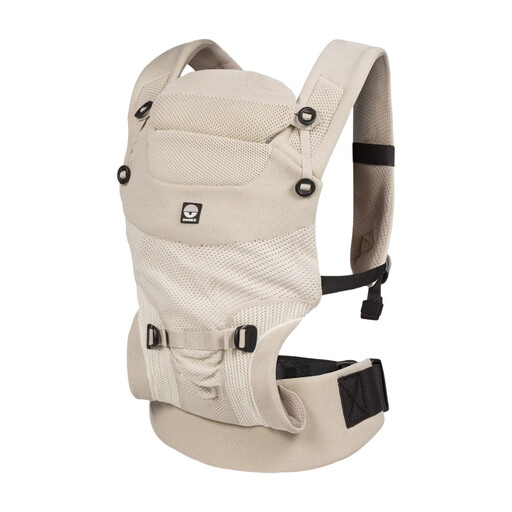
Why this product fits the profile: The stated range of 3.5 to 15 kg and three carrying positions cover many everyday situations. The seat and leg supports are adjustable.
The M-position, adjustable seat and hip belt are more concrete and verifiable than a mere marketing claim about ergonomics.
Soft-stretch material, padded shoulder straps and suitability up to around 3 years according to product information.
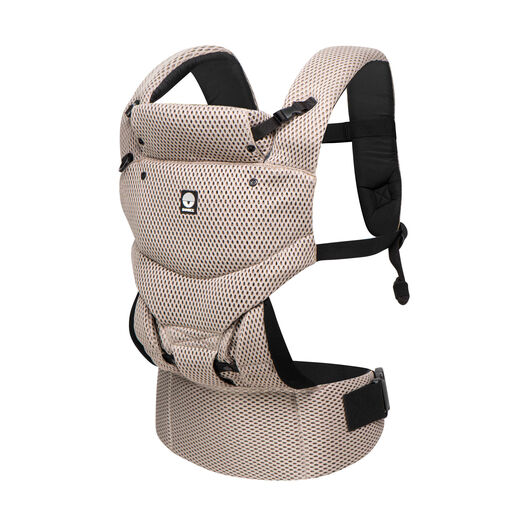
Why this product fits the profile: This model combines 3D-mesh, M-position, three carrying positions and a hip belt that fits up to 143 cm.
The product details specify the material, sitting position, standard EN 13209-2:2015 and specific body measurements.
3D-mesh for air circulation, adjustable leg supports and use from 3.5 to 15 kg according to manufacturer information.
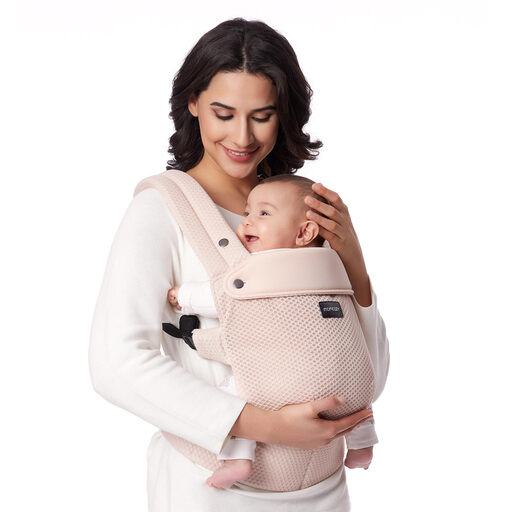
Why this product fits the profile: The mesh design is ideal for warm days, longer walks and travel. The stated range is approximately 3.2 to 20 kg.
Air-mesh, a removable or foldable neck support and clear weight limits make the selection more transparent.
X-shaped back support, EVA waist support, three adjustable size positions and machine washable according to the product description.
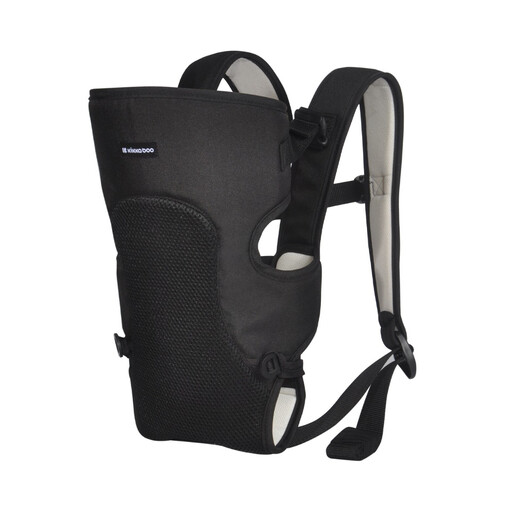
Why this product fits the profile: This lightweight mesh carrier is suitable for babies from around 3 months up to a maximum of 9 kg and offers three positions.
The clearly defined age and weight limits prevent the carrier from being mistakenly seen as a solution for toddlers.
100 percent polyester mesh, padded shoulder straps and safety standard EN 13209-2 according to product data.
We’ve put together a full, regularly updated list of products that fully meet these strict selection criteria and the safety regulations in force in the EU.
This depends on the specific model and the child. Some carriers are designed for a minimum weight of around 3.5 kg, while others are only suitable from about three months. What matters are the manufacturer’s instructions, the child’s height, head control and a correctly supported posture. If you’re unsure, check the user manual before buying.
The length of use depends on the weight limit, size and seat width. Models like the Dooky Terra Nova or Urban Comfort are designed for up to around 15 kg according to product information, while the Momcozy mesh models are stated for up to approximately 20 kg. Once your child no longer sits securely, their airways aren’t kept clear, or carrying comfort decreases, you should stop using it.
Beyond the purchase price, the main ongoing costs are for care. Machine-washable models are usually straightforward for everyday use. With hand washing, air drying or delicate materials, you’ll need to allow more time. Additionally, you should regularly check the buckles, stitching and straps, and never continue using a damaged baby carrier.