
Lieferung heute & morgen

Qualitätsgarantie

Willkommens-Angebote freischalten: KOSTENLOSE Lieferung | Bis zu 80 % RABATT | Kostenlose 30-Tage-JoyPlus-Testphase
App herunterladen
A baby carrier can make everyday life easier. You can use it when travelling, shopping or walking short distances, keeping your baby close while enjoying hands-free carrying. However, models vary considerably in their age recommendations, carrying positions, materials and adjustment options.
If you focus only on terms such as “ergonomic”, “lightweight” or “suitable for all ages”, you could miss important details. These three common buying mistakes are especially easy to make:
Before buying, compare the manufacturer’s guidance with your child’s actual stage of development. A baby carrier for babies and toddlers won’t necessarily be equally suitable throughout the entire age range stated.
Check the following:
Some models are listed as suitable from around 3 kg, while others are intended for use from around three months. If your baby was born prematurely or has specific health needs, seek medical advice before using a carrier.
In an ergonomic baby carrier, your baby sits upright and close to your body. Their legs shouldn’t hang straight down. A suitably wide, adjustable seat can support the M-position recommended by the manufacturer, with the knees higher than the bottom.
Other important features include:
The word “ergonomic” is no substitute for checking the design itself. Read the instructions and check the fit before every use.
A lightweight baby carrier can be more comfortable on longer walks or when travelling. However, the carrier’s own weight is only one part of overall comfort. Wide shoulder straps, an adjustable waist belt and a supportive back panel all affect how the weight is distributed.
For warmer days, an air-permeable baby carrier with mesh panels may be a good choice. Cotton, on the other hand, feels soft to many parents, and some models are machine washable. Always check the care instructions, as not every baby carrier is suitable for tumble drying or intensive cleaning.
A baby carrier with hip support or an integrated hip seat can provide extra stability. These models are often heavier and bulkier than soft carriers. That may not matter for short walks, but it’s worth considering the packed size when travelling.
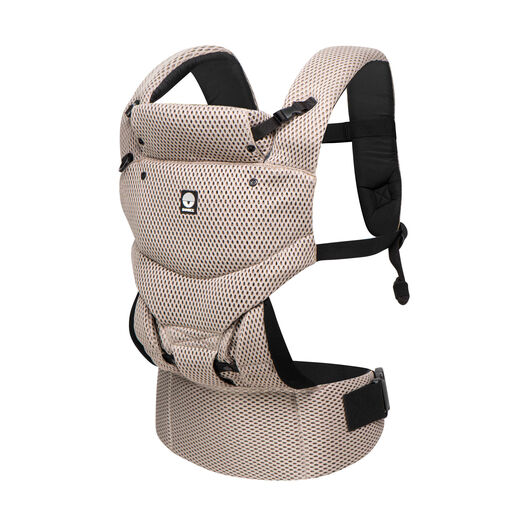
Why this product suits this profile: According to the product details, this model is suitable for children from around 0 to 3 years old and weighing 3.5 to 15 kg. The adjustable seat and leg sections, along with three carrying positions, offer options for different everyday situations.
The M-shaped seating position, breathable 3D mesh and clearly stated weight limit make key buying criteria easy to check.
3D mesh, padded straps, an adjustable waist belt, and front and back carrying options according to the manufacturer.
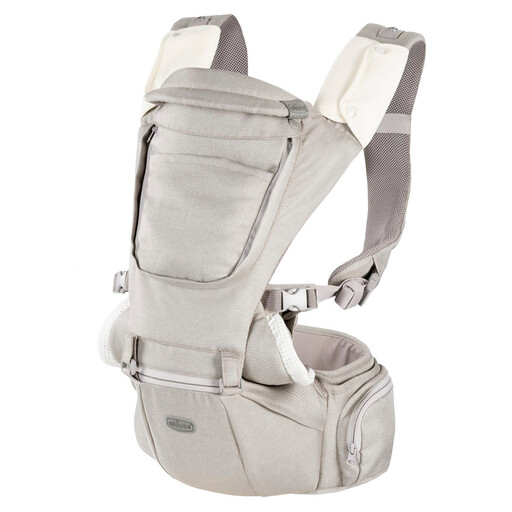
Why this product suits this profile: According to the manufacturer, this 3-in-1 system combines a fabric carrier with a hip seat that can also be used separately. It’s listed for use from 3 kg up to 15 kg and offers several carrying configurations.
The product details specify the minimum and maximum weight, list the individual components and explain that straps and fastenings should be checked.
Separate hip seat, cotton fabric, machine washable and several carrying options according to the product description.
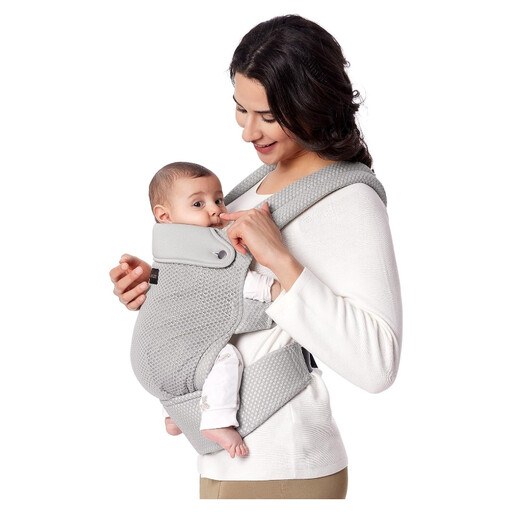
Why this product suits this profile: The mesh design is made for warm days and frequent outings. According to the product details, it’s suitable for children weighing around 3.18 to 19.96 kg and is worn on the front.
The air-mesh fabric helps reduce heat build-up, while three adjustable size settings let you adapt the fit as your child grows.
Breathable mesh, integrated EVA support around the hips, machine-washable fabric and a weight of around 771 g.
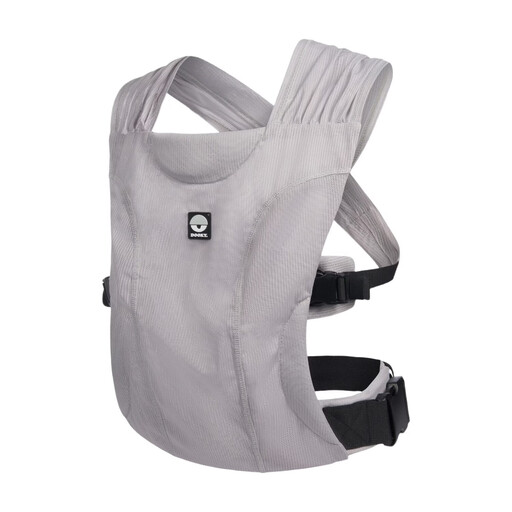
Why this product suits this profile: According to the product description, this model is designed for use in the shower and pool, and is suitable for children around 56 to 74 cm tall. It’s intended for a clearly defined range of uses.
Use is clearly limited to shallow water, the shower or the pool. The product is explicitly not a life-saving aid and does not replace supervision.
Quick-drying stretch fabric, click fastenings and suitability for a height of 56 to 74 cm according to the manufacturer.
We’ve put together a complete, regularly updated list of products that meet these strict selection criteria and fully comply with the safety regulations in force in the EU.
Before each use, check the straps, seams, buckles and fabric for damage. Fasten every clasp securely and make sure it has clicked into place. Your child should:
A baby carrier won’t protect your child from falls or road accidents. Don’t use one while cycling, running, cooking over an open flame or doing anything else where there’s an increased risk of falling. If you experience pain or notice pressure marks, adjust the fit or stop using the carrier.
It depends on the model. Some products are listed as suitable from around 3 kg, while others are intended for use from around three months or once your baby has sufficient head control. Always follow the manufacturer’s guidance on weight, height and stage of development.
This depends on the maximum weight, your child’s height and the carrier’s design. Models with an adjustable seat may be adapted for use over a longer period. Stop using a baby carrier if your child exceeds the stated limits or if the straps or seams show signs of wear.
The main ongoing costs are for care and cleaning. Depending on the material, machine-washable models may be easier to clean. For a baby carrier with mesh or a hip seat, follow the care and drying instructions to avoid putting unnecessary strain on the fabric, padding and fastenings.