
Lieferung heute & morgen

Qualitätsgarantie

Willkommens-Angebote freischalten: KOSTENLOSE Lieferung | Bis zu 80 % RABATT | Kostenlose 30-Tage-JoyPlus-Testphase
App herunterladen
By Joybuy's Product Recommendation Officer
A baby carrier is a wonderful way to give your child closeness and security, all while keeping your hands free for daily tasks. However, the range of models is vast, from the classic front carrier to the flexible baby wrap. This guide is designed to help you understand how different carrier systems work and make an informed decision that meets the needs of both you and your child.
Choosing a baby carrier depends on several factors. To help guide you, we've summarised three key aspects.
A crucial criterion for a good baby carrier is its ergonomic support for the child. The correct posture, known as the spread-squat position or M-position, is vital for healthy hip development. In this position, the baby's knees are slightly higher than their bottom and their legs are spread, so the hips and thighs form an "M". The child's back should be gently rounded to support the natural C-shape of their spine. Look for products recognised as "hip-healthy" by institutions like the International Hip Dysplasia Institute (IHDI), as this is a key indicator of an ergonomic baby carrier.
The market offers various types of carriers, each differing in handling and use case:
The material of the baby carrier should be breathable, durable, and skin-friendly. Fabrics like cotton or linen are often a great choice. Also, check if the carrier is machine-washable to make cleaning easier. Consider the recommended weight and age range as well. Some models are designed as a carrier suitable from birth, while others are only for older babies or can grow with your child and be used into the toddler years.
Based on functionality, design, and user-friendliness, we have curated a selection of models that meet different needs.
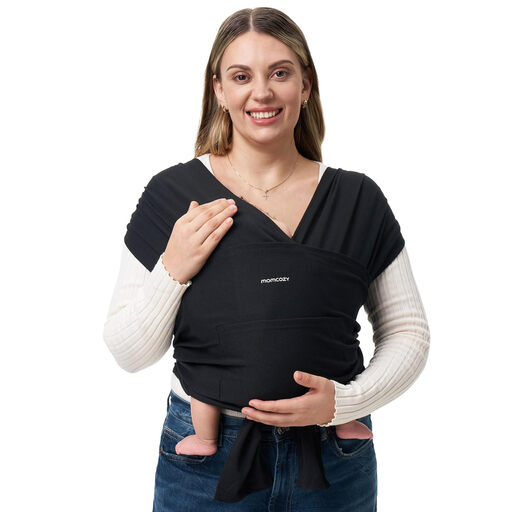
Why it stands out: This model combines the snug fit of a wrap with a simple double-ring closure system, eliminating the need for tying.
Benefits:
Who it's for: Parents who appreciate the closeness of a wrap but prefer a faster, simpler, knot-free experience, especially for the early days with their baby.
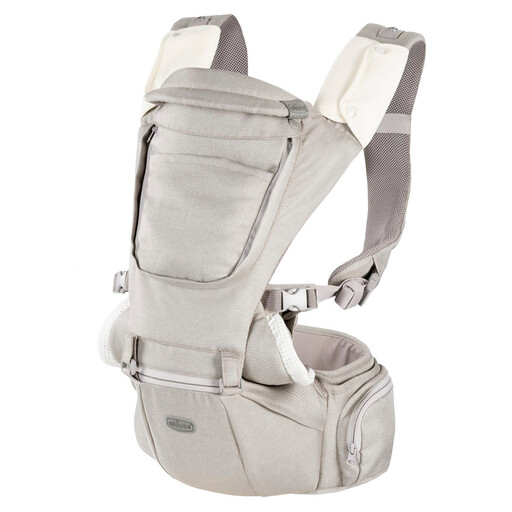
Why it stands out: A versatile 3-in-1 system consisting of a firm hip seat base and a soft textile carrier, recognised by the IHDI as hip-healthy.
Benefits:
Who it's for: Parents looking for a multifunctional and durable solution that grows with their child from birth up to 15 kg and offers maximum carrying comfort.
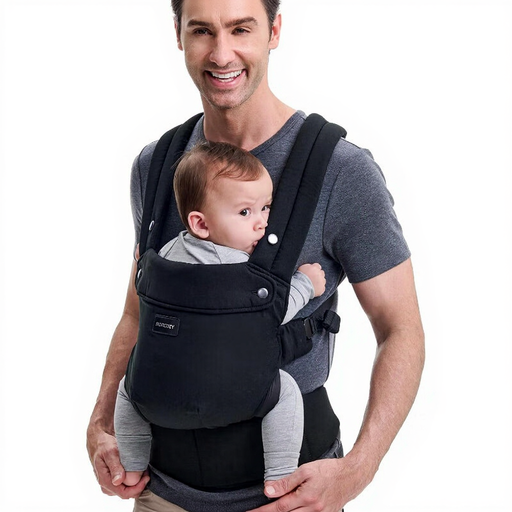
Why it stands out: This structured, pure cotton carrier focuses on strong lumbar support for the wearer and an ergonomically correct posture for the baby.
Benefits:
Who it's for: Parents seeking an easy-to-use buckle carrier for regular use who place a high value on back relief and natural materials.
While you carry your baby safely and comfortably, many other useful helpers can make daily life easier. If you're looking for more accessories, why not discover our selection of Baby Headbands and other practical items.
Many baby carriers can be used from birth (usually from a minimum weight of around 3.5 kg). Wraps and special newborn inserts for structured carriers are particularly designed for the littlest ones. However, it is crucial to always follow the manufacturer's instructions regarding the minimum weight and correct use for newborns.
The spread-squat position (M-position) is the natural posture a baby assumes when you pick them up. Their knees are at or above the level of their bottom, and their legs are slightly spread. This position supports the healthy development of the hip joints and helps prevent hip dysplasia. A good ergonomic baby carrier should ensure this posture at all times.
There is no fixed time limit, as long as both the baby and the wearer are comfortable. Pay attention to your child's cues. The important thing is that the carrier is adjusted correctly, the spread-squat position is maintained, and the baby's airways are always clear. For longer carrying periods, taking breaks can be beneficial to allow the child to move around.