
Lieferung heute & morgen

Qualitätsgarantie

Willkommens-Angebote freischalten: KOSTENLOSE Lieferung | Bis zu 80 % RABATT | Kostenlose 30-Tage-JoyPlus-Testphase
App herunterladen
A baby carrier can be practical around the home, on walks or when travelling. It keeps your baby close to your body while leaving your hands free for other tasks. However, the choice is extensive: terms such as “ergonomic”, “breathable” or “suitable for newborns” alone do not tell you whether a model is genuinely suitable for your baby’s age, weight and build.
As a Joybuy Product Recommendation Officer, I therefore filter the relevant product information and explain which details should be checked before buying a baby carrier in Germany.
The statement “from birth to 3 years” does not automatically mean that every carrying position is suitable from day one. The key factors are minimum weight, height, head control and the instructions for use. Some models are designed for newborns from around 3 kg, while others are only suitable from approximately 3 months or once your baby can hold their head up independently.
The maximum weight also varies considerably. A baby carrier for babies and toddlers may, for example, be designed for up to 15 kg or approximately 20 kg. The specific product approval is always decisive, not just the marketing claim on the packaging.
An ergonomic baby carrier should hold your baby in a stable, upright position. With a baby carrier with an M-position seat, your baby’s knees are higher than their bottom. The seat width and leg supports must therefore be adjustable to provide the right fit. A rigid or overly narrow seat can make the advertised position difficult to achieve in practice.
For parents, wide, padded shoulder straps, an adjustable waist belt and a clearly explained weight distribution are also important. A baby carrier with a hip support can help distribute the load by involving the lower back more effectively. However, this is no substitute for correct adjustment and a suitable weight limit.
Mesh fabric can improve air circulation, but it does not automatically prevent heat build-up. With a breathable baby carrier, you should also take the back area, neck support, seat and clothing into account. On warm days, regularly check your baby’s temperature, skin and position.
The carrier should also be practical to clean. Machine-washable models can be convenient if the carrier is used frequently. Other baby carriers may, according to the product information, only be cleaned by hand with mild detergent and air-dried.
Start by noting your baby’s current weight and take foreseeable development into account. According to the manufacturer, a model covering 3.5 to 15 kg is suitable for a different period of use than a carrier covering approximately 3.2 to 20 kg. With a baby carrier for newborns, you should also check whether it provides sufficient head and neck support.
Product information may state age recommendations in different ways. Minimum weight, maximum weight, height and permitted carrying position should therefore always be considered together.
A baby carrier with several carrying positions may be suitable for different stages of development. Common options include:
The outward-facing position should only be used if the instructions approve it for your baby’s age and development. With several models, back carrying is only recommended from around 6 months.
Before each use, check that the buckles click securely into place and that the straps lie flat without twisting. Inspect the seams, fastenings and fabric for signs of wear. Several of the models listed here are marketed in connection with EN 13209-2:2015 or EN 13209-2 together with safety information. This standard covers requirements and test methods for soft child carriers; the specific instructions for use remain decisive.
A baby carrier is not a protective system for falls or road accidents. The products mentioned are not intended for activities such as jogging or cycling.
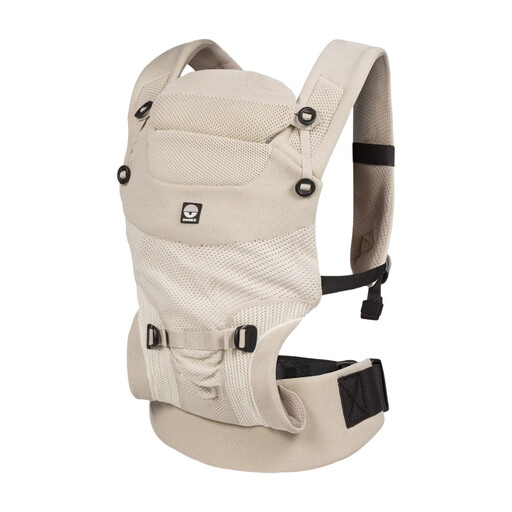
Why this product suits this profile: According to the product information, this carrier is designed for approximately 3.5 to 15 kg and three carrying positions. An adjustable seat, M-position, padded shoulder straps and waist belt cover important basic requirements.
The age recommendation is supported by specific weight and size information. Before buying, check that your baby meets the minimum requirements.
Three carrying positions, adjustable M-position seat and maximum waist size of 159 cm according to the product data.
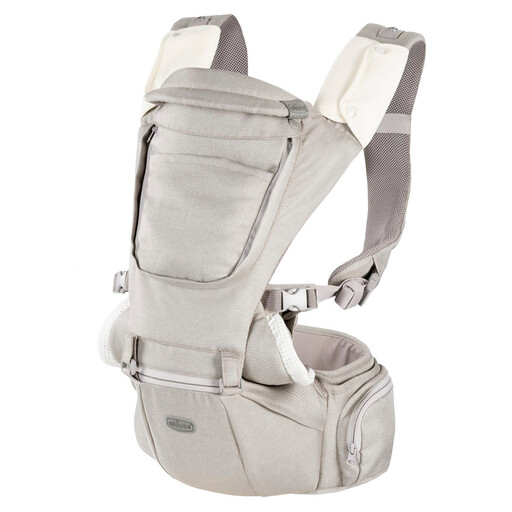
Why this product suits this profile: The 3-in-1 system combines a fabric carrier with a separately usable hip-seat base. According to the product data, it offers eight configurations and is designed for use from 3 to 15 kg.
The many positions are listed clearly. This makes it possible to check before buying whether the combination you want is actually included.
Removable hip-seat base, eight carrying configurations and machine-washable cover according to the manufacturer’s information.
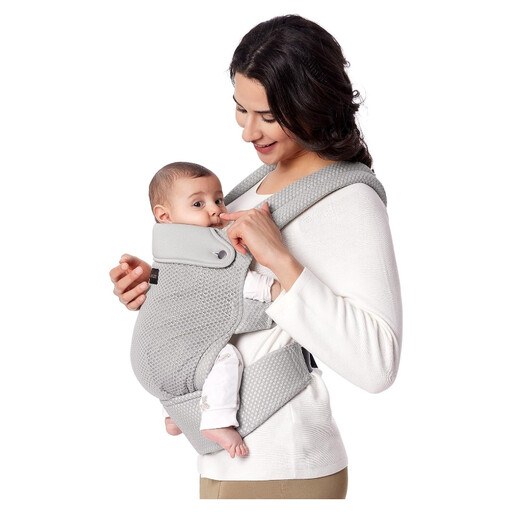
Why this product suits this profile: This breathable baby carrier uses Air-Mesh fabric and cooling neck material. According to the product information, it is designed for approximately 3.18 to 19.96 kg and three adjustable size positions.
The material is specifically described as mesh rather than being promoted simply as suitable for summer. Even so, ventilation does not replace temperature checks.
Air-Mesh panels, X-shaped back support, EVA waist support and machine washing according to the product description.
We have put together a complete, regularly updated list of products that fully meet these strict selection criteria and the safety regulations applicable in the EU.
Before using the carrier for the first time, parents should read the instructions in full and practise putting it on without their baby. When placing your baby in the carrier, carry out the following checks:
If you experience pain, pressure points or uncertainty, stop using the carrier and check the adjustment. For premature babies, babies with a low birth weight or babies with specific health considerations, medical advice before use is advisable.
This depends on the model. According to the product information, some baby carriers are suitable from 3 kg or from birth, while others are only suitable from around 3 months. Weight, height, head control and the instructions must all correspond.
The period of use depends on weight, size and design. Models covering up to 15 or 20 kg can be used through several stages of development. An age recommendation up to 3 years is no substitute for the maximum weight limit and approval of individual carrying positions.
A breathable baby carrier with mesh can support air circulation. Even so, parents should choose lightweight clothing, avoid direct heat and regularly check that their baby is not overheating or that their airways are not covered.