
Lieferung heute & morgen

Qualitätsgarantie

Willkommens-Angebote freischalten: KOSTENLOSE Lieferung | Bis zu 80 % RABATT | Kostenlose 30-Tage-JoyPlus-Testphase
App herunterladen
A baby carrier can be practical in everyday life: on walks, when travelling, around the house or anywhere a pushchair would be awkward. At the same time, choosing the right one can be challenging. Terms such as “ergonomic”, “from birth” or “breathable” do not automatically mean that a model is suitable for your child, your body or your daily routine.
Three common purchasing misconceptions particularly often lead to the wrong choice:
Before buying, check the minimum and maximum weight range and the child’s height, if stated. Depending on the model, a baby carrier from birth may start at 3 kg or 3.5 kg, while other carriers are not intended for use until around three months.
A baby carrier up to 3 years may be used up to approximately 15 kg, depending on the manufacturer’s specifications. However, this does not mean that every carrier will fit every child equally well up to that age. Check regularly:
For premature babies, low birth weight or specific health conditions, seek medical advice before use.
With a baby carrier with M-position, the child’s knees are positioned higher than their bottom. The seat and leg area must therefore be sufficiently adjustable. An ergonomic baby carrier should also support the child’s back according to their stage of development, without covering their face or restricting their airways.
For parents, wide, padded shoulder straps and an adjustable waist belt are important. A baby carrier with hip support can distribute the weight more evenly across the pelvic area. Even so, make sure the carrier can be adjusted to your height and waist measurement. For the models featured, the specifications extend, for example, to hip or waist measurements of up to 143 and 159 cm respectively.
A front carrier with the child facing towards the wearer is the most obvious position for many younger babies. A forward-facing position should only be used if the model and the child’s developmental stage explicitly allow it. Some products are designed for back carrying from around six months.
For warm days, a breathable baby carrier made from 3D mesh or air mesh may be worth considering. Cotton often feels soft, but depending on its construction, it may allow less air to pass through. Care is equally important:
The EN 13209-2:2015 standard sets out requirements for soft-bodied baby carriers. Such a specification is a useful indication that the product has been tested, but it does not replace correct use and regular checks.
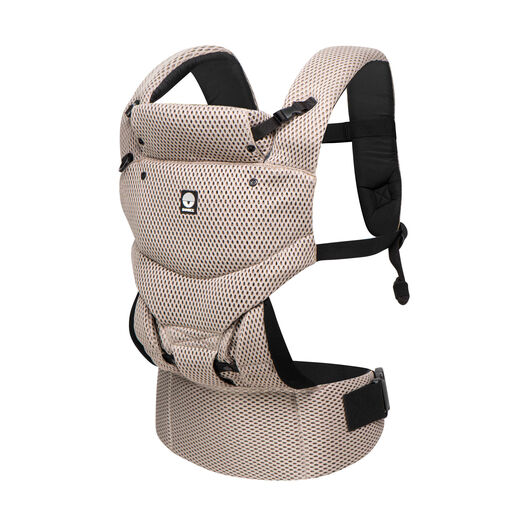
Why this product suits the profile: According to the product specifications, this carrier is suitable for 3.5 to 15 kg and offers three carrying positions: front-facing inwards, front-facing outwards and back carrying from six months.
The adjustable seat and leg area address the issue of an unsuitable M-position. The product specifications also mention 3D mesh and the EN 13209-2:2015 standard.
M-position, breathable 3D mesh, adjustable waist belt up to 143 cm and a compact, foldable design.
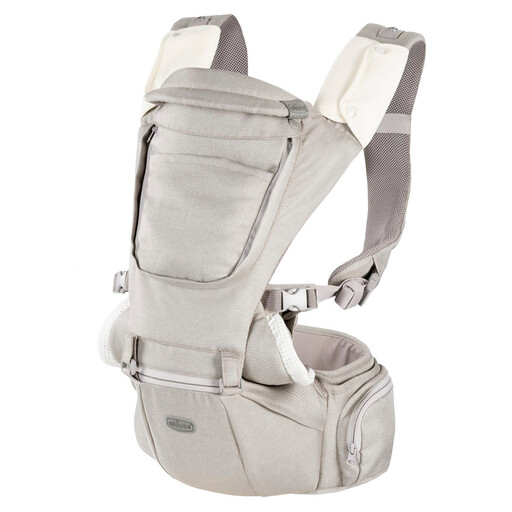
Why this product suits the profile: This 3-in-1 system combines a fabric carrier with a separate, firm hip-seat base. According to the specifications, it is suitable for weights from 3 to 15 kg.
The individual components can be adapted to suit the intended use. In full carrying mode, the base must be securely attached to the fabric section.
Eight configurations according to the manufacturer, a firm hip-seat base and a machine-washable cover on a gentle cycle at 30 °C.
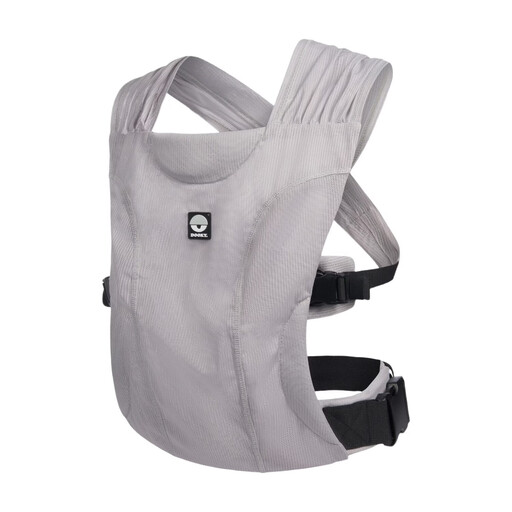
Why this product suits the profile: This specialist water carrier is designed for showers and shallow pools and, according to the specifications, is suitable for heights of approximately 56 to 74 cm.
The warnings clearly define the permitted use: no deep or open water, no unsupervised use and not a substitute for swimming or rescue aids.
Quick-drying stretch material, click fasteners and a clearly defined area of use for showers and pools.
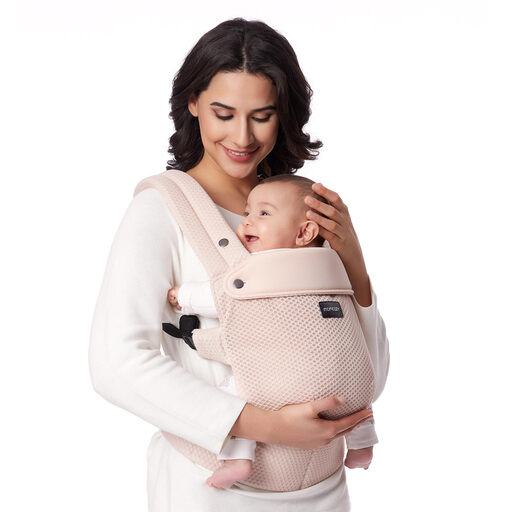
Why this product suits the profile: This air-mesh model is designed for front carrying and a weight range of approximately 3.18 to 19.96 kg. It is therefore suitable for families who are frequently out and about.
The three adjustable size positions help the carrier adapt as the child grows. The front-carrying range is clearly specified; back carrying should not be assumed.
Breathable air mesh, integrated EVA lumbar support, padded leg openings and machine washing according to the care instructions.
We have put together a complete, regularly updated list of products that fully meet these strict selection criteria and the safety regulations applicable in the EU.
Regardless of the model, you should check the baby carrier before putting it on. Follow the manufacturer’s instructions and pay attention to the following points:
A baby carrier is not a protective system in the event of a fall or road accident. Do not use it while jogging, cycling, on ladders or during activities involving an increased risk of falling or burns.
This depends on the model and the minimum weight. According to the manufacturers, some products are suitable from 3 or 3.5 kg, while others are not intended for use until around three months. Read the age, size and weight specifications in the instructions and adjust the carrier carefully.
Models with a weight range up to 15 kg are often described as baby carriers for up to 3 years. However, the actual end of use depends on the child’s weight, height and seat width, as well as the comfort of both the child and the wearer. Never exceed the specified maximum weight.
Follow the care label. Some models are machine washable, while others may only be cleaned by hand. Before washing, remove any detachable parts if instructed to do so, and allow the carrier to dry completely. Then check all fasteners and seams before using it again.