
Lieferung heute & morgen

Qualitätsgarantie

Willkommens-Angebote freischalten: KOSTENLOSE Lieferung | Bis zu 80 % RABATT | Kostenlose 30-Tage-JoyPlus-Testphase
App herunterladen
The right baby carrier can make daily life with a baby significantly easier. It gives parents their hands back while providing security and closeness for the child. The baby carrier with a hip seat is becoming particularly popular, as it promises a flexible and comfortable solution for various growth stages. However, the selection is vast, and making a decision can often be difficult.
As a Joybuy Product Recommendation Officer, my role is to provide you with objective guidance. This article highlights the key features of an ergonomic baby carrier and presents a selection of models to help you find the perfect carrying solution for your family.
Before you make a decision, there are several functional aspects to consider. These criteria will help you find a carrier that is both comfortable and practical for you and your child.
A hip-healthy baby carrier is fundamental for your child's healthy development. Ensure the carrier supports the so-called M-position (also known as the "frog-leg" position). In this position, the baby's knees are slightly higher than their bottom, and their legs are spread apart. This posture promotes healthy hip development and is recommended by orthopaedists and midwives. The carrier's seat panel—the fabric between the child's legs—should be wide enough to extend from one knee to the other.
Many parents want a baby carrier that grows with their child. Models that are suitable as a newborn baby carrier and can be used into the toddler years offer long-term value. Always check the manufacturer's weight and age recommendations. A detachable hip seat further enhances functionality: it can be used separately as a seat support for short distances, while the combined carrier and seat create a complete front carrier or back carrier for longer outings.
The wearer's comfort is just as important. Good weight distribution, achieved through wide, padded shoulder straps and a sturdy waist belt, helps prevent back and shoulder pain. Adjustable straps allow for a custom fit for different body types. For warmer months or active parents, a summer baby carrier made from breathable materials like mesh fabric is a worthwhile option to prevent overheating for both child and parent.
Based on the criteria above, we have compiled a selection of models that stand out for their functionality and design.
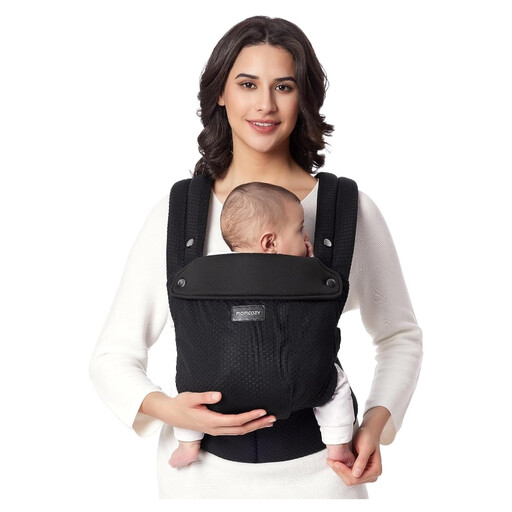
Why it stands out: This model from Momcozy is specifically designed for comfort on warm days and for an active lifestyle. The full breathable mesh fabric maximises air circulation, keeping both parent and baby comfortably dry.
Advantages:
Who it's for: Parents looking for a lightweight and highly breathable baby carrier suitable from birth that is ideal for summer, travel, or an active daily routine.
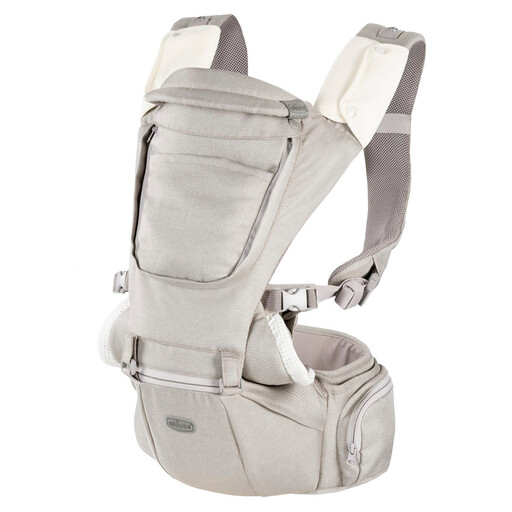
Why it stands out: The Chicco Hip Seat is a modular 3-in-1 system that offers maximum flexibility. It consists of a firm hip seat base and a soft fabric carrier, which can be used together or separately.
Advantages:
Who it's for: Parents seeking a multifunctional and durable solution that adapts to the changing needs of newborns to toddlers while offering certified ergonomics.
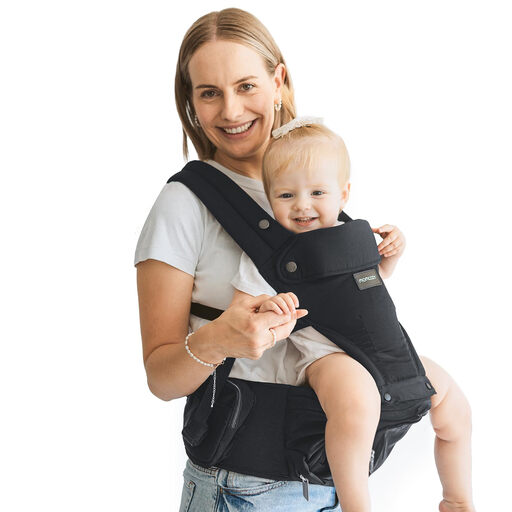
Why it stands out: This 2-in-1 model combines a full-featured carrier with a detachable, padded hip seat. It is designed to be easily put on and taken off by one person while maximising comfort.
Advantages:
Who it's for: Parents looking for a versatile baby carrier with a hip seat that is easy to use and offers high comfort for extended periods of wear.
Choosing the right baby carrier is a very personal decision. If the models presented here don't quite meet your needs, you might find the perfect alternative in our broader selection.
? Explore the full range of baby carriers here
Many models with hip seats are designed to be used as a newborn baby carrier, often with special inserts or adjustments. The separate hip seat itself is typically useful once the baby can hold their head up independently and starts to become more curious about their surroundings (around 4-6 months). It serves as a support to hold the child on your hip without straining your arm and back.
You can recognise an ergonomic baby carrier by several features: it supports the baby's back in its natural gentle curve, the seat panel is wide enough to keep the legs in the M-position, and it provides good head and neck support for sleeping or very young babies. For the wearer, adjustable, well-padded straps and effective weight distribution across the hips and shoulders are crucial.