
Lieferung heute & morgen

Qualitätsgarantie

Willkommens-Angebote freischalten: KOSTENLOSE Lieferung | Bis zu 80 % RABATT | Kostenlose 30-Tage-JoyPlus-Testphase
App herunterladen
Whether for a new arrival, a birthday, Christmas or simply as a little surprise: toys for babies and children should suit the child’s age, abilities and everyday life. The choice ranges from interactive baby toys and developmental toys to puzzles, soft toys and logic games. However, eye-catching features and big promises reveal little about whether a product is actually suitable.
As a Joybuy Product Recommendation Officer, I therefore filter products according to clear criteria: age recommendation, material information, construction, power supply and intended use.
“From 6 months” or “for 1 to 3 years” is not a blanket statement of quality. What matters is whether the child can already sit, grasp, press or combine things purposefully. A toy with small parts may be suitable for an older child but could present a choking risk for a younger baby.
Always check:
Lights, sounds and melodies make a product interactive, but they are not automatically an advantage. With musical baby toys, sensory toys and a baby activity centre, it should be clear which actions the child performs independently. Pressing, turning, sliding, sorting and matching are all easy to understand.
Also look for a volume control. With battery-operated toys, the battery compartment, closure and controls should be easy to check.
Terms such as “non-toxic”, “safe” or “supports development” should not be assessed in isolation. More meaningful information includes specific details about materials, rounded edges, BPA-free construction, CE marking and, where applicable, EN 71. The CE marking is a declaration of conformity by the manufacturer, not an independent quality seal.
With soft toys and plush toys, seams, ribbons, loops and care instructions are particularly important. The musical mechanism in a baby musical toy should be removable if the product needs to be washed.
Babies grasp, turn, follow movements and respond to sounds. Large, easy-to-grasp shapes without loose small parts may be suitable. A sensory toy with lights, music or movement should be used on a stable surface. Batteries should be kept in a securely closed compartment and are not part of free play.
From this age, simple cause-and-effect games, push-along vehicles and sorting activities may be suitable. A learning toy for toddlers does not need to have lots of modes. It is more important that buttons, wheels and cogs can be operated with an appropriate amount of force.
First children’s puzzles, peg games and larger construction sets help children learn to match colours and shapes through play. Look for robust parts and a manageable number of components. When a puzzle contains small parts, the age recommendation must be followed.
Role play, vehicles, drawing boards and more challenging logic games for children are suitable for this age group. For products containing small parts, the warning “not suitable for children under 3 years” must be observed. For children aged 6 and over, compact single-player games can provide a practical activity while travelling.
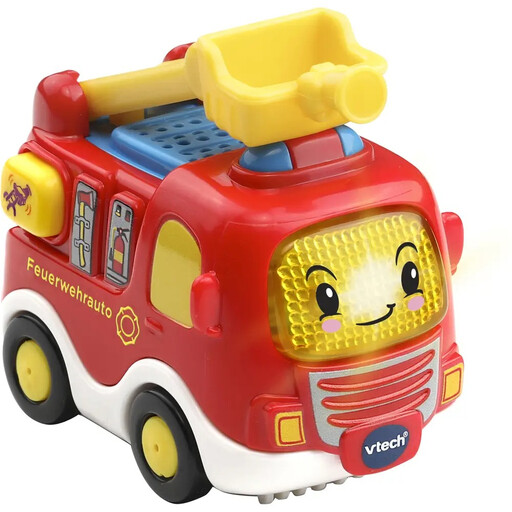
Why this product suits this profile: According to the product information, this vehicle is suitable for children aged 1 year and over. It combines push-along play with buttons, lights, sounds and songs. Two AAA batteries are included.
The functions are clearly described and linked to a specific age limit. The warning “not suitable for children under 1 year” should be followed.
Moving ladder, three songs, six melodies and compatibility with other Tut-Tut Baby Flitzer playsets.
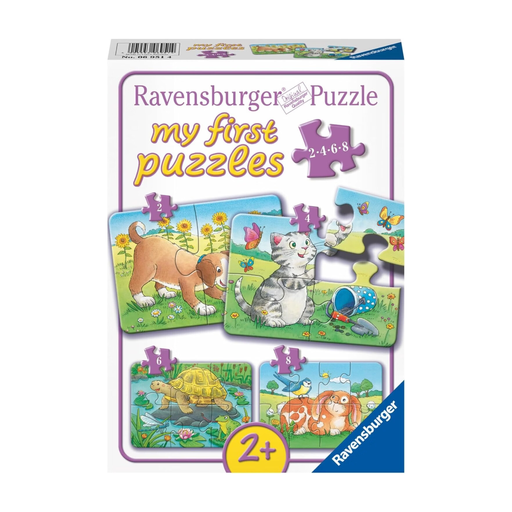
Why this product suits this profile: The set is designed for children aged 2 years and over and contains four puzzles with increasing levels of difficulty. Sturdy cardboard pieces make them easier to handle.
Instead of lots of unused features, the set offers a clearly defined activity with an easy-to-understand age recommendation.
Four designs, cardboard construction, no batteries required and a step-by-step increase in difficulty.
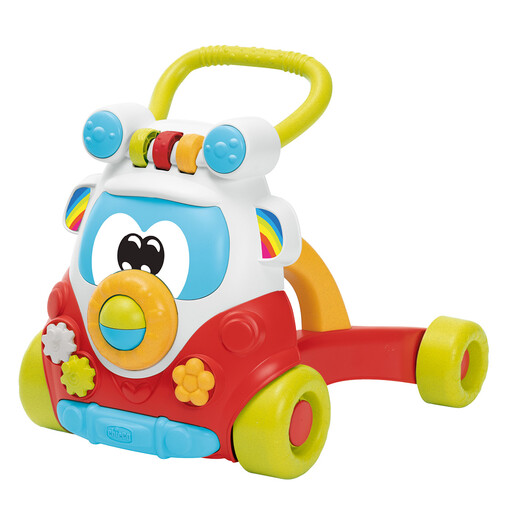
Why this product suits this profile: According to the product information, this 2-in-1 baby walker is designed for children aged 9 to 24 months. It combines walking support with five manual activities.
Use is subject to important conditions: the child should be able to sit independently, and the walker must not be used near stairs, thresholds or on sloping surfaces.
Four large wheels, a wide design, five mechanical activities and material information stating that it is BPA- and phthalate-free.

Why this product suits this profile: The cube is designed for children aged 1 to 3 years and combines a piano, guitar, telephone, cogs and music in a compact format, among other features.
The compact design brings together a variety of play activities without the need to buy several individual products. The CE and EN71 information comes from the manufacturer’s product description.
ABS plastic, rounded edges, a carry handle and eight different activity areas.
Before ordering toys for babies and children, make sure you have checked the following:
We have put together a complete, regularly updated list of products that fully meet these strict selection criteria and the safety regulations applicable in the EU.
For toys from 6 months, consider robust products that are easy to grasp and do not contain small parts that can come loose easily. Sensory products with lights, music or movement should only be used under supervision and on a safe surface. The manufacturer’s specific age recommendation remains decisive.
Their lifespan depends on the materials, how they are used and how well they are cared for. Regularly check edges, wheels, seams, battery compartments and attachment points. Damaged parts should no longer be used. Care instructions are important for soft toys, while plastic toys can often be cleaned with a damp cloth.
This depends on the type of battery, volume, play duration and frequency of use. Check whether batteries are included. Mechanical musical boxes, such as a soft toy with a removable musical mechanism, do not incur battery costs during use.