
Lieferung heute & morgen

Qualitätsgarantie

Willkommens-Angebote freischalten: KOSTENLOSE Lieferung | Bis zu 80 % RABATT | Kostenlose 30-Tage-JoyPlus-Testphase
App herunterladen
Choosing a baby cream can quickly feel overwhelming. The shelves are packed with products, all promising gentleness and protection. However, not every cream is suitable for every purpose or skin type. The wrong choice not only leads to wasted money but can also irritate your child's delicate skin. As your Joybuy Product Recommendation Officer, I'll help you understand the key criteria and avoid common purchasing pitfalls.
Many well-intentioned purchases turn out to be unsuitable. This is often due to widespread misconceptions reinforced by marketing messages.
Instead of being swayed by packaging designs, you should base your decision on objective features. These three points will help you distinguish the good from the bad.
The most fundamental difference lies in the cream's purpose.
The list of ingredients (INCI) is your most reliable source of information. Pay attention to the following:
The "dermatologically tested" claim is a standard that confirms the product has been tested for skin reactions under medical supervision. For very sensitive or eczema-prone skin, there are special product lines. The texture is also important: A moisturizing cream for the face should absorb quickly without leaving a greasy film, whereas a barrier cream can be intentionally richer and more adherent.
Based on these objective criteria, we have identified several products that are well-suited for specific needs.
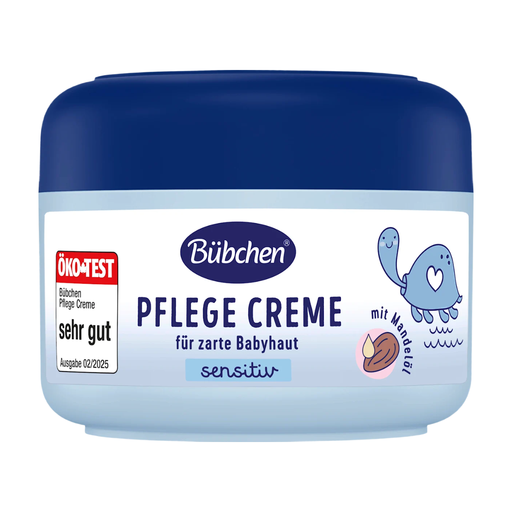
Why it's a great fit: Ideal for parents looking for a straightforward and reliable moisturizer for daily use on the face and body. The formula is tailored to the basic needs of normal to slightly sensitive baby skin.
This product intentionally avoids perfume and dyes. It focuses on its core function—moisturizing—without potentially irritating additives.
The formula with panthenol and almond oil moisturizes and soothes the skin. The cream absorbs quickly without leaving a sticky residue.
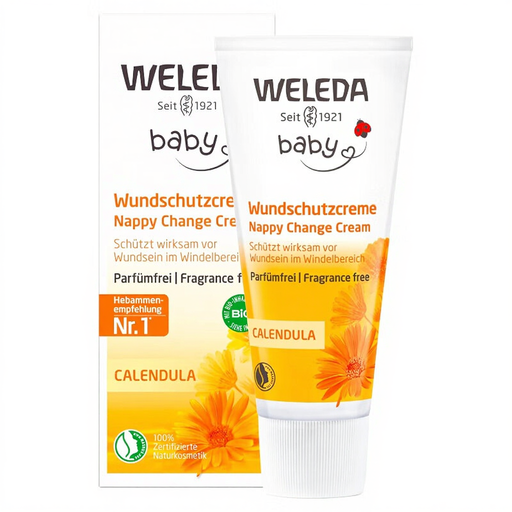
Why it's a great fit: A specialised barrier cream developed specifically for the demanding conditions of the diaper area. It reliably protects the skin from moisture and helps prevent redness.
This product solves the "one-for-all" trap by performing a specific function. It is not an all-purpose moisturizer, but a targeted barrier cream.
The combination of skin-friendly lanolin and zinc oxide forms an effective and breathable protective layer. Organic Calendula extract also soothes irritated areas of skin.
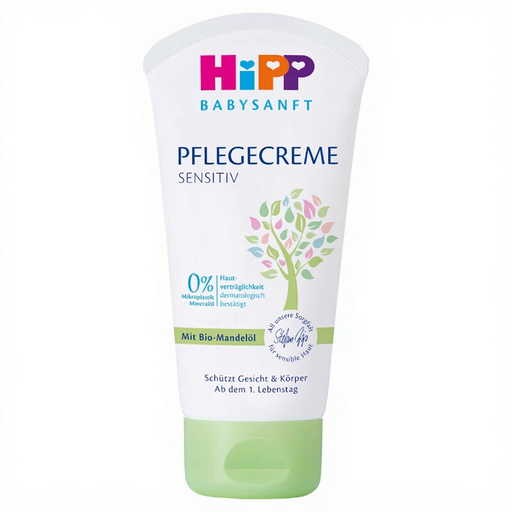
Why it's a great fit: An excellent choice for caring for baby skin prone to dryness and sensitivity. The formula is also suitable for managing eczema-prone skin and provides intensive moisture for the face and body.
This product is completely free of mineral oil, parabens, and perfume. It was specifically developed to minimise the risk of allergies and meet the needs of sensitive skin.
The cream contains valuable organic almond oil for intensive care and panthenol to soothe the skin. It is easy to spread and absorbs quickly, making it convenient for daily use.
We have compiled a complete, up-to-date list of products that fully meet these strict selection criteria and German safety standards.
1. How often should I use baby cream? The frequency depends on the purpose and the skin's condition. A barrier cream is applied as needed with every diaper change to clean, dry skin, especially if redness is visible. A moisturizer can be applied daily to the face and body, for example, after bathing or in dry indoor air.
2. How can I identify a good fragrance-free baby cream? The most reliable way is to check the ingredient list (INCI) on the back of the packaging. Look for the terms "Parfum" or "Fragrance." If these are absent, the cream is generally fragrance-free. Many manufacturers also advertise this directly on the front with claims like "fragrance-free" or "unscented."
3. What is the difference between a barrier cream and a moisturizing cream? The main difference lies in their function and formula. A barrier cream is rich and uses ingredients like zinc oxide to form a water-repellent barrier, protecting the skin from moisture and irritation in the diaper area. A moisturizing cream (or lotion) is more lightweight, absorbs faster, and its primary purpose is to hydrate the skin and keep it supple.