
Lieferung heute & morgen

Qualitätsgarantie

Willkommens-Angebote freischalten: KOSTENLOSE Lieferung | Bis zu 80 % RABATT | Kostenlose 30-Tage-JoyPlus-Testphase
App herunterladen
A baby’s skin is thinner and often reacts more quickly to friction, moisture or unfamiliar ingredients than adult skin. So when you’re buying a baby cream, it’s not just about the brand name or a promise like “extra gentle”. What really matters is whether the texture, ingredients and intended use fit your baby’s daily routine.
A rich nappy rash cream is designed for the nappy area, not automatically for the whole face or body. It can form a protective film and therefore be useful against moisture. For everyday full-body care, however, a lighter baby lotion is often more practical, as it spreads easily over larger areas.
Plant oils and calendula are often promoted as natural ingredients. Yet essential oils or fragrance components that must be declared, such as limonene, linalool or geraniol, may still be present. If you’re looking for a fragrance-free baby cream, you should check the INCI list, not just the front of the packaging.
More cream doesn’t automatically mean better skincare. A thick layer can trap moisture in the nappy area or feel unpleasant on the face. For daily use, a thin, even layer on clean, dry skin is usually enough. If redness persists or gets worse, the cause should be checked by a medical professional.
First, match the product to its intended purpose:
Also pay attention to age recommendations. Some products are described as suitable from birth, others from a specific month of age.
For sensitive skin, short, clear formulations can make selection easier. Relevant ingredients include, for example:
A calendula baby cream is therefore not automatically the right choice for every child. If you know your baby has an allergy to certain plants, nuts, sesame or wool wax, check the full ingredients list. A small patch test on a limited area of skin can be sensible before the first full application. For newborns or noticeable skin changes, it’s advisable to consult your midwife, paediatrician or pharmacist.
75 ml is handy for a changing bag or travel, while 150 to 400 ml can be more economical for regular body care. After opening, follow the symbol on the packaging for how long the product can be used. Tubes reduce direct contact with the product; with pots, make sure you use clean hands and keep the lid tightly closed.
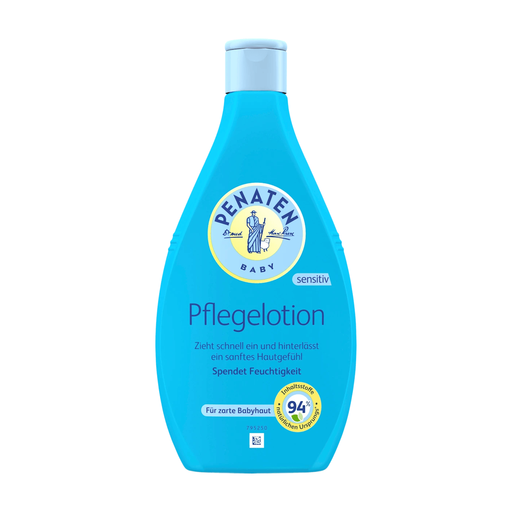
Why this product fits the profile: The 400 ml size is designed for regular body care over larger areas of skin. According to the product description, the lotion is suitable from one month old and is free from preservatives and colourants.
The lotion is clearly positioned as a body care product and doesn’t need to be used as a nappy cream. Still, check the current packaging information before buying.
400 ml content; according to the product information, dermatologically tested for skin tolerance and free from preservatives and colourants.
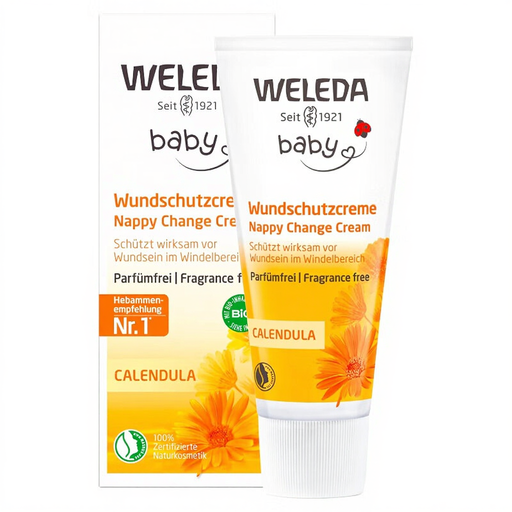
Why this product fits the profile: According to the product information, the formula contains zinc oxide, almond oil, beeswax, lanolin, and calendula and chamomile extracts. It is described as a fragrance-free care product for the nappy area.
The “Fragrance-Free” label distinguishes this product from formulas with added fragrance. Still, check the full INCI list against any individual allergies before use.
75 ml content; zinc oxide and wax-based ingredients; according to the product information, dermatologically tested for skin tolerance.
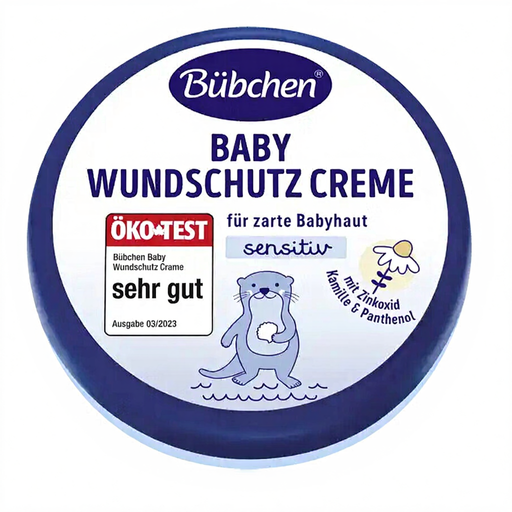
Why this product fits the profile: The 150 ml tube is designed for repeated use in the nappy area. According to the product description, it contains zinc oxide, chamomile and panthenol, and is free from silicones, colourants and microplastics.
Its intended use as a nappy rash cream prevents a body lotion from being used as a barrier cream in the nappy area. Do not apply to deep or infected wounds.
150 ml content; zinc oxide, chamomile and panthenol according to the product information; dermatologically confirmed skin tolerance.
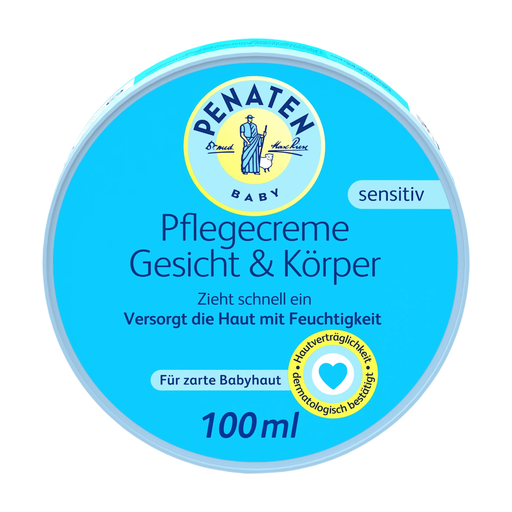
Why this product fits the profile: According to the product description, this care cream is intended for the face and body. It is described as free from fragrances, colourants and alcohol, making it suitable for shoppers looking for a clearly defined everyday care product.
The stated use for face and body reduces the risk of buying the wrong product due to too narrow a purpose. For the nappy area, however, you should still choose a product designed for that purpose.
100 ml content; for face and body; according to the product information, free from fragrances, colourants and alcohol.
We’ve put together a full, regularly updated list of products that fully meet these strict selection criteria and the safety regulations in force in the EU.
Always apply baby cream to clean, dry skin. In the nappy area, a thin film on particularly stressed areas can be enough. With a baby cream for redness, first gently clean the skin and pat it dry. If the redness gets worse, the skin weeps, or it persists despite proper care, consult a medical professional.
For cold days, a water-free wind and weather balm for the face or hands can be useful. Such a formulation should be applied before going outside. Products with fragrances, essential oils or certain plant extracts should be assessed individually for sensitive skin.
A suitable product is one whose packaging explicitly states it can be used from birth or for newborns. For newborn skincare, use a small amount, check the INCI list, and initially only care for a limited area of skin.
The open jar symbol on the packaging is the key guide, for example “12M”. You should also observe the smell, colour and consistency. Changes or damaged packaging mean you should stop using it.
Not generally. A nappy cream is usually more focused on moisture protection and creating a protective barrier. For the face, choose a product that is explicitly intended for the face or for the face and body.