
Lieferung heute & morgen

Qualitätsgarantie

Willkommens-Angebote freischalten: KOSTENLOSE Lieferung | Bis zu 80 % RABATT | Kostenlose 30-Tage-JoyPlus-Testphase
App herunterladen
Baby skin doesn’t automatically need lots of skincare products. What matters is choosing the right application, ingredients and age suitability for your baby’s specific needs. A baby face cream often differs in texture and purpose from a nappy cream or a rich baby body cream.
Labels like “sensitive”, “mild” or “natural” aren’t enough on their own as a selection criterion. A look at the INCI list will show whether, for example, Parfum, essential oils or declared fragrance ingredients are included. If you’re specifically looking for a baby cream without fragrances, you should check the packaging details before buying.
A rich moisturising cream can feel pleasant on the face, but may be too heavy to apply on the nappy area. Conversely, a light moisturising cream for babies won’t necessarily provide the desired protection against moisture in the nappy. The label “Face & Body” describes the intended area of use, but it doesn’t replace checking individual skin tolerance.
“Dermatologically tested” is a statement about the skin tolerance test carried out on that particular product, but it’s not a guarantee that every skin type will tolerate the cream without issue. Similarly, “natural ingredients” don’t automatically mean fragrance-free or low-allergen. For sensitive skin, it’s advisable to do a small tolerance test on an inconspicuous area, following the instructions on the pack.
For dry patches on the face, a compact, easy-to-spread baby face cream is often suitable. A baby body cream should spread more easily over larger areas. For the nappy area, nappy cream and nappy rash cream with protective ingredients like zinc oxide are worth considering. Zinc oxide can form a barrier against moisture; however, no medical effect can be inferred from this.
Also pay attention to whether the cream absorbs quickly or leaves a visible protective film. A light texture is better suited to daily care, while a richer consistency may be intended for particularly dry skin areas.
The full INCI list is more informative than the front of the packaging. Commonly used ingredients include, for example:
When searching for a natural cosmetics baby cream, you should check for recognised certifications on the packaging. The term “natural” alone is not a uniformly protected quality seal.
For newborns, you should note the stated suitability from birth or the specific age recommendation. Cosmetic baby creams are intended for external use only. Contact with the eyes should be avoided. If persistent redness, noticeable irritation, weeping skin or open areas occur, stop using the product and seek medical advice.
Also look out for:
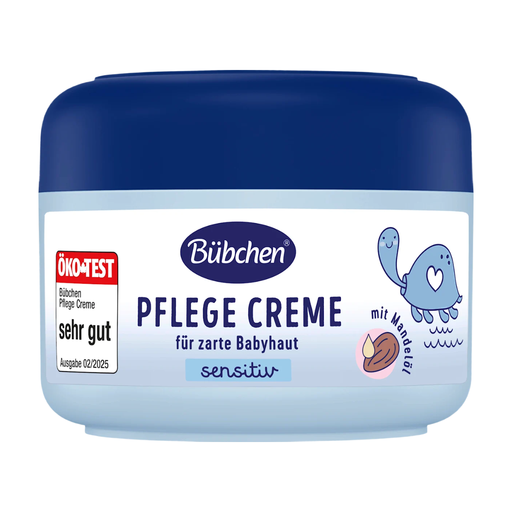
Why this product fits the profile: The 75 ml pot is designed for daily care of the face and body, making it a manageable basic starter kit.
The product description mentions a fragrance-free formulation. Nevertheless, the current packaging should be checked against the INCI list before purchase.
Contains, according to product information, panthenol, almond oil, allantoin and shea butter; dermatologically tested for skin tolerance.
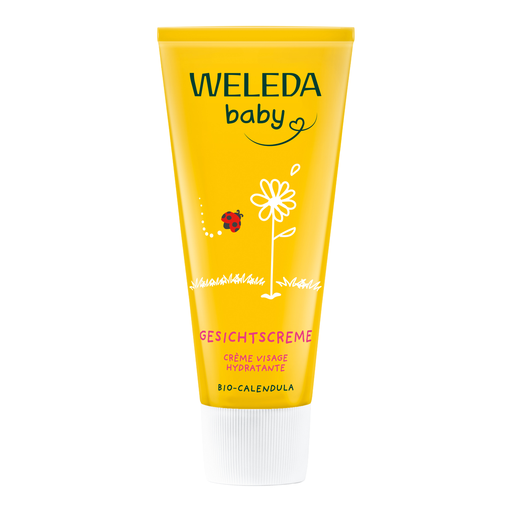
Why this product fits the profile: The targeted focus on the face makes selection easier when you don’t want a universal body care product.
The application is clearly described as facial care. However, the INCI list does contain fragrances and declared fragrance ingredients.
50 ml content, calendula and almond oil according to product information, and an explicitly described use for dry facial skin.
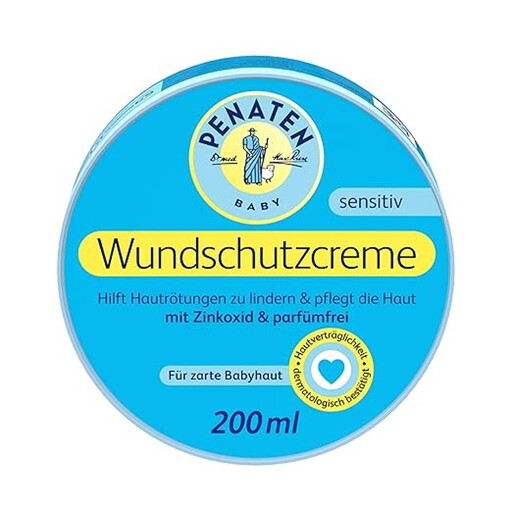
Why this product fits the profile: The 200 ml size is designed for regular use, especially in the daily care routine around the nappy area.
The product information mentions zinc oxide and a protective function against moisture. The contradictory fragrance information should be checked against the original packaging.
200 ml content, plus zinc oxide, lanolin and shea butter according to the product description; explicitly intended for external use.
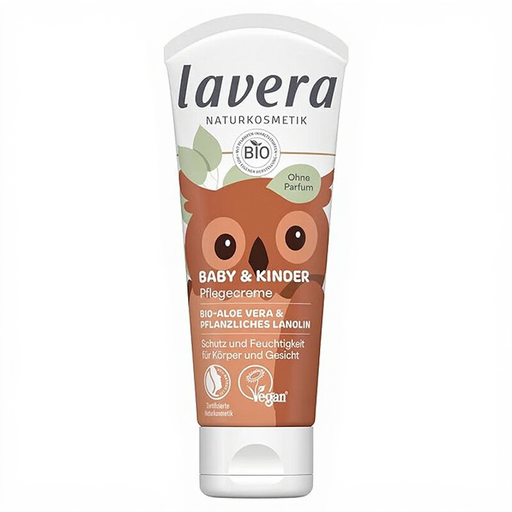
Why this product fits the profile: The product description mentions certified organic ingredients and a formulation free from mineral oils, preservatives and parabens.
The information about organic quality and the omission of certain substance groups is more specific than a general advertising claim. Suitability should still match the age recommendation.
75 ml content, aloe vera, soya and grapeseed oil, plus chamomile extract according to product information; described for sensitive children’s skin.
We’ve put together a full, regularly updated list of products that fully meet these strict selection criteria and the safety regulations in force in the EU.
For dry skin, richer formulations with glycerin, plant oils, shea butter or lanolin are often chosen. With a cream for dry baby skin, the application should match the body area. A small amount is usually enough; too much product can feel unpleasant on the skin.
That depends on the individual product description. Products labelled “Face & Body” are intended for both areas. A specific baby face cream, on the other hand, may focus more on the needs of facial skin. With the first application, you should observe the skin’s reaction.
Many cosmetic products carry a symbol of an open pot with a number of months, for example “12M”. This indicates the recommended period of use after opening. Close the pot or tube after each use and store the moisturising cream for babies in a dry, cool place away from direct sunlight. If the smell, appearance or consistency changes, it should not be used further.