
Lieferung heute & morgen

Qualitätsgarantie

Willkommens-Angebote freischalten: KOSTENLOSE Lieferung | Bis zu 80 % RABATT | Kostenlose 30-Tage-JoyPlus-Testphase
App herunterladen
Baby skin is delicate and does not automatically require an extensive skincare routine. In many cases, gentle cleansing, fresh air and a suitable baby cream for dry or particularly stressed areas are sufficient. However, anyone looking to buy a product should take a closer look: the term “sensitive” alone says little about the actual formulation or intended area of use.
This Joybuy Product Recommendation Officer buying guide explains the key product features and highlights which baby cream may suit different everyday situations.
A natural baby cream may contain plant-based fragrances or essential oils. In the INCI list, these may appear as Parfum, Limonene, Linalool or Geraniol, for example. Parents looking for a fragrance-free baby cream should therefore always check the complete ingredient list.
Likewise, “with calendula” or “with chamomile” initially describes only one ingredient. It does not imply a medical or therapeutic effect.
A lightweight baby moisturiser for the face and body should spread easily and absorb well. A baby nappy rash cream for the diaper area, by contrast, is often richer and may contain ingredients such as zinc oxide or waxes. These ingredients can form a protective layer, but they are not necessarily suitable for use on the face.
Using a baby body cream in the diaper area may mean choosing a product with an unsuitable texture or without sufficient moisture protection.
A 400 ml lotion can be practical for daily body care. For facial care or use on the go, a 50 to 75 ml tube is more convenient. Hygiene is also important with small containers: cream should be removed with clean hands and the container should be closed securely after use. Observe the opening date and the period of use stated on the packaging.
Before buying, it should be clear whether the cream is intended for the face, body or diaper area.
The manufacturer’s information on the packaging takes precedence over general product descriptions in the online shop.
For sensitive skin, short, clearly understandable formulations are often easier to assess. Anyone wishing to avoid fragrances should specifically look for baby cream for sensitive skin or “fragrance-free” and check the INCI list.
Possible ingredients and their practical function:
For known allergies, recurring symptoms or unusual skin changes, medical advice is recommended. Cosmetics are not a substitute for medical treatment.
According to the product information, some products are suitable from birth, while others are intended for use from a specific age. “Dermatologically tested” describes an assessment of skin compatibility, but does not rule out every individual reaction. Provided the product instructions do not state otherwise, testing the product on a small area before the first extensive application may be advisable.
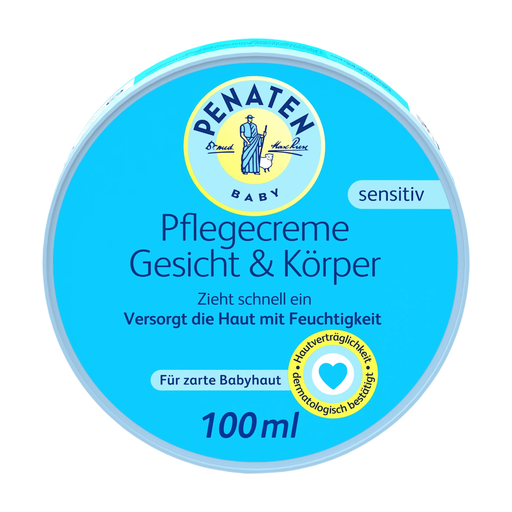
Why does it suit this profile? A cream for both the face and body can simplify getting started when you do not want to buy several skincare products. According to the stated formulation, it is free from fragrances, colourants and alcohol.
The combined area of use reduces the risk of selecting a body-only or diaper cream for the face.
100 ml content; according to the product description, intended for the face and body as well as sensitive skin.
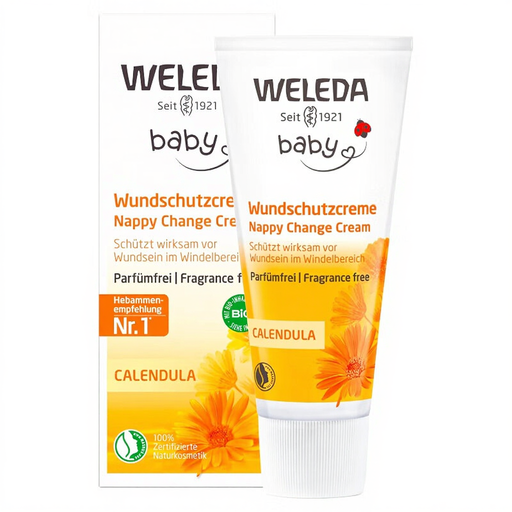
Why does it suit this profile? According to the product information, this cream is intended for the diaper area and contains ingredients including zinc oxide, almond oil, beeswax and lanolin. This variant is described as fragrance-free.
Its clearly stated use for the diaper area prevents a standard moisturiser from being used as a diaper cream.
75 ml content; zinc oxide and wax-based ingredients according to the INCI list; product information regarding skin compatibility.
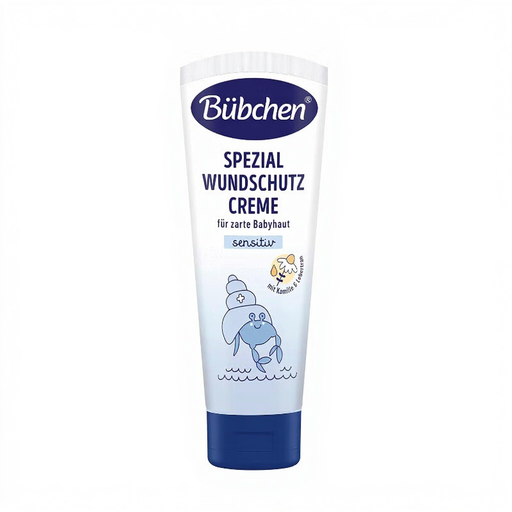
Why does it suit this profile? The product description identifies the diaper area as its intended use and lists chamomile extract, cod-liver oil and zinc oxide among its ingredients.
The product is identified not merely as general baby skincare, but specifically as a wound-protection or diaper cream.
75 ml content; according to the description, free from mineral oils, preservatives and artificial colourants.
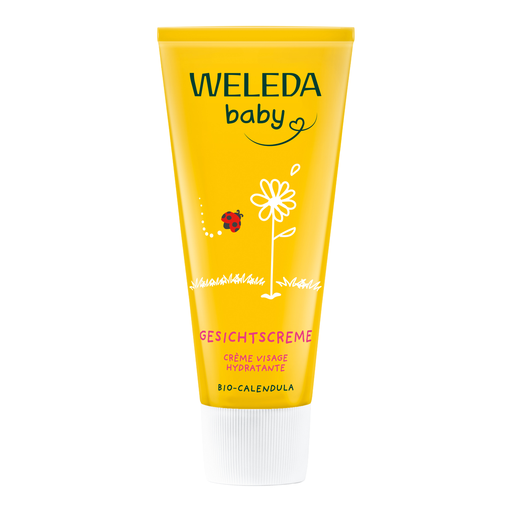
Why does it suit this profile? This cream is specifically described as a baby face cream and is intended for daily use in small quantities.
Its clearly defined facial-care purpose helps prevent an overly rich wound-protection cream from being chosen for the face.
50 ml content; according to the product information, contains almond oil, lanolin and calendula extract; application guidance for cold weather.
Compare the complete selection of baby creams and nourishing products by area of use, quantity and product features.
A baby cream for sensitive skin should ideally contain few fragrances and have a clearly defined area of use. “Fragrance-free” should be verified against the current packaging and INCI list. For known sensitivities, the individual ingredient list is more important than the brand name.
This depends on the condition of the skin and the area of use. A body cream or lotion can be applied when the skin is visibly dry or as needed. Diaper cream should be used on the intended area and in accordance with the directions on the packaging. A routine, thick layer over the entire body is not automatically necessary.
The best-before date and the open-jar symbol indicating the period after opening—such as “12M”—are the key references. Changes in smell, colour or consistency may be a reason to stop using the product. If in doubt, check the packaging information for the specific product.