
Lieferung heute & morgen

Qualitätsgarantie

Willkommens-Angebote freischalten: KOSTENLOSE Lieferung | Bis zu 80 % RABATT | Kostenlose 30-Tage-JoyPlus-Testphase
App herunterladen
Purchasing a baby crib is one of the first major decisions for expectant parents. The market offers a vast array of models, from co-sleeper cribs to convertible slatted cribs, but the sheer number of options can quickly become overwhelming. Marketing promises and seemingly budget-friendly all-in-one sets often lead to disappointment and additional costs. This guide will help you identify the key features to look for and make an informed decision for a safe and practical sleeping space.
Before we dive into the essential criteria, you should be aware of three common problems that can arise during the selection process:
To make a safe and durable choice, you should focus on the following non-negotiable features. These objective criteria will help you evaluate a product's quality, independent of marketing claims.
Safety is the highest priority. Look for compliance with current European safety standards. These ensure that the crib is stable, has no sharp edges, and that the spacing of the slats is designed to prevent a child from getting trapped.
A functional baby crib adapts to the needs of both the child and the parents.
The sleep environment directly impacts your child's well-being.
Here is a selection of models tailored to different needs and living situations.

Why This Fits Their Persona: Ideal for parents who want closeness and flexibility in the first few months. It serves as a bedside crib, a bassinet on wheels, and later as a bench, adapting to daily life.
Avoids the incomplete set trap by including a breathable 'safe asleep' mattress. The 7-level height adjustment ensures compatibility with many parent beds.
Meets the EN 1130:2019 safety standard. The included locking casters allow for mobile use as a bassinet around the home.
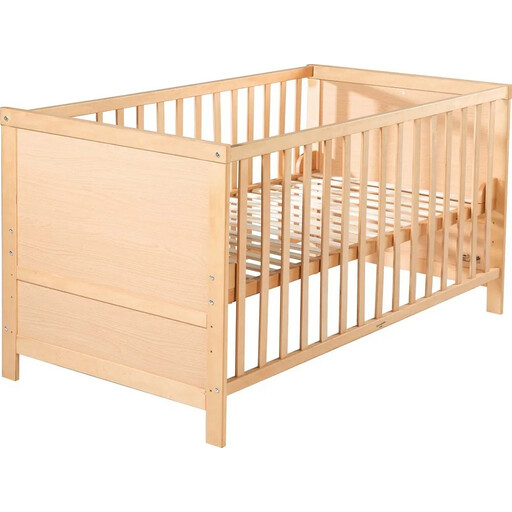
Why This Fits Their Persona: A sustainable investment for families looking for a solution from birth to primary school age. The standard 70x140 cm size and conversion capability offer long-term usability.
Tackles the "grows with your child" trap with a sturdy plywood construction designed for long-term use. Conversion to a junior bed is part of its core design.
A 3-level adjustable mattress base and 3 removable slats adapt to the child's development. Conversion to a junior bed is possible (conversion sides sold separately).
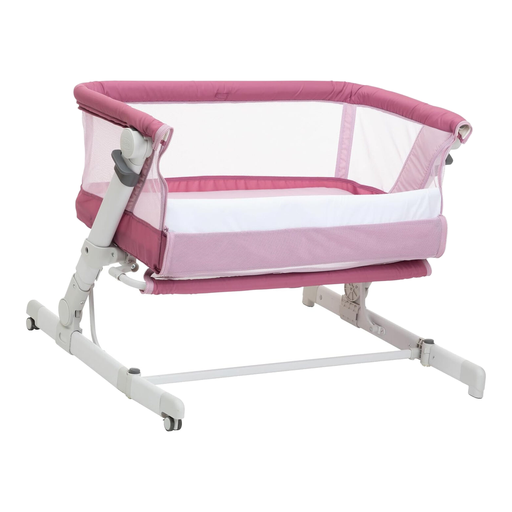
Why This Fits Their Persona: Perfect for parents who travel frequently or need a space-saving solution for their home. The combination of a travel and bedside crib offers maximum flexibility.
Solves the compatibility problem with multi-level height adjustment and a design conceived for attachment to the parent's bed. The quick folding mechanism makes it a true travel crib.
Very lightweight aluminium frame and an instant folding mechanism without disassembly. Mesh windows on the sides ensure good air circulation.
We have compiled a complete, up-to-date list of products that fully meet these strict selection criteria and safety regulations.
1. How high should a slatted crib be? The EN 716 safety standard requires that the distance from the top of the mattress (in its lowest position) to the top of the crib rail must be at least 60 cm. This prevents a standing child from climbing out of the bed.
2. When can you convert a baby crib? The conversion should be done as soon as your child starts to pull themselves up on the rails or attempts to climb. On many models, the removable slats can be taken out first. The full conversion to a toddler bed is usually appropriate between the ages of two and three.
3. Is a baby nest a safe place to sleep? A baby nest is designed to give an infant a sense of security during the day on a flat, stable surface (e.g., on the floor) and under constant supervision. Its use for unsupervised nighttime sleep in the crib is discouraged, as soft padding and bumpers can obstruct air circulation and pose a safety risk. Always adhere to the specific manufacturer's warnings.