
Lieferung heute & morgen

Qualitätsgarantie

Willkommens-Angebote freischalten: KOSTENLOSE Lieferung | Bis zu 80 % RABATT | Kostenlose 30-Tage-JoyPlus-Testphase
App herunterladen
There is a wide range of products for introducing complementary foods: silicone spoons, fork-and-spoon combinations and complete stainless-steel children's cutlery sets. At first glance, many offers look similar. However, differences often only become apparent in everyday use – for example, when it comes to gripping, cleaning or choosing the right size.
Three common buying misconceptions can lead to unnecessary spending:
If you want to buy a baby cutlery set, you should therefore first clarify which stage of development the cutlery will be used for and what type of cleaning is realistic in your family’s daily routine.
The cutlery needed for a baby’s first meals differs from that suitable for a toddler who is already eating independently at the family table.
A baby spoon should be lightweight, compact and easy to grip. Soft materials such as silicone can be practical during first feeds. Rounded edges, a manageable spoon bowl and a handle that is not too long are important.
The term BPA-free baby cutlery indicates that the manufacturer does not list bisphenol A as a material component. However, it does not replace checking other product information. You should also look for details about phthalates, food contact and cleaning.
For Baby Led Weaning accessories, a set consisting of a spoon and fork can be useful. This allows your child to practise gripping and eating independently, while adults continue to supervise the meal.
From around 12 to 18 months, the requirements change. At this stage, a child can practise using a short spoon and a blunt fork; a rounded knife can be added later. A classic children's cutlery set made from stainless steel is often more durable for this stage than a model made entirely from silicone.
The manufacturer’s age recommendation is an important guide. It should not be replaced by the child’s height or individual developmental milestones.
For silicone baby cutlery, details such as “100% food-grade platinum silicone” are relevant. Products made from this material can be soft and flexible. The Kikka Boo spoons and the accompanying fork-and-spoon sets also specify temperature ranges of -40 °C to 230 °C. This information relates to the material and does not mean that food can be served without checking its temperature.
For stainless-steel models, the specific alloy should be stated. According to the product description, the MiaMia cutlery uses 18/10 stainless steel and PP plastic handles. The sets are also stated to comply with EN 14372, a standard for cutlery and tableware for infants and young children.
A baby cutlery set can be impractical despite being designed for a particular age if its proportions do not suit the child’s hand. Check the following:
A non-slip handle can make gripping easier. Flexible fork tines or rounded tips are typical design features of products for younger children. However, they do not remove the need for cutlery to be used under supervision.
Dishwasher-safe baby cutlery saves time in everyday life. Nevertheless, care instructions should be followed carefully. Some products are also approved for use in a microwave or steriliser, while others may only be cleaned by hand.
After each use, cutlery should be rinsed thoroughly and dried completely. Carry cases are practical when you are out and about, but they should also be cleaned regularly and only used with dry cutlery. Before every meal, check silicone tips, handle connections and fork tines for cracks or loose parts.
The following products differ in their age recommendation, material, contents and intended use. This makes it easier to match your choice to how the product will actually be used.
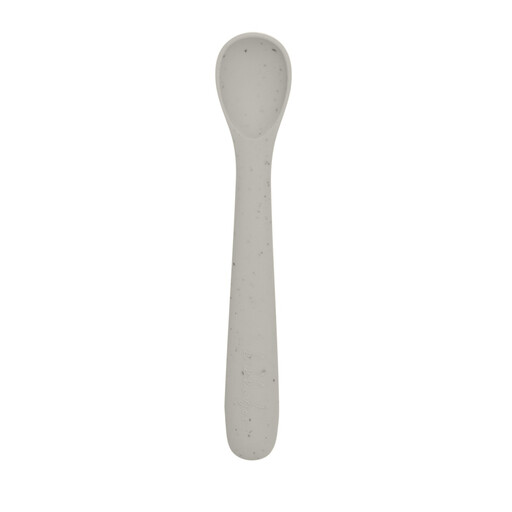
Why this product suits this profile: This individual spoon is intended for babies aged 6 months and over, making it suitable for starting complementary feeding without having to buy a larger set straight away.
The clear age recommendation and compact shape help avoid using cutlery that is too large for a baby’s first meals.
100% food-grade platinum silicone, BPA-free, 14.8 cm long and, according to the product information, suitable for the dishwasher, microwave and steriliser.
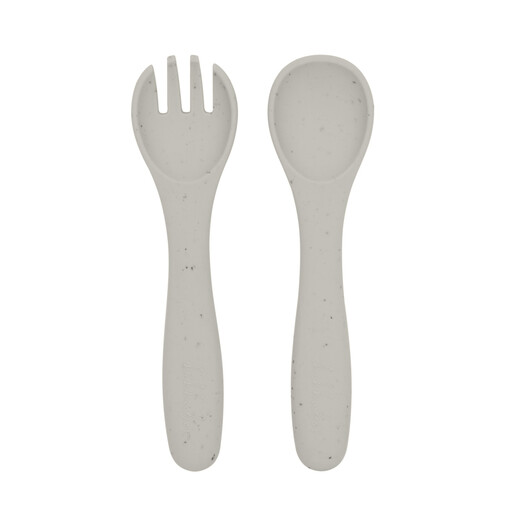
Why this product suits this profile: The spoon and fork are designed together for first eating attempts from 6 months and cover two typical uses.
The soft, flexible tips and documented material information are more specific than general terms such as “child-friendly”.
A set consisting of one spoon and one fork, made from 100% platinum silicone, BPA-free and, according to the product information, suitable for the dishwasher, microwave and steriliser.

Why this product suits this profile: According to the product information, this four-piece set is intended for children aged 12 months and over and includes two spoons and two forks.
The age recommendation helps prevent a larger stainless-steel set from being used too early for a younger baby.
18/10 stainless steel with PP handles, rounded spoons and blunt fork tines; according to the product description, dishwasher-safe and made in accordance with EN 14372.
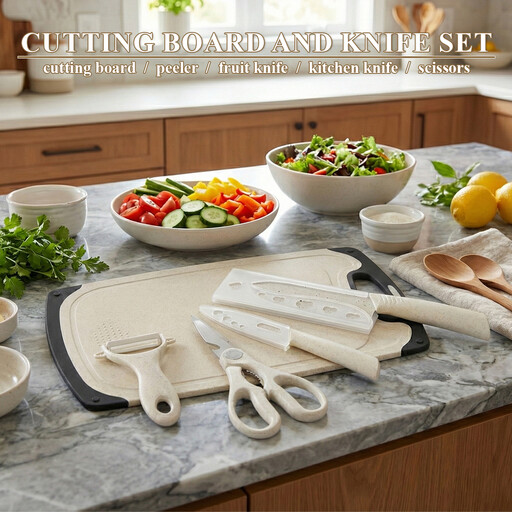
Why this product suits this profile: This set is aimed at families who regularly prepare meals for complementary feeding and Baby Led Weaning themselves.
It is not a replacement for baby cutlery, but complements a spoon and fork with a chopping board, peeler, scissors and knife with protective covers.
Five accessories for preparing soft foods; according to the product description, BPA-free PP and wheat straw fibre, plus a non-slip underside.
We have put together a complete, regularly updated list of products that fully meet these strict selection criteria and the safety regulations applicable in the EU.
Even an age-appropriate baby cutlery set should only be used under direct supervision. Your child should not walk, play or chew while holding the cutlery. Before every use, check for cracks, sharp edges, loose connections or damaged fork tines.
The temperature of food must be checked regardless of the material’s temperature resistance. Silicone in particular can become hot when used with warm food. Do not use abrasive cleaners or metal scourers if the manufacturer advises against them.
For getting started, short, lightweight spoons with a rounded edge and a small spoon bowl are suitable. A spoon-and-fork set can be useful if your child is already making their first attempts at eating independently. The age recommendation, handle size and the option of thorough cleaning are all important.
The useful life depends on the age recommendation, material and condition. A silicone spoon for complementary feeding can later be supplemented with stainless-steel children's cutlery. As soon as cracks, deformation, sticky areas or damaged connections appear, the affected piece should no longer be used.
Dishwasher safety makes cleaning easier, but it is not, on its own, proof of hygiene. Cutlery must be cleaned according to the care instructions, dried completely and stored in a clean place. Only dry cutlery should be kept in carry cases.