
Lieferung heute & morgen

Qualitätsgarantie

Willkommens-Angebote freischalten: KOSTENLOSE Lieferung | Bis zu 80 % RABATT | Kostenlose 30-Tage-JoyPlus-Testphase
App herunterladen
Choosing a baby doll can quickly become overwhelming with the sheer number of models and features available. Many products promise interactive fun, but not all deliver on their advertising claims. As a Joybuy Product Recommendation Officer, I'm here to filter the essential information for you, so you can make an informed decision and avoid disappointment. In this guide, we'll highlight common pitfalls and show you which criteria truly matter.
Some of the most common problems that arise during selection include:
To avoid a purchase you'll regret, you should check three key aspects. These will help you objectively assess a doll's quality and suitability.
The construction of the doll's body is crucial for both the play experience and safety.
For all materials, look for certification according to the European toy safety standard EN 71. This standard regulates mechanical properties and chemical safety, among other things.
A doll's complexity should match the child's developmental stage. For toddlers, a simple doll that encourages nurturing and role-playing is often sufficient. Older children (from around 3-4 years), on the other hand, often enjoy an interactive doll that can react to actions, speak, or cry. Check whether the functions are mechanical (e.g., activated by a pacifier) or electronic (battery-powered). Mechanical solutions are often more durable and allow for play in the bathtub.
A large doll ecosystem with doll clothes and a doll's pram can significantly enhance the play value. Before buying, find out if the doll has a standard size (e.g., 36 cm or 43 cm) for which a wide range of accessories from various manufacturers is available, or if you will be tied to brand-specific products. This prevents frustration and unexpected follow-up costs.
Here are some recommendations tailored to different age groups and play preferences.

Why This Fits Their Persona: Ideal for toddlers experiencing their first nurturing role-play scenarios. The soft body is perfect for cuddling, and the 36 cm size is easy for little arms to manage.
It intentionally omits complex, failure-prone electronics. The focus is on tactile feel and basic role-play, which makes it durable. The materials are designed for children from 12 months.
Soft-bodied doll with sleeping eyes; promotes empathy and care; includes a bottle for initial feeding games.

Why This Fits Their Persona: For children who want more interaction. This doll offers seven lifelike functions that make parent-child play more realistic, without relying on batteries.
The functions are purely mechanical, making it robust and even bath-safe. This bypasses the pitfall of short-lived electronics. A comprehensive accessory set is already included.
7 functions without batteries (incl. drinking, crying, potty); includes a starter accessory pack; fully posable and bath-safe.
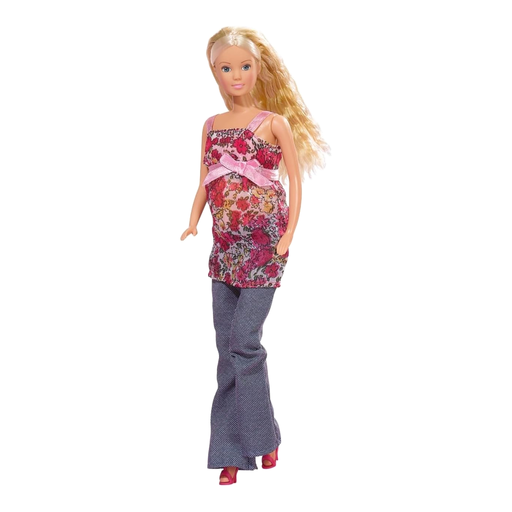
Why This Fits Their Persona: Perfect for children who love to invent complex stories. The doll is pregnant, and the baby can be removed from her tummy, enabling a unique, educational role-play about a new family member.
The play concept is based on a mechanical feature and the child's imagination, not on fragile electronics. It encourages creative storytelling rather than playing pre-recorded phrases.
Unique play concept with a pregnant doll and removable baby; promotes understanding of family dynamics; includes accessories for baby care.
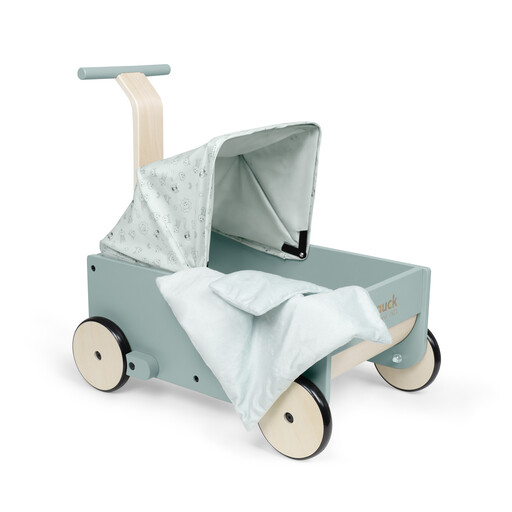
Why This Fits Their Persona: This accessory is more than just a toy. It combines a doll's pram with a sturdy baby walker, supporting children as they take their first steps while keeping their favourite doll with them.
Instead of flimsy plastic, this product uses durable, FSC-certified wood. The 2-in-1 function offers long-term value that goes beyond being just a toy.
Combines a baby walker and doll's pram; height-adjustable handle (grows with the child); adjustable brakes for added safety; rubber-coated, quiet wheels.
We've compiled a complete, up-to-date list of products that fully meet these strict selection criteria and European safety standards.
Simple soft-bodied dolls are suitable for children from one year of age. They serve as a cuddly companion and encourage early nurturing behaviours. Dolls with more functions or small parts, like an interactive doll, are generally recommended for children aged three and up, as their role-play becomes more complex and their motor skills are more developed for dressing and undressing doll clothes.
Dolls made entirely of plastic can often be cleaned with a damp cloth and mild soap. Some are even bath-safe. For a soft-bodied doll, usually only a surface wash is possible. Always check the manufacturer's instructions. Dolls with electronics must never be submerged in water. Cleaning should be done superficially with a slightly damp cloth, avoiding the battery compartment area.
Not always. Although many manufacturers offer common sizes like 36 cm or 43 cm, the body proportions of the dolls can vary. Clothing from brands like Baby Born often fits other dolls of a similar size, but there's no guarantee. The safest bet is to choose accessories from the same manufacturer or, if possible, test the clothing on the doll before buying.