
Lieferung heute & morgen

Qualitätsgarantie

Willkommens-Angebote freischalten: KOSTENLOSE Lieferung | Bis zu 80 % RABATT | Kostenlose 30-Tage-JoyPlus-Testphase
App herunterladen
A dummy can help soothe your baby, settle them to sleep and keep them calm when you’re out and about. But there’s more choice than you might think at first glance. Baby dummies differ in age range, teat shape, material, ventilation, what’s included and how they’re cleaned.
If you focus only on colours or well-known brands, you could miss important details. Here are three common buying pitfalls to watch out for:
A 0–6 month dummy is designed for younger babies. Models for 6–16 months, 6–18 months or 16 months and over are suited to different stages of development and the size specified by the manufacturer. The age range isn’t just a marketing detail: a dummy that’s too large or doesn’t fit properly may be uncomfortable.
Also check that the age recommendation is the same for every item in a set. For example, a gift set might include bottles for a certain age and dummies for babies aged 0–6 months. Check the details for each item before you buy.
With a silicone dummy, the teat’s composition is particularly important. Food-grade silicone is often described as easy to care for and tasteless. Claims such as BPA-free dummy or BPA-/BPS-free should apply to the specific product variant you’re considering.
The EN 1400 marking covers requirements for dummies for babies and young children. It’s a useful point of reference, but you should still check the dummy before every use. Gently pull the teat in different directions and throw it away if you notice cracks, a sticky surface, bite marks or other damage.
For sensitive skin, practical design features include enough space between the shield and your baby’s face, as well as ventilation holes. These won’t prevent every skin reaction. If redness persists, stop using the dummy and seek medical advice if needed.
A dummy with a sterilising box can be handy at home and when you’re out and about. Depending on the model, you add water to the box and then use it in the microwave according to the manufacturer’s instructions. Check the temperature afterwards and let the box and dummy cool completely.
For your daily routine:
Claims such as climate-neutral dummy or materials made from renewable resources relate to specific manufacturer statements. They shouldn’t be taken to mean that a product has no environmental impact at every stage of its life cycle.
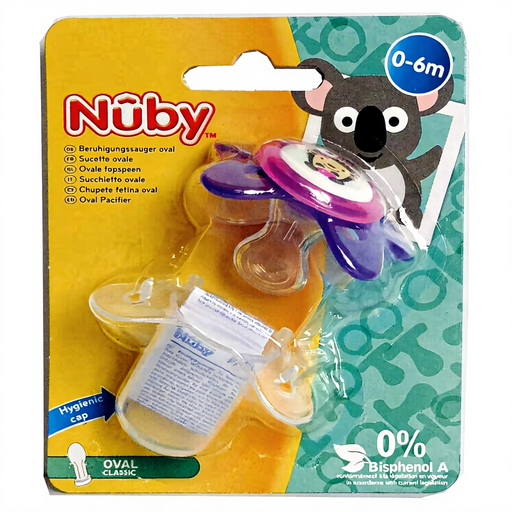
Why it suits this need: This single dummy is for parents looking for an age-appropriate option for babies from birth.
The 0–6 month age range and the silicone and polypropylene materials are clearly stated, making it easier to choose a dummy that’s right for your baby’s age.
Listed as BPA- and phthalate-free, with a butterfly shield featuring ventilation holes and suitable for steam sterilisation.
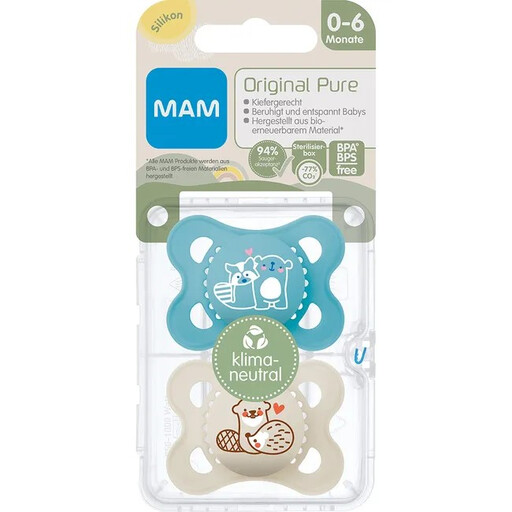
Why it suits this need: This two-piece set pairs a symmetrical teat with a sterilising and storage box for everyday use.
The set specifies the age range, material and compliance with EN 1400. The box can be used for storage and for sterilising the dummies according to the instructions.
SkinSoft silicone, listed as BPA-/BPS-free, a symmetrical flat teat shape and two dummies per pack.
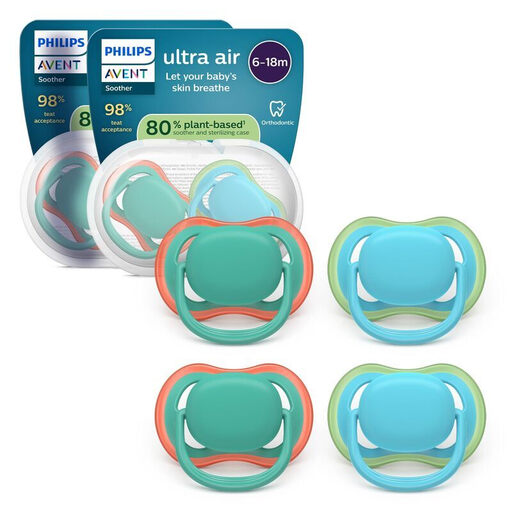
Why it suits this need: Four dummies and two sterilising containers make this set a practical choice for households that change dummies frequently, share childcare or go out regularly.
The product information specifies the 6–18 month age range, that it’s BPA-free, its large air holes and its reusable sterilising box.
Symmetrical silicone teat, pack of 4, two containers and, according to the product information, 80% plant-based materials in the hard plastic components.
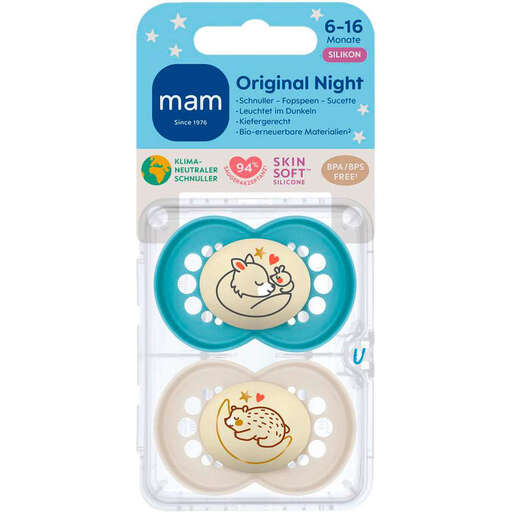
Why it suits this need: The luminous button is designed to help parents find a night-time dummy more easily in a darkened room.
The night-time feature is a specific product benefit, not a claim about sleep quality. The age range and cleaning instructions are also provided.
Luminous button, SkinSoft silicone, symmetrical teat shape, large air holes and a sterilising box in the two-piece set.
We’ve put together a complete, regularly updated list of products that meet these strict selection criteria and fully comply with the safety regulations in force in the EU.
It depends on the product, the condition of the material and the manufacturer’s instructions. Many product descriptions recommend replacing a dummy after around four weeks or one to two months. Replace it immediately if you notice visible damage, a sticky surface, cracks or bite marks.
Before first use, boil the dummy, steam-sterilise it or use a suitable sterilising box, following the instructions. If you’re using a microwave sterilising box, follow the product instructions for the amount of water, duration and wattage. Let the dummy cool before giving it to your child.
No. These terms describe the shape and design of the teat. You should also consider the right age range, whether your child accepts it, regular checks and responsible use over time. If you have questions about your child’s mouth or dental development, seek advice from a paediatrician or dentist.