
Lieferung heute & morgen

Qualitätsgarantie

Willkommens-Angebote freischalten: KOSTENLOSE Lieferung | Bis zu 80 % RABATT | Kostenlose 30-Tage-JoyPlus-Testphase
App herunterladen
Baby and educational toys should be fun, match the developmental stage and work reliably in everyday family life. Among toys for babies, motor skills toys and musical products, many offers look similar. What really counts, however, isn’t as many functions as possible or flashy marketing claims, but clear information on age, materials, cleaning and use.
As a Joybuy Product Recommendation Officer, I filter market information using practical selection criteria. That way, you can avoid typical misbuys.
The note “from 0 months” or “for 1 to 3 years” is only a first pointer. Also check:
An example of the importance of age labelling: The Sterntaler Heiko Play Figure looks like a soft baby toy with a rattle and easy-to-grip arms and legs. In the product data, however, it is listed for children aged 3 years and over. It therefore shouldn’t be chosen for a baby purely because of its soft surface.
An activity cube, baby activity centre or musical toy can combine several stimuli. That’s helpful when the functions are easy to operate. Too many lights, sounds and melodies can make daily life harder, especially if there’s no volume control.
With electronic sensory toys, look for:
Terms such as “BPA-free”, “non-toxic” or “CE” shouldn’t be viewed in isolation. The CE marking is a manufacturer’s declaration of conformity with relevant EU requirements and not an independent quality mark. Also check the manufacturer’s information, warnings and workmanship.
For wooden toys, for example, a note such as FSC-certified wood describes the source of the material. On its own, it doesn’t indicate whether the toy is suitable for every age group.
For babies from 0 to around 6 months, lightweight, easy-to-grip products with different textures are usually suitable. A soft crinkle book or a baby toy with a rattle can stimulate perception and first grasping, without promising any specific performance.
From around 6 months, rolling, pressing, turning and crawling become more interesting. Suitable examples include a baby activity centre, a ball or a flat play panel. For children from 12 months, simple sorting and shape games, Montessori toys or a wooden puzzle can make sense. The manufacturer’s age recommendation remains decisive.
A product must suit the available play space and your child’s size. With a standing toy, the feet or base should sit stably on the floor. Removable legs can be useful if a play table is initially to be used as a floor panel.
Small handles and buttons encourage independent exploration. Even so, the toy should be checked regularly for loose parts, cracks and damaged seams.
For a baby soft toy, cloth book or play doll, it’s important to know whether the product is machine-washable or only suitable for surface cleaning. Electronic toys usually need batteries; check whether they’re included and how the battery compartment is secured.
With musical toys for children, a volume control is a practical feature for flats, quiet times and shared family areas. It’s no substitute for appropriate supervision and shouldn’t be advertised as medical protection.
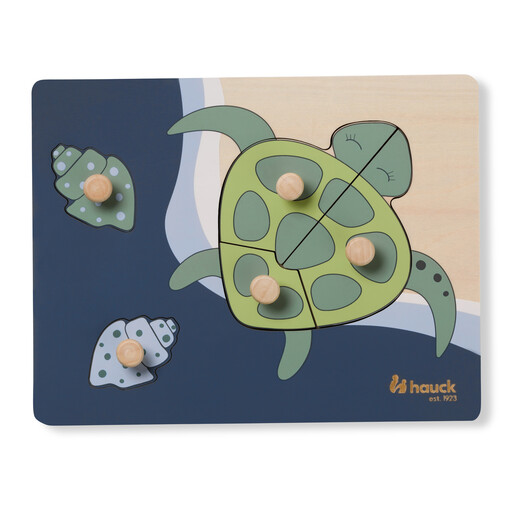
Why this product suits the profile: The wooden puzzle is intended for children aged 12 months and over and offers a straightforward play idea with no batteries or electronic extras.
The 12 months+ age limit and the warning for direct supervision are clearly stated. The pegs make it easier to remove the pieces, but they should still be checked regularly.
FSC-certified wood according to the product description, rounded edges and dimensions of approximately 22 × 17 cm.
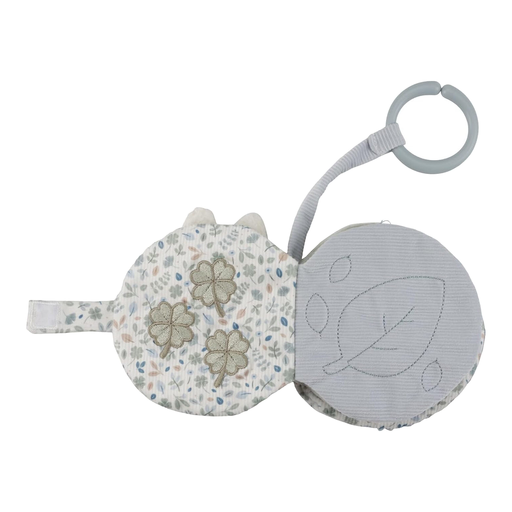
Why this product suits the profile: According to the product data, the soft activity book is suitable from birth and can be attached to a pushchair with a ring.
Crinkle paper, mirror and different sounds provide several play prompts. As the warnings also mention small parts, parents should follow the packaging information and offer the book under supervision.
100% polyester according to the product details, a low weight of around 10 g and wipe-clean care.

Why this product suits the profile: The compact cube bundles several activities, making it suitable for travel, waiting times or households with limited storage space.
The functions are spread across eight sides or play modes. The 1–3 years age label limits use appropriately; before each use, edges and moving elements should be checked.
Dimensions of approximately 23 × 23 × 24 cm, carry handle and, according to the product information, rounded edges and ABS plastic.
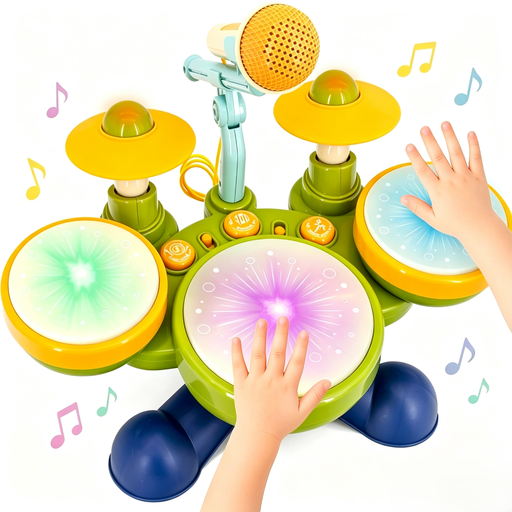
Why this product suits the profile: According to the product information, this musical toy is aimed at 1- to 3-year-olds and offers drum surfaces, cymbal, microphone and various sound modes.
The built-in volume control helps adjust the sound level to the room and situation. According to the product data, batteries are not included and need to be planned for separately.
ABS plastic, rounded edges, removable stand and adjustable volume, according to the manufacturer.
We’ve put together a complete, regularly updated list of products that fully meet these strict selection criteria and the safety regulations in force in the EU.
From 6 months, lightweight grasping toys, balls, cloth books and flat activity toys are suitable. What matters are an appropriate age rating, easy-to-grip shapes and the absence of freely accessible small parts. Toys should only be used under the supervision specified.
The length of use depends more on the developmental stage and the play concept than on the number of functions. A wooden puzzle can be used over a longer period if, at first, sorting is practised and later independent assembling. With electronic toys, volume, battery consumption and repeated melodies can affect day-to-day practicality.
For babies, soft, lightweight products such as an activity book or a simple grasping toy are often suitable. For children from 12 months, shape puzzles, motor skills toys and first musical instruments are obvious choices. Before buying, always check the age recommendation, warnings, materials, cleaning and the specific intended use.