
Lieferung heute & morgen

Qualitätsgarantie

Willkommens-Angebote freischalten: KOSTENLOSE Lieferung | Bis zu 80 % RABATT | Kostenlose 30-Tage-JoyPlus-Testphase
App herunterladen
The range of baby essentials for newborns and babies stretches from baby bottles and infant formula PRE to care products, baby carriers and hearing protection. At first glance, many products look similar. However, differences in age recommendations, teat size, cleaning methods or materials can make all the difference in daily use.
Three common buying mistakes frequently lead to the wrong purchases:
For baby items from birth, the age recommendation should match exactly when you plan to use them. For newborns, smaller bottles and a slow flow are usually most practical. The MiaMia Baby Bottle 140 ml is supplied, according to the product details, with a size S silicone teat suitable for breast milk, tea, water, PRE formula and stage 1 infant formula.
As your baby’s feeding volume increases, a larger capacity can be useful. The MiaMia Baby Bottle 260 ml also comes with a size S teat and is described as suitable from birth. However, a larger bottle does not automatically mean the teat should flow faster. What matters most are the manufacturer’s instructions and your baby’s drinking behaviour.
When it comes to bottle teats, parents should look out for the following:
For many families, BPA-free baby products are an important benchmark. You should also check the material details, care instructions and whether the product is suitable for the dishwasher, sterilisation or microwave.
According to the product details, MiaMia bottles are made from BPA-free polypropylene and silicone. The bottle and teat are dishwasher-safe and can be sterilised. The bottle body is microwave-safe, but without the ring, cap and teat. In contrast, the Chicco NaturalFeeling Baby Bottle 150 ml is explicitly stated as not suitable for the microwave.
So before you buy, it is worth checking:
An anti-colic baby bottle may feature a valve or a special teat design. Such systems alter the air intake during feeding, but they are no substitute for the correct teat size, proper assembly and an upright feeding position.
A wide bottle neck makes filling and cleaning easier. A clearly readable scale helps you keep track of how much your baby has drunk. With sets that include dummies or extra teats, check whether all the parts actually fit your daily routine.
The same principles apply to care products: baby wipes should suit your child’s skin tolerance and should not be seen as the only solution for every clean-up. According to the product details, Pampers Sensitive Baby Wipes contain no alcohol or perfume. HiPP Baby Soft Wipes are suitable from birth but do contain perfume. If your baby has sensitive skin, it may be wise to test them on a small area first. If redness or irritation occurs, stop using them.
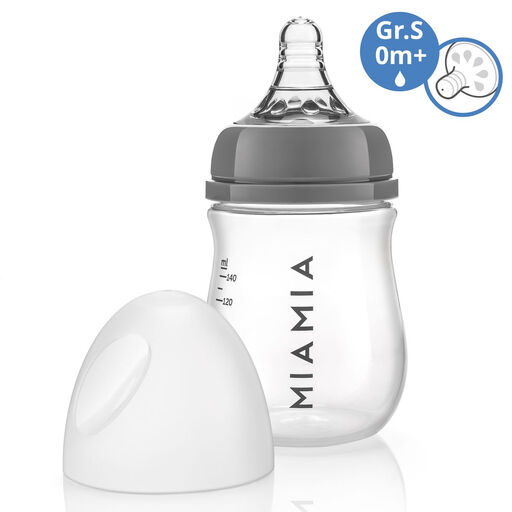
Why this product fits the profile: The compact size is ideal for small feeding volumes and works well as an extra baby bottle for combined breastfeeding and bottle feeding.
The age recommendation, 140 ml capacity and size S teat are clearly stated. This makes it easier to match your choice to the early feeding stage.
BPA-free PP and silicone, wide bottle neck, dishwasher-safe and sterilisation-compatible according to the product details.
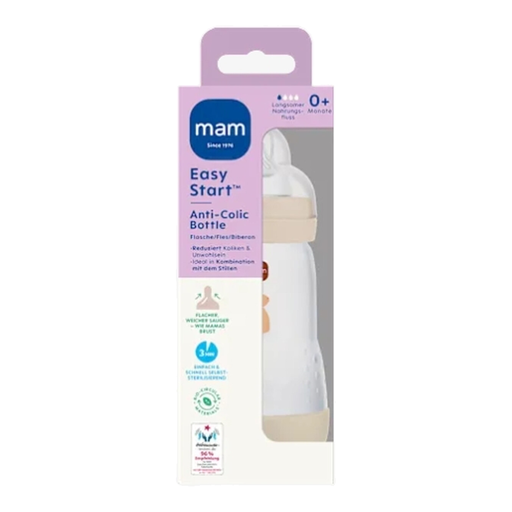
Why this product fits the profile: The 260 ml bottle from birth is aimed at families looking for an anti-colic baby bottle with a slow flow and multiple cleaning options.
The bottle must not be cleaned as a fully sealed unit. The manufacturer’s instructions require all individual parts to be disassembled.
260 ml capacity, slow flow, silicone teat and top-rack dishwasher cleaning according to the product description.
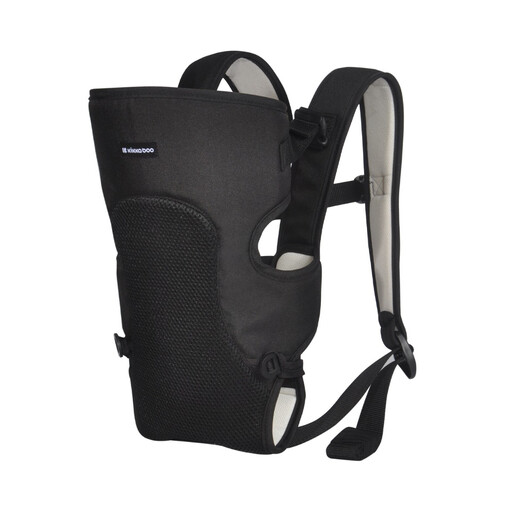
Why this product fits the profile: For trips around town or on the go, this baby carrier offers three carrying positions within the stated age and weight limits.
Use is limited to approximately 3 to 12 months and a maximum of 9 kg. This prevents you from using the carrier for too long just because it offers versatile positions.
Breathable mesh, padded shoulder straps, buckle system and compliance with EN 13209-2 according to the product details.
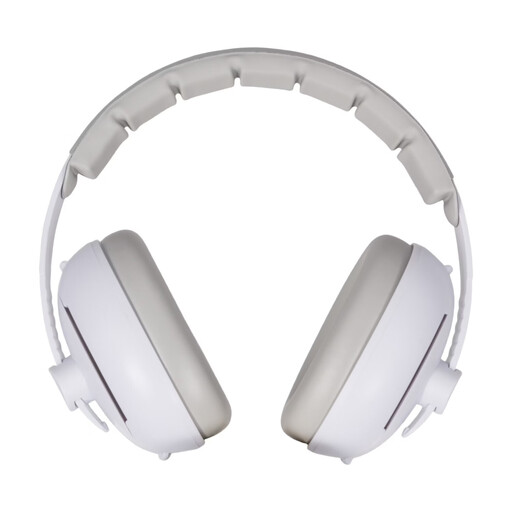
Why this product fits the profile: The interchangeable headbands are ideal for families who want hearing protection for their baby and later for their toddler.
The stated usage range and standard EN 352-1:2020 provide clear guidance. The hearing protection must not be used in situations where ambient sounds are safety-critical.
Weight of 119 g, adjustable headband and, according to the product details, a noise reduction rating of 27 dB.
We have put together a full, regularly updated list of products that fully meet these strict selection criteria and the safety regulations in force in the EU.
Infant formula PRE can, according to the product details, be used from birth for exclusive bottle feeding or as a supplement to breastfeeding. With Bebivita PRE First Milk from Birth 500 g, the carbohydrate source is, according to the product description, exclusively lactose; the pack also lists DHA as an ingredient in line with current regulations for infant formula.
When preparing formula, parents should always follow the instructions on the pack. This includes freshly boiled drinking water, the specified cooling temperature, precisely levelled scoops and checking the feeding temperature. If you have any questions about feeding, discuss the decision to use infant formula with your midwife, paediatrician or hospital.
A suitable bottle is one that the manufacturer explicitly states is suitable from birth and that comes with a slow-flow teat. Also important are the capacity, material, cleaning method and compatibility of the teat, ring and cap.
That depends on whether you are exclusively breastfeeding, exclusively bottle feeding or doing a combination. For occasional bottle feeds, a small selection of two to three bottles may be enough. If you are using bottles frequently, you should also factor in the time needed for cleaning and sterilising.
There is no fixed lifespan that applies to all models. Bottle teats and dummies should be checked before every use and replaced if they show signs of cracks, stickiness, discolouration, warping or other damage. Even if the material appears undamaged, always follow the manufacturer’s own guidelines.