
Lieferung heute & morgen

Qualitätsgarantie

Willkommens-Angebote freischalten: KOSTENLOSE Lieferung | Bis zu 80 % RABATT | Kostenlose 30-Tage-JoyPlus-Testphase
App herunterladen
Baby feeding accessories support families through several developmental stages: from the first baby bottle through breastfeeding to weaning. The choice is vast, yet product names like "anti-colic", "premium silicone" or "extra hygienic" alone tell you little about how they perform in daily life. What really matters are clear details about materials, age suitability, cleaning and safe use.
A dummy for newborns isn't automatically suitable for an older baby. The same applies to bottle teats, where teat size and flow rate differ. A flow that's too fast can make drinking awkward, while a teat that's too slow can prolong mealtimes. When choosing, always make sure the age recommendation and the specific teat stage work together.
An anti-colic baby bottle usually has a valve or ventilation system. This is designed to reduce air intake during feeding. However, no general medical effect can be inferred from this. Parents should check how many parts need cleaning, whether the system can be assembled correctly, and if replacement teats are available.
A product may seem practical at first glance, but hard-to-reach corners, many individual parts or limited dishwasher suitability can create extra work. Especially with baby bottles, teats and pump accessories, a fully disassemblable design is important. With silicone bibs and baby bibs, on the other hand, quick cleaning, dry storage and a secure fastening matter most.
For products that come into direct contact with food or the mouth, clear material information is essential. Commonly used materials include polypropylene, silicone or polyester. With BPA-free baby accessories, the product description should explicitly state BPA-free. Additional details such as PVC-free or phthalate-free can be helpful for bibs and toddler tableware.
For baby bottles and teats, you should also look out for relevant standards. Some products are marked, for example, to EN 14350 for drinking products for infants and young children, or to EN 1400 for dummies. The standard doesn't replace the instruction manual, but it does offer a reliable point of reference.
Before buying, you should know whether an item:
A bottle cleaning brush with separate teat and straw attachments can be practical for families with several bottles. With a bottle warmer, automatic shut-off, temperature control and suitability for different bottle materials are important technical details. Always check the milk temperature before feeding.
During breastfeeding, a colostrum collector or containers for breast milk storage can be useful. Here, capacity, closure, cleaning and storage instructions should all work together. For weaning from around six months, an easy-to-grip baby spoon, a washable bib and possibly a complete baby feeding set are typical essentials. The manufacturer's age recommendation remains the key guide.
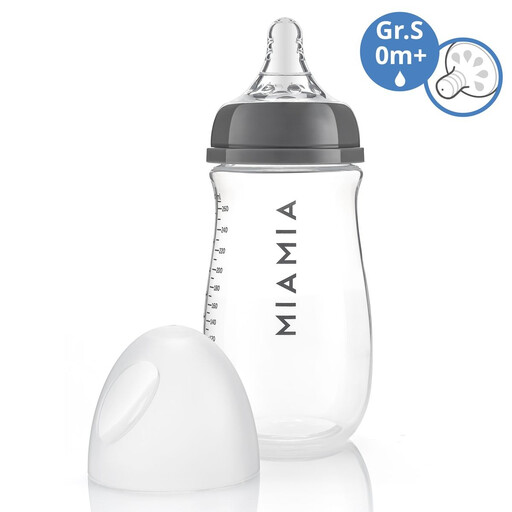
Why this product fits the profile: The 260 ml baby bottle is designed for feeding from birth and can be used for breast milk, water and infant formula. The wide neck makes filling and cleaning easier.
The product details clearly state the material, capacity, teat size and cleaning instructions. This makes it easier to assess ongoing care requirements before buying.
BPA-free PP and silicone; dishwasher-safe and sterilisable according to product information.
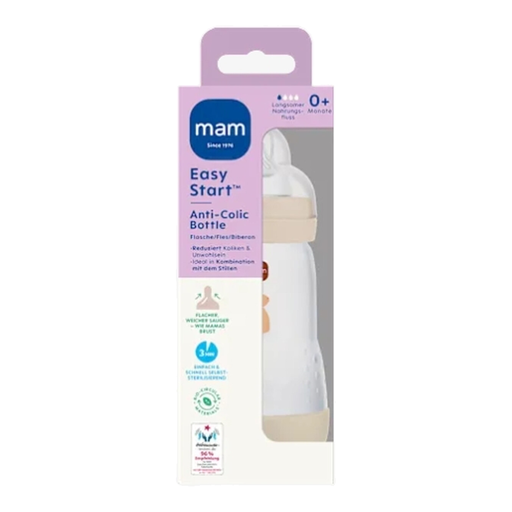
Why this product fits the profile: The anti-colic baby bottle features a slow-flow teat and a ventilation system. It's ideal for families who want to combine bottle and breastfeeding.
The description highlights the need for full disassembly for cleaning and the slow milk flow. This means important care and fit questions aren't replaced by general marketing claims.
260 ml capacity; dishwasher-safe parts and sterilisation options according to manufacturer instructions.

Why this product fits the profile: This set is designed for households with several bottles, teats or breast pump parts, as well as families who are frequently on the go.
Multiple brush attachments and a foldable drying stand address hard-to-reach areas and impractical drying. All parts must be completely dry before storage.
Brushes for bottles, teats and straws; carry case and integrated drying stand.
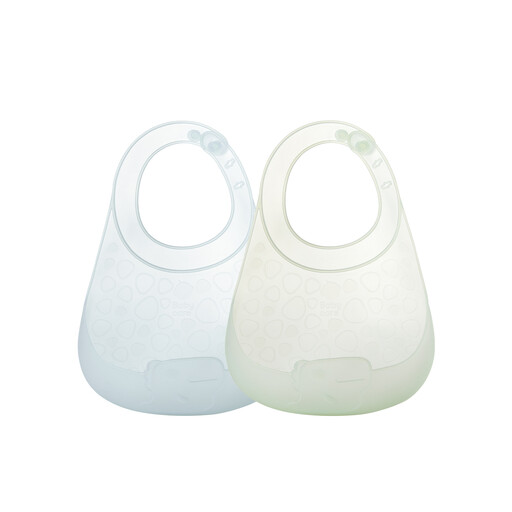
Why this product fits the profile: This two-piece silicone bib set is recommended from six months according to the product details, and features an adjustable fastening and a catch pocket.
The details state the material, age range, care and fastening. This makes it easier to check whether the bib suits your weaning situation and preferred cleaning method.
Food-grade silicone; BPA-, PVC- and phthalate-free according to the product description; dishwasher-safe.
We've put together a complete, regularly updated list of products that fully meet these strict selection criteria and the safety regulations in force in the EU.
To get started, you'll usually need a baby spoon, a well-fitting baby bib or silicone bib, plus suitable bowls and drinking cups. A catch pocket on the bib can reduce cleaning effort. Make sure the age recommendation is appropriate and always supervise your baby during mealtimes.
Baby bottles, teats and dummies for babies should be checked before each use for cracks, deformation, sticky spots or other damage. For dummies, manufacturers often recommend replacement after one to two months; if you spot any visible damage, replace them immediately. Always follow the instruction manual and assess the product's condition.
A bottle warmer can be practical if you regularly heat breast milk or infant formula. Before buying, check the capacity, compatible bottle shapes, automatic shut-off and cleaning effort. Even with automatic temperature control, always test the drinking temperature before each feed.