
Lieferung heute & morgen

Qualitätsgarantie

Willkommens-Angebote freischalten: KOSTENLOSE Lieferung | Bis zu 80 % RABATT | Kostenlose 30-Tage-JoyPlus-Testphase
App herunterladen
The transition to solid foods is a significant milestone for your baby and for you as parents. With the desire to encourage independent eating, the search for the perfect baby's first cutlery set begins. But the market is flooded with products whose marketing promises often create more confusion than clarity. Many parents invest in sets that quickly prove to be impractical or even unsuitable.
As your Joybuy Product Recommendation Officer, I'm here to help you avoid common purchasing pitfalls. We'll focus on the objective criteria that truly matter, so you can make an informed decision for your baby's first utensils.
Before we dive into the important features, let's look at three common problems that can lead to frustration for both child and parent:
Choosing the right weaning cutlery isn't about bright colours, but about thoughtful design and material-specific properties.
To avoid the issues mentioned above, you should focus on three core parameters when making your choice. These form the basis for a safe and developmentally supportive eating experience.
The material is the most critical factor. BPA-free baby cutlery is standard today, but that alone is not enough. The texture of the material that comes into direct contact with the mouth is just as important.
A toddler cutlery set for self-feeding must be adapted to a baby's motor skills.
In addition to being suitable for your baby, the cutlery should also make parents' daily lives easier.
Instead of making a one-size-fits-all recommendation, we have identified products tailored to the specific needs of parents and children.

Why this set is a great fit: Ideal for the very first attempts at self-feeding. The combination of soft material and thoughtful ergonomics provides optimal support for babies from 6 months onwards, without overwhelming or frustrating them.
The soft silicone tips are gentle on gums (avoids pitfall 1). The short, textured handle is designed for a palmar grasp, preventing frustration (avoids pitfall 2).
The set includes a practical travel case, ensuring hygiene on the go. The materials are declared as BPA-free.
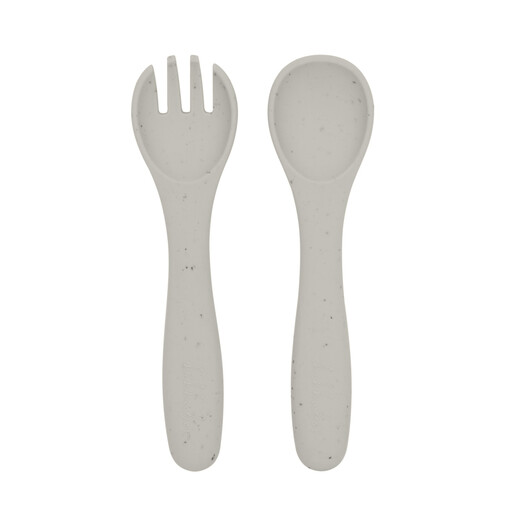
Why this set is a great fit: For parents who value a premium material feel and a modern, minimalist design. This set combines functionality with an appealing aesthetic.
According to the manufacturer, the set is made of 100% platinum silicone, a very pure and durable material. It is soft and flexible, thus avoiding the pitfall of hard materials (pitfall 1).
Its high temperature resistance (from -40°C to 230°C, according to the manufacturer) makes it versatile and suitable for the dishwasher, microwave, and steriliser.
We have compiled a complete, up-to-date list of products that fully meet these strict selection criteria and safety regulations.
A baby cutlery set from 6 months is generally suitable as soon as you start introducing solid foods. Initially, your baby will likely explore the cutlery playfully. The targeted use for independent eating usually develops between 10 and 18 months. Early, pressure-free interaction encourages curiosity and motor skill development.
Most high-quality silicone cutlery is dishwasher-safe. For manual cleaning, use warm water and a mild washing-up liquid. Rinse off all soap residue thoroughly and let the cutlery air dry. Avoid aggressive cleaning agents or abrasive sponges, as they can damage the material. Always follow the manufacturer's care instructions.
Look for the “BPA-free” or “Bisphenol A-free” label on the product packaging or in the product description. Reputable manufacturers also state that the product is made of “food-grade silicone.” Inspect the cutlery for cracks or damage before each use. A seamless, single-piece design with no small parts minimises the risk of components breaking off.