
Lieferung heute & morgen

Qualitätsgarantie

Willkommens-Angebote freischalten: KOSTENLOSE Lieferung | Bis zu 80 % RABATT | Kostenlose 30-Tage-JoyPlus-Testphase
App herunterladen
Buying baby food online might seem straightforward at first: jars, porridges, fruit purées and snacks are sorted by month and often labelled with terms like “organic”, “no added sugar” or “handy for on the go”. However, these claims are no substitute for checking the ingredients list, consistency and how the product is used.
Three common buying mistakes frequently lead to unsuitable products:
Weaning food from 5 months usually consists of finely puréed fruits or softly prepared milk and cereal porridges. Weaning food from 6 months often includes combinations with oats, spelt or vegetables. Products for baby food from 8 months can already have a slightly more textured consistency, which helps with gradually learning to chew.
The age recommendation on the packaging is the key guide. With individual items, the product name and description may differ. For example, HiPP Kids’ Muesli Berries is listed in the product name as “from 10 months”, but the description says “from 12 months”. In such cases, the current packaging information should take priority.
“Baby food with no added sugar” means that no household sugar or sweetening juice concentrate has been added. The natural sugar from apples, pears, bananas or berries remains in the nutritional information table. According to the product details, a Bebivita apple and pear purée consists of 100 % fruit and contains 11.0 g of sugar per 100 g.
With baby cereal porridge and baby milk porridge, allergens are also important. Wheat, oats, spelt, barley and rye contain gluten. Milk, yoghurt and whey products must also be considered. If you know of any allergies or there is a family history, you should read the ingredients list on every pack, even if the recipe appears unchanged.
For occasional meals, 100 g pots or individual pouches are practical. Multipacks such as 6 × 190 g or 8 × 100 g can be easier to plan for families with regular needs. However, once opened, short consumption periods apply: depending on the product, any leftovers should be stored in the fridge and used the next day or within two to three days.
With powdered porridges, preparation is key. Water must be heated according to the pack instructions and then cooled to the specified temperature. The meal should be freshly prepared with a clean spoon. Porridges should not be put in a baby bottle. Checking the temperature protects against scalding; microwaves can cause uneven heating.
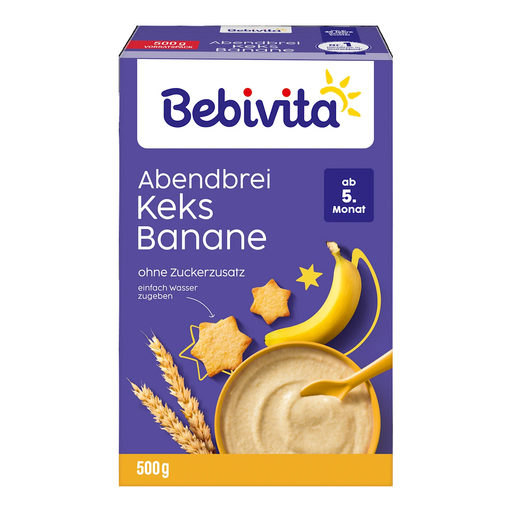
Why this product fits the profile: The 500 g bulk pack is suitable for families looking for a straightforward baby evening porridge from 5 months. It is prepared simply by adding water.
The information explicitly states no added sugar or sweetening juice concentrates. The natural sugar from the ingredients still remains.
Preparation with water, 500 g pack, plus declared amounts of calcium, iron and vitamin D.
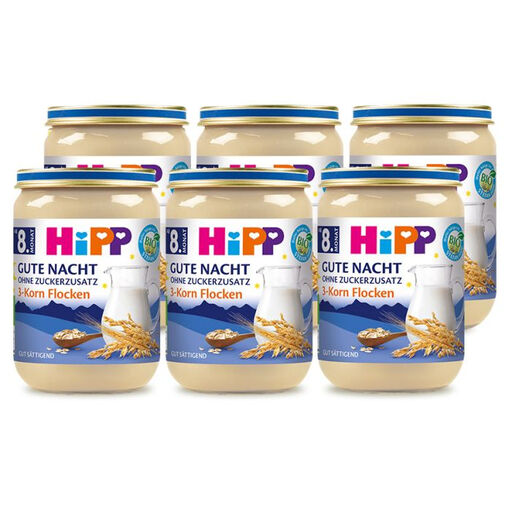
Why this product fits the profile: The multipack with 6 × 190 g is aimed at households that prefer organic baby food for a regularly planned evening meal.
The ingredients list identifies milk, wheat and oats as allergens. This allows you to match the selection to your family’s dietary situation before buying.
Organic ingredients according to the product information, three types of grain and 190 g portions; suitable from 8 months.
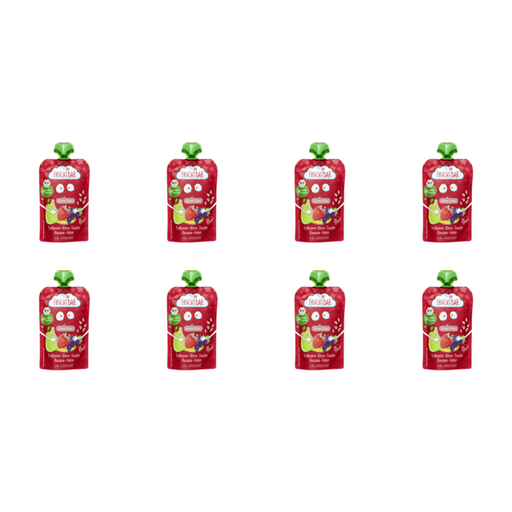
Why this product fits the profile: The 8 × 100 g pouches are ideal for days out, nursery bags or situations without a kitchen. The product is intended from 6 months.
The ingredients are clearly listed: pear purée, grape juice, strawberry, banana and 4 % oats. “No added sugar” is not confused with being sugar-free.
Organic certification according to the product information, resealable pouch and 77 kcal with 12.0 g sugar per 100 g.
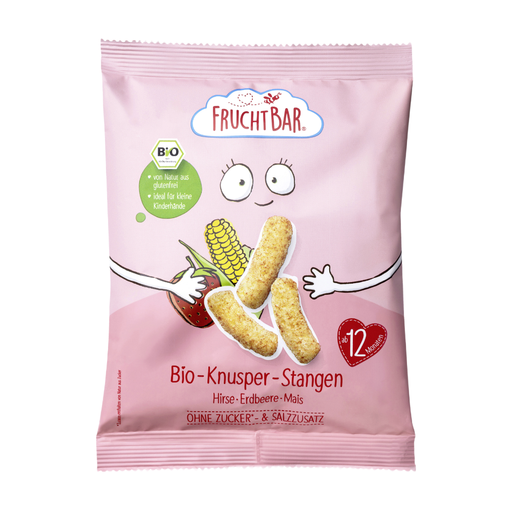
Why this product fits the profile: According to the product information, this snack is intended from 12 months and makes a great addition to toddler snacks for on the go or between meals.
The information states no added sugar and no added salt. Because of the crunchy texture, your child should be sitting down and supervised while eating.
60 % millet, 26 % maize semolina and 6 % strawberry powder according to the ingredients list; gluten-free according to the product description.
For a gentle start, finely puréed varieties such as baby fruit purée made from apple and pear are ideal. For older babies, fruit and cereal combinations or a baby cereal porridge with oats are good options. From toddler age, muesli, spelt sticks and other snacks for babies or toddlers become suitable. Products containing milk, yoghurt, wheat or spelt should always be checked for potential allergens.
When choosing organic baby food, look for the EU organic logo, the inspection body number and a traceable ingredients list. However, an organic seal does not automatically mean a product is suitable for every age, dietary plan or allergy profile.
We’ve put together a complete, regularly updated list of products that fully meet these strict selection criteria and the safety regulations in force in the EU.
This depends on your baby’s individual readiness for weaning. Generally, products whose packaging explicitly states use from 5 months are suitable, such as finely puréed fruits or certain milk and cereal porridges. New ingredients should be introduced gradually.
This varies depending on the product type. Opened fruit pots and porridges are usually stored in the fridge and consumed within 12 hours to three days. Dry products should be kept tightly sealed and dry after opening, and used within the stated period. The manufacturer’s instructions on the packaging are the key guide.
Pouches can be handy when you’re out and about. However, they should not be sucked on continuously, as frequent contact between fruit purée and teeth can encourage tooth decay. It’s better to serve the purée on a spoon. Children must always be supervised while eating.