
Lieferung heute & morgen

Qualitätsgarantie

Willkommens-Angebote freischalten: KOSTENLOSE Lieferung | Bis zu 80 % RABATT | Kostenlose 30-Tage-JoyPlus-Testphase
App herunterladen
Choosing the right baby food can be a challenge for parents. The selection is vast, labels are often confusing, and the marketing claims all sound convincing. As a Joybuy Product Recommendation Officer, I see it as my duty to help you navigate the sea of information and make informed decisions for your child's nutrition. In this guide, we'll highlight three common pitfalls and show you what really matters when selecting baby purées and complementary foods.
Many well-intentioned purchases turn out to be less than ideal in hindsight. This is often due to clever marketing that distracts from the actual product characteristics. Here are three points you should pay attention to:
To find the right food for your child, you should focus on objective criteria. The following three aspects will help you quickly assess a product's quality.
The ingredients list is arranged in descending order by weight. If water or a sweet fruit is listed first, it is the main component. Look for a balanced mix of vegetables, grains, and high-quality proteins.
The start of complementary feeding is an important developmental milestone. The texture of the food should be adapted to your child's abilities.
In Germany, the EU organic logo and the German organic seal guarantee compliance with the EU regulation on organic production. Some manufacturers go a step further with grower associations like Demeter or Bioland and are subject to stricter guidelines. These seals represent a specific agricultural practice but do not replace the need to check the ingredients list.
Based on these objective criteria, we have compiled some products for different requirement profiles.
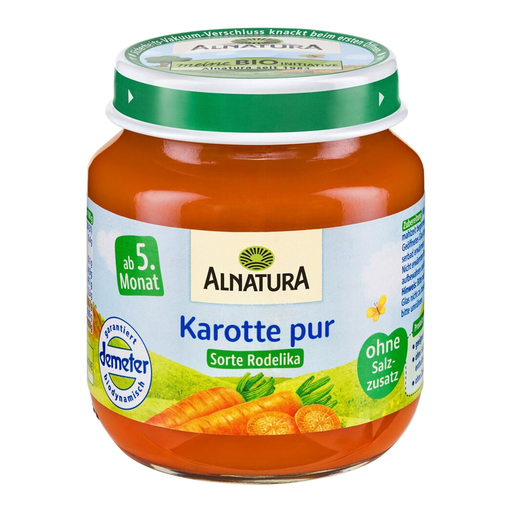
Why This Fits Their Persona: Ideal for parents who are starting to wean and want to introduce a pure, unadulterated vegetable. The simple recipe makes it easy to specifically monitor tolerance.
This product avoids the "no added sugar" trap as it consists of only two ingredients: carrots and water. The low natural sugar content comes exclusively from the vegetable.
Demeter quality that goes beyond EU organic standards. Finely puréed and with no added salt, it's perfect for the first attempts with a spoon.
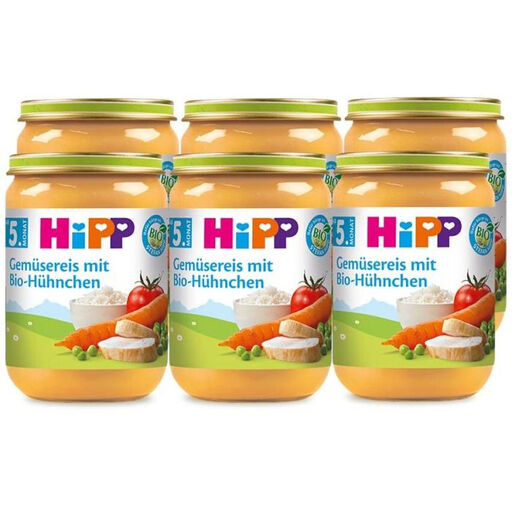
Why This Fits Their Persona: For parents looking for a time-saving, yet complete and balanced meal. The multipack offers convenience and ensures a quick option is always on hand.
This menu disproves the "organic fallacy." It's not just organic but also nutritionally well-designed: it contains valuable rapeseed oil with omega-3 fatty acids and is a complete meal.
A complete meal with vegetables, rice, and meat. No added salt and gluten-free. The convenient 6-pack is ideal for stocking up.
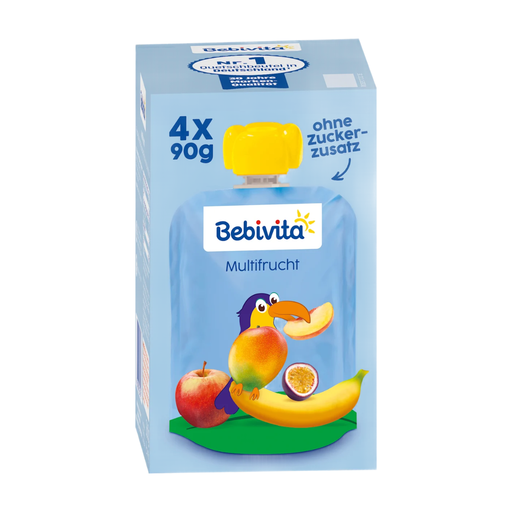
Why This Fits Their Persona: Perfect for active families with toddlers from 1 year old. The resealable pouch is a clean and simple solution for small hunger pangs on outings or while travelling.
The product is made of 100% fruit and has no added sugar. It is clearly positioned as a snack for toddlers, which helps parents use it consciously and not as a constant meal replacement.
100% fruit, gluten-free, and with no added sugar. The practical, resealable pouch is easy to handle and ideal for a child's independence.
We have compiled a comprehensive, up-to-date list of products that meet these strict selection criteria.
Once opened, any unheated remainder from the jar should be kept sealed in the refrigerator. Most manufacturers recommend consuming the contents within 24 to 48 hours. Always refer to the specific information on the product label. For hygiene reasons, any leftovers that have already been heated should not be reused.
Yes, mixing different varieties is a great way to provide variety or gently introduce new flavours. For example, you can mix a pure vegetable purée with a little fruit purée to increase acceptance. Make sure to only combine varieties whose individual ingredients your child is already familiar with and tolerates well.
Squeezy pouches are a safe and practical option, especially for on the go. However, it is recommended to squeeze the purée onto a spoon or let the child spoon-feed themselves under supervision. Constant sucking on the spout can impair the development of chewing muscles and increase the risk of tooth decay. As with all snacks, the key is to enjoy them in moderation.