
Lieferung heute & morgen

Qualitätsgarantie

Willkommens-Angebote freischalten: KOSTENLOSE Lieferung | Bis zu 80 % RABATT | Kostenlose 30-Tage-JoyPlus-Testphase
App herunterladen
Choosing the right baby food can be a challenge for parents. The selection is vast, and packaging is filled with promises like "organic," "no added sugar," or "especially nutritious." As a Joybuy Product Recommendation Officer, my job is to help you see through these marketing messages and make an informed decision. In this guide, we'll focus on the facts so you can find the right food for your child without falling for empty advertising claims.
Before we dive into the important selection criteria, let's highlight two common marketing traps that often lead to poor purchasing decisions.
1. The "No Added Sugar" Trap: The phrase "no added sugar" is found on many products. However, it simply means that no granulated sugar (sucrose) or syrup has been added. Products can still have a high sugar content from fruit juice concentrates, fruit purées, or other sweetening ingredients. A look at the "of which sugars" line in the nutrition table is therefore essential to assess the actual sugar content.
2. Age Recommendation as the Sole Criterion: Labels like "baby porridge from 6 months" are intended as a guide. However, every child develops at their own pace. Some babies show interest in solid foods earlier, others later. The official recommendation is to start with solid foods no earlier than the beginning of the 5th month and no later than the beginning of the 7th month. More important than a rigid age guideline are your child's individual signs of readiness, such as the ability to sit upright with support and hold their head up independently.
To find the right baby food, three core parameters are crucial. These will help you objectively assess a product's quality.
The order of ingredients indicates which are most prevalent in the product. For a vegetable purée, vegetables should be listed first, not water or starch. Look for a short and understandable ingredient list.
The nutrition table provides the unvarnished facts. Focus on the following values per 100 g:
Each format has its place and ideal use case.
Here are some product recommendations tailored to the different needs of parents and children.
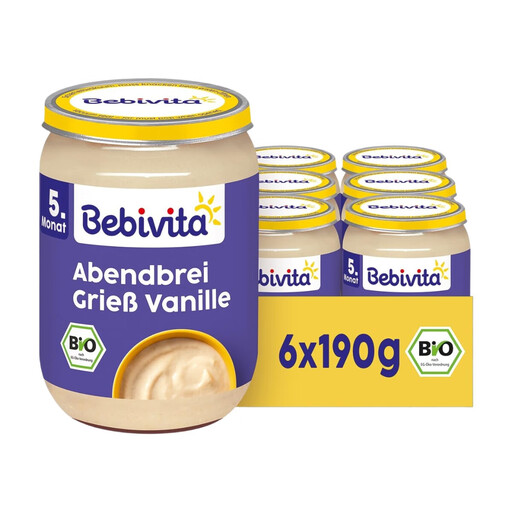
Why it's a great choice: For parents starting with solid foods, this ready-to-eat baby food jar offers a straightforward and reliable option. The mild taste and creamy consistency are ideal for the first introduction to porridge meals.
The product is certified as organic baby food and contains no added sugar. The sugar content of 2.5 g per 100 g comes exclusively from the milk and cereal, which avoids the "no added sugar" trap.
Ultimate convenience with its ready-to-eat format in a jar. Fortified with Vitamin B1, which is required by law for cereal-based complementary foods.
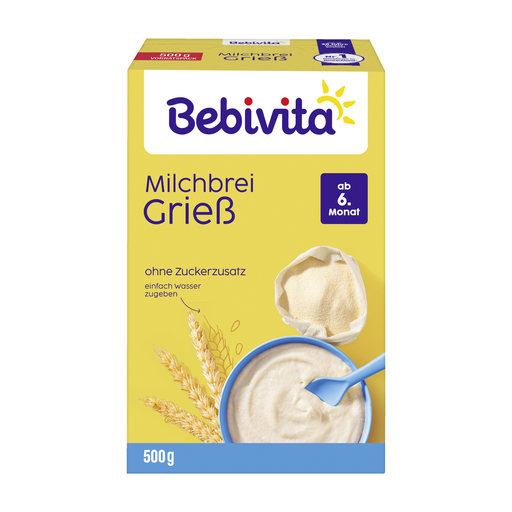
Why it's a great choice: This powdered milk porridge is ideal for parents who want to freshly prepare a filling evening meal. Preparation with water is simple, and the portion size can be adjusted to the child's appetite.
The product contains no added sugar or sweetening juice concentrates. Control over the preparation ensures that no extra sweet ingredients are added, which bypasses the trap of rigid age recommendations as the consistency can be adjusted.
Flexible preparation and fortification with important nutrients like calcium, iron, and vitamin D to support development.
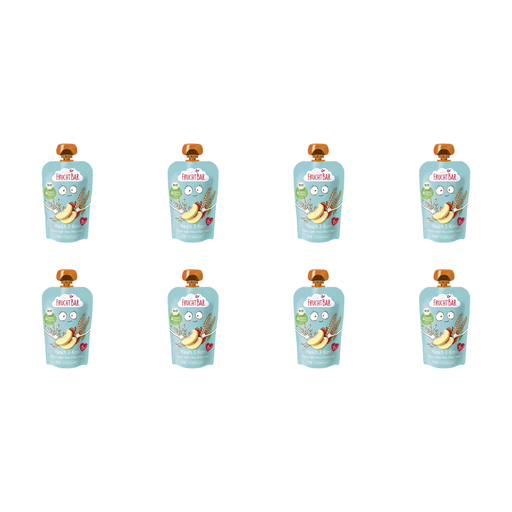
Why it's a great choice: This pouch is a great choice for active families. The resealable packaging is ideal for outings. The combination of fruit and grains (oats, spelt, millet) makes it more filling than a pure fruit purée.
Although it is a fruit product, it contains no added sugar. The sugar content of 9.4 g per 100 g comes exclusively from the fruits. The addition of grains provides extra fibre and nutrients.
Organic quality in convenient, resealable packaging. Free from any additives for a pure taste.
We've compiled a complete, up-to-date list of products that fully meet these strict selection criteria and German regulations.
1. When is "no added sugar" baby food actually low in sugar? The term "no added sugar" excludes added table sugar, but not the sugar naturally present in fruits or milk. To identify a low-sugar product, check the nutrition table. A value below 5 g of sugar per 100 g is considered low for a fruit or milk product. For pure vegetable purées, the value should be significantly lower.
2. How long does an opened baby food jar or prepared baby porridge last? A freshly prepared porridge should be fed immediately and any leftovers discarded. Opened baby food jars can be sealed and stored in the refrigerator and should generally be used by the next day. Always follow the manufacturer's specific instructions on the packaging. Warmed-up leftovers should not be reheated or stored.
3. Are pouches a complete meal? No, pouches are designed as an in-between snack for on the go. They do not replace a complete, balanced meal like a vegetable, potato, and meat purée or a milk and cereal porridge. Due to their often higher fruit sugar content and liquid consistency, they should be offered consciously and in moderation, ideally from a spoon to avoid constant sucking.