
Lieferung heute & morgen

Qualitätsgarantie

Willkommens-Angebote freischalten: KOSTENLOSE Lieferung | Bis zu 80 % RABATT | Kostenlose 30-Tage-JoyPlus-Testphase
App herunterladen
By Joybuy Product Recommendation Officer, August 29, 2026
Choosing the right baby food can be a daunting task for parents. The shelves are filled with a vast array of products, all promising a healthy and nutritious meal for your child. But behind the colourful labels and marketing claims, there are often pitfalls that can lead to the wrong purchasing decision.
This guide is designed to help you distinguish important information from mere marketing buzz. We'll highlight the most common stumbling blocks and show you which objective criteria truly matter when selecting baby purées, baby food jars, and pouches.
The 2 Most Common Traps When Buying Baby Food:
To make an informed decision, you should focus on verifiable facts. The following three parameters are crucial for the quality and suitability of ready-made baby food.
The ingredients list is ordered by quantity: whatever is listed first is the most abundant ingredient. For a vegetable purée, the vegetable should be listed first, not water. When looking for baby food with no added sugar, don't just rely on the marketing claim; check the ingredients list for terms like glucose syrup, fructose, or juice concentrates. The "of which sugars" value in the nutrition table indicates the total sugar content, including naturally occurring sugars from fruits and vegetables. A low salt content is also a mark of quality.
The texture of the food plays a vital role in the development of oral motor skills.
Each product type has its specific use cases.
Here are some product recommendations tailored to different requirements and developmental stages.
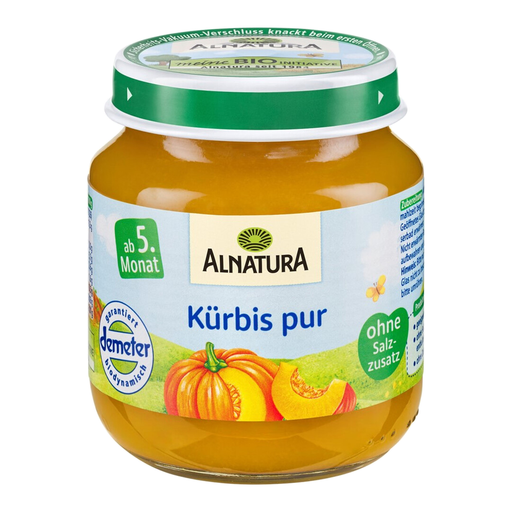
Why it's a great fit: Ideal for parents who want to start weaning with a single, mild vegetable. The simple recipe is easy to digest and doesn't overwhelm a baby's sensitive palate.
The product avoids the sugar trap by omitting any sweetening ingredients. It contains only pumpkin and water, resulting in a very low natural sugar content (2.6 g per 100 g).
Demeter quality and an extremely short ingredients list (pumpkin 95%, water) offer maximum transparency and purity for the start of weaning.
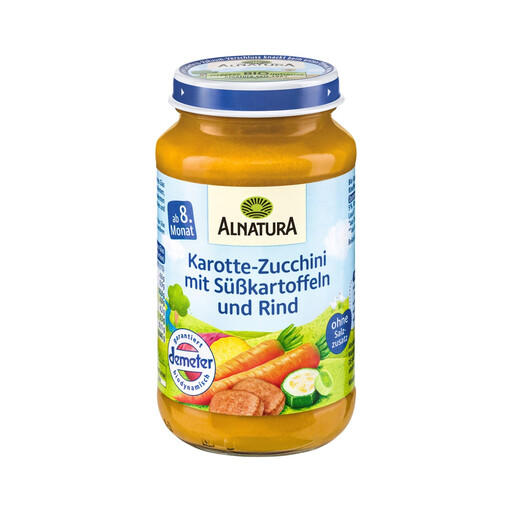
Why it's a great fit: For babies who are ready for the next step. This menu offers a balanced meal with vegetables, meat, and carbohydrates in an age-appropriate, lumpy consistency.
It avoids the trap of an inappropriate texture by being explicitly declared as "finely mashed," which encourages chewing without posing a choking hazard.
A complete meal in organic quality (88% Demeter content). The composition of vegetables, beef, and rapeseed oil provides essential nutrients for this growth phase.
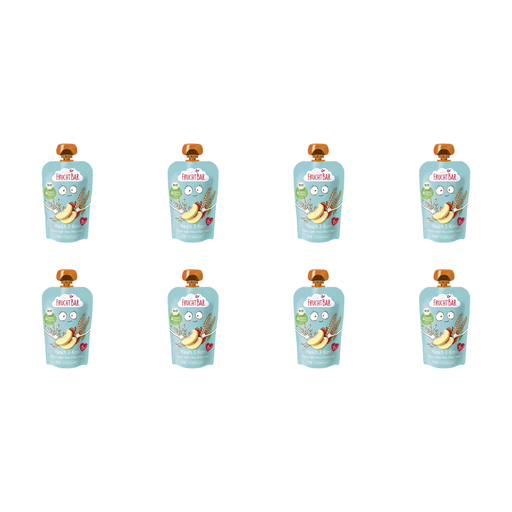
Why it's a great fit: For active families looking for a convenient yet nutritious snack. The combination of fruit and grains provides longer-lasting satiety than a pure fruit pouch.
This product is more than just a sweet snack. The addition of oats, spelt, and millet makes it a more balanced snack and avoids the trap of being a pure "sugar snack."
Certified organic, with no added sugar and guaranteed free from additives. The resealable and recyclable packaging is practical and environmentally conscious.
We have compiled a complete, up-to-date list of products that fully meet these strict selection criteria and UK/EU regulations.
The "no added sugar" claim is a starting point, but not a guarantee. Check two things:
Once opened, a jar should always be sealed and stored in the refrigerator. Take out the desired portion with a clean spoon instead of feeding directly from the jar. This prevents saliva from getting into the jar, which would accelerate bacterial growth. Follow the manufacturer's instructions on the label, but as a rule, the remainder should be consumed within 1-2 days.
Pouches are a very practical solution for on-the-go. However, they should not be the main source of nutrition or a constant substitute for meals from a spoon. Sucking on the spout does not train the chewing muscles in the same way as eating from a spoon. Additionally, constant sucking on sugary or acidic purées can increase the risk of tooth decay. It is best to squeeze the contents onto a spoon or ensure it is consumed quickly.