
Lieferung heute & morgen

Qualitätsgarantie

Willkommens-Angebote freischalten: KOSTENLOSE Lieferung | Bis zu 80 % RABATT | Kostenlose 30-Tage-JoyPlus-Testphase
App herunterladen
Buying baby food might sound straightforward at first: a quick look at the age recommendation, flavour and pack size should be enough. In practice, however, there are a few typical pitfalls to watch out for. A product can be labelled "no added sugar" and still contain naturally occurring sugar. Likewise, an organic certification alone doesn't tell you whether a baby purée is suitable for your child's age, known allergies or intended use.
This guide helps parents and carers choose baby purées, jars, milk porridge, fruit purées and toddler snacks based on clear, practical criteria.
With fruit purées and baby pouches, the sugar often comes from apples, bananas or berries. The label no added sugar doesn't mean the product contains no sugar at all. That's why it's essential to check the ingredients list together with the nutritional information. Additional sugars, sweetening juice concentrates or honey shouldn't simply be equated with natural fruit sugars.
Organic baby food can be a sensible choice, but it doesn't replace checking the age recommendation, ingredients and allergens. Look for the EU organic logo, any additional certification marks and the specific ingredients list. An organic product containing milk, wheat or oats isn't automatically suitable for a child who needs to avoid those ingredients.
Pouches are easy to carry on the go, but they shouldn't be left for your baby to suck on for extended periods. For several products, it's explicitly recommended to spoon-feed the contents or to supervise consumption. Opened baby jars and purées also have limited storage times. Always follow the instructions on the individual label.
The age indication is a key factor. Vegetable purées like Alnatura Kürbis are labelled as suitable from 4 months. An evening porridge, on the other hand, might be offered from 5, 6, 7 or 8 months, depending on the specific recipe.
Weaning foods from 4 months shouldn't be chosen based on marketing claims alone. Check whether the texture, ingredients and feeding method suit your child's individual development. Products from 10 or 12 months often contain more grains, lumps or ingredients designed for toddlers.
Read the ingredients in descending order. For a grain porridge, it matters whether it contains wheat, oats, spelt or several types of grain. Milk porridges may contain milk, whey products or yoghurt. Common allergens must be highlighted on the packaging.
Also look out for:
A product that is 100 per cent fruit, for example, can be free from added sugar but still have a high natural sugar content because of the fruit.
Instant porridges like Bebivita Milchbrei are mixed fresh with water. For the product mentioned, the instructions recommend using water at around 50 °C; the meal should not be heated in the microwave. Opened powder sachets must be kept dry, sealed and used within the stated time frame.
For jars and pots: only take out the amount you need, refrigerate leftovers according to the manufacturer's instructions and use them promptly. Leftovers that have been reheated or already fed should not be offered again. Single portions are practical for on-the-go, while multipacks can make stockpiling easier if you use them regularly.
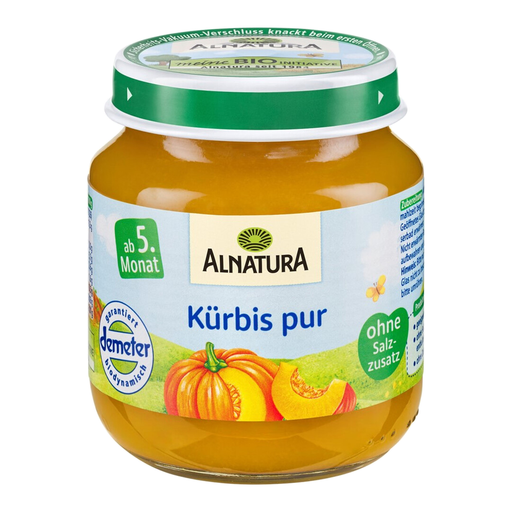
Why this product suits the profile: The single-ingredient recipe is suitable for starting weaning, according to the product information, and makes it easy to keep track of what's in it.
The ingredients list is short: according to the product information, 95 % pumpkin and water. This reduces the risk of introducing several new ingredients at once.
Organic pumpkin, gluten-free according to the product information and with no added salt.
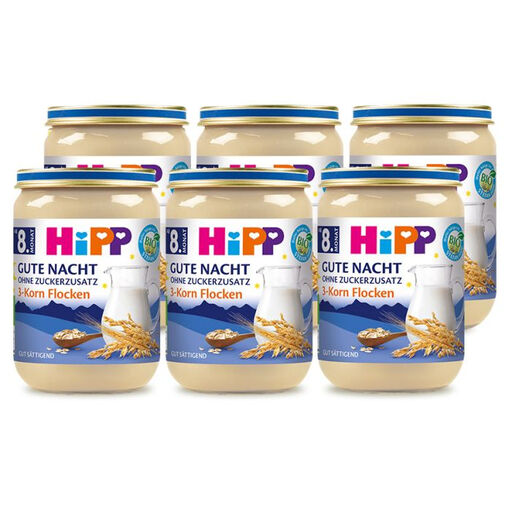
Why this product suits the profile: This milk porridge combines a milk preparation with several types of grain for a ready-made evening meal, according to the product information.
The age stage from 8 months and the allergens it contains, such as milk, wheat and oats, are clearly stated and should be taken into account.
Organic ingredients according to the product information, no added sugar, and contains vitamins A, B1, D and calcium.
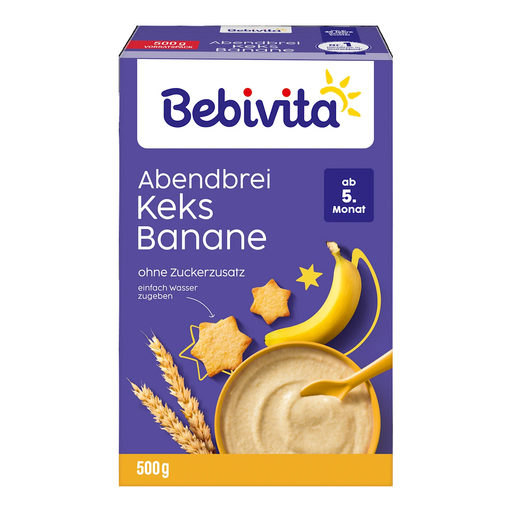
Why this product suits the profile: This instant porridge is designed for families who want a quick, portionable evening meal that can be prepared with water.
The preparation is based on water. At the same time, the ingredients list includes wheat, milk components and possible traces, which should be checked before purchase.
500 g pack, no added sugar according to the product information, and with stated amounts of calcium, iron and vitamin D.
We've put together a complete, regularly updated list of products that fully meet these strict selection criteria and the safety regulations in force in the EU.
For a simple vegetable purée, look for products with few ingredients and a smooth texture. Fruit purées such as pear and apple or apple and banana can be used as a dessert or as part of a meal. With baby pouches, pay attention to the age recommendation, portion size and any advice about dental care.
Toddler snacks like millet sticks or spelt sticks are often only suitable from 10 or 12 months. Check the instructions about sitting upright and supervision during eating. A product with no added sugar isn't automatically suitable for every age group.
Products labelled "from 4 months" may be intended by the manufacturer as a starting point for weaning. Look for a simple ingredients list, a suitable texture and consider your child's individual development. If you're unsure about introducing new foods, it's a good idea to seek advice from your paediatrician or midwife.
It depends on the product. Powdered porridges should usually be kept dry and well sealed, and used within a few weeks. Opened jars, pots or pouches should be stored in the fridge and, according to the packaging instructions, often need to be used within a day or a few days. Always follow the manufacturer's specific guidance.
Not every pouch is intended as a complete meal. Many products are labelled as a snack, dessert or part of a meal. Because of the direct contact with teeth, it's best to spoon-feed the contents rather than letting your baby suck on the pouch for a long time.