
Lieferung heute & morgen

Qualitätsgarantie

Willkommens-Angebote freischalten: KOSTENLOSE Lieferung | Bis zu 80 % RABATT | Kostenlose 30-Tage-JoyPlus-Testphase
App herunterladen
Baby food ranges from infant formula and baby porridge to fruit purées and snacks for toddlers. At first glance, the selection seems straightforward, but it quickly becomes confusing with different age recommendations, ingredient lists and product claims. If you only focus on the brand name, organic certification or a low unit price, you may miss important details.
A product without added sugar can still contain naturally occurring sugar from fruit, milk or cereals. Take Bebivita Quetschie Mango in Apple-Peach, for example: according to the product information, the ingredients are apple, mango and peach, and the declared sugar content is 11.3 g per 100 g. So for comparison, it’s the nutritional information table that counts, not just the front of the packaging.
With baby porridge and fruit muesli too, it’s worth checking the order of ingredients. Ingredients are generally listed in descending order by weight. If wheat, oats or fruit preparations appear near the top, they have a greater influence on the composition than ingredients at the end of the list.
Organic baby food can offer traceable origins for agricultural ingredients, but on its own it doesn’t tell you whether a product is suitable for every child. For example, Alnatura baby jars with pumpkin from 4 months contain 95% organic pumpkin and water, are gluten-free and have no added salt. At the same time, the introduction of solid foods should be done individually and according to the recommendations of the healthcare professionals looking after your child.
Cereal products often contain gluten and milk. This applies, among others, to HiPP Bio Good Night Porridge with wheat and oat flakes, as well as Nestlé CERELAC. If you are aware of any allergies or are unsure, parents should check the full packaging information and seek medical or nutritional advice.
“Solid foods from 4 months”, “baby porridge from 8 months” and “toddler milk from 1 year” describe different product groups. A porridge suitable from 7 or 8 months is not automatically right for a younger baby. Likewise, follow-on formula does not replace an individual decision about the feeding plan.
With infant starter formula such as PRE milk, the preparation instructions are especially important. Incorrect ratios, unsuitable water or storing leftovers can compromise product safety. Always follow the instructions on the specific packaging.
First, match the product to the actual need:
The age recommendation must align with your child’s development and meal plan. With infant formula, also consider whether it is intended as sole nutrition or as a supplement to breastfeeding.
Check at least the following:
Larger packs can be convenient if you use a product regularly. However, with infant formula, the stated use-by period after opening must be observed. Different products typically recommend around three to four weeks. Opened jars or fruit purées should be kept in the fridge and used promptly according to the label.
With squeeze pouches, the way they are used is also important: your child should not suck on the pouch continuously. Serving it with a spoon can help reduce direct and frequent contact with teeth. Babies and toddlers should always be supervised while eating and should sit upright.
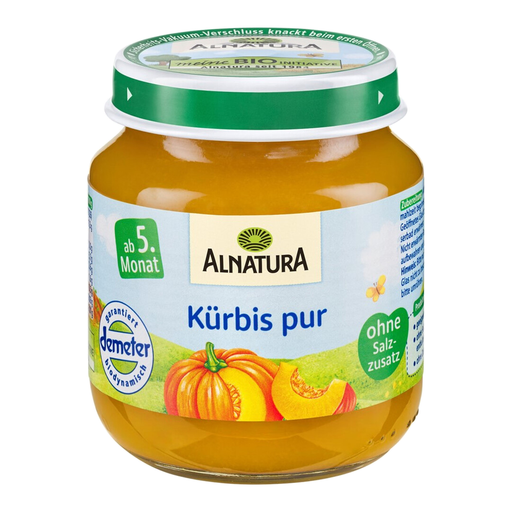
Why this product fits the profile: This single-vegetable jar has a short ingredient list with pumpkin and water, making it ideal for parents who want to compare a simple product composition.
The ingredient list is straightforward; according to the product information, it contains neither gluten nor added salt.
95% organic pumpkin, Demeter quality, finely puréed texture and a 125g jar.
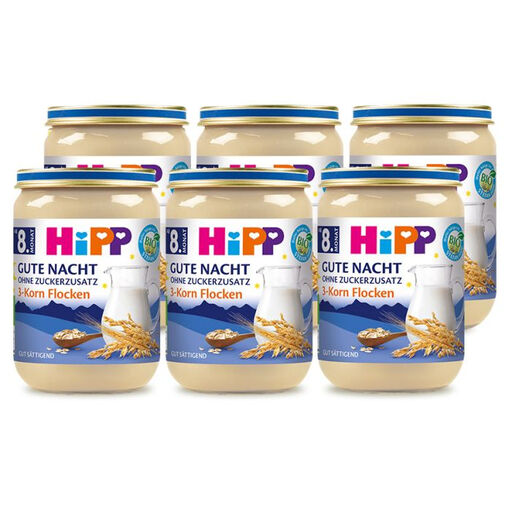
Why this product fits the profile: According to the information, this milk and cereal porridge is intended from 8 months and contains wheat, oats and rice, along with declared vitamins and calcium.
The age stage, allergens and nutritional values are clearly stated. “No added sugar” is not confused with “sugar-free”.
Organic ingredients, six jars of 190g each, plus vitamin A, B1, D and calcium according to the product declaration.
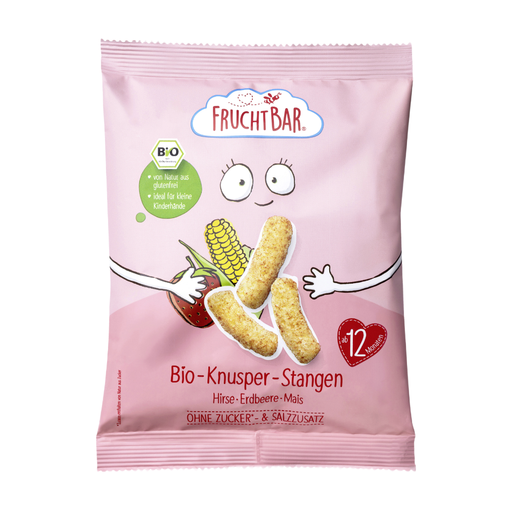
Why this product fits the profile: According to the information, this snack is suitable from 12 months and is made with millet, maize and strawberry powder.
The “gluten-free” and “no added sugar or salt” claims are backed up by the listed recipe.
60% millet, organic ingredients and a resealable 30g pack; supervision is required during eating.
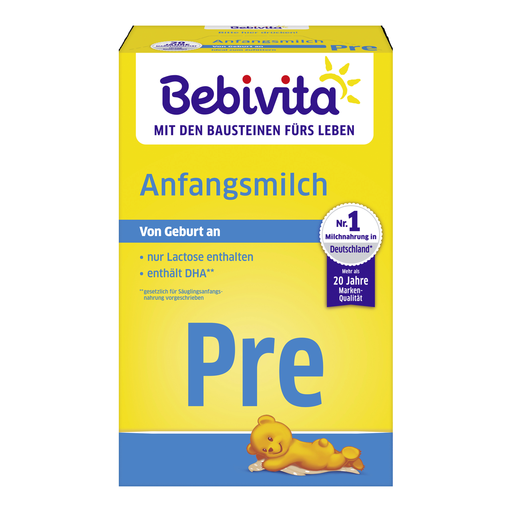
Why this product fits the profile: According to the product information, this PRE infant formula is suitable from birth and can be used as sole bottle feed or as a supplement to breastfeeding.
The preparation instructions specify exact water and powder ratios. Leftovers should not be reused, and the opened pack must be used within the stated period.
500g pack, lactose as the carbohydrate source according to the information, and DHA as per the product declaration.
We have put together a complete, regularly updated list of products that fully meet these strict selection criteria and the safety regulations in force in the EU.
Infant starter formula at the PRE stage is intended from birth according to the respective product information. Examples include Bebivita PRE First Milk and HiPP First Milk PRE Bio Combiotik. Preparation must follow the pack instructions exactly. If you have questions about feeding or when changing milk, it is advisable to consult your paediatrician or midwife.
No. The age recommendation describes the intended product group, but it is not an individual recommendation. A single-ingredient jar such as Alnatura Organic Pumpkin is intended from 4 months according to the product information. Whether and when to introduce solid foods depends on factors including your child’s development and personal advice.
That depends on the product. Opened milk powder packs should generally be used within three to four weeks according to the respective instructions. Opened jars and fruit purées should be kept in the fridge and are often best used the next day, or within a specifically stated period for individual products. Always follow the specific packaging information.