
Lieferung heute & morgen

Qualitätsgarantie

Willkommens-Angebote freischalten: KOSTENLOSE Lieferung | Bis zu 80 % RABATT | Kostenlose 30-Tage-JoyPlus-Testphase
App herunterladen
Preparing baby food requires precision and safety. A reliable appliance is essential, especially at night when every minute counts. However, the kettle market is saturated and confusing, with many products advertising features that don't live up to their promises in practice. As a Joybuy Product Recommendation Officer, I'll help you identify the crucial features and steer clear of common purchasing traps.
Many parents invest in a device that later proves to be impractical or inadequate. Watch out for these three widespread problems to avoid a bad investment:
To find the right appliance, you should focus on objective, technical parameters. These three features are crucial for the safe and practical preparation of baby food.
A good kettle with temperature control should offer precise target values or at least preset levels relevant for baby food. Common settings here are 40°C, 50°C, and 60°C. A model with a real-time temperature display gives you additional peace of mind, as you can always read the current water temperature without having to guess.
The material of the water container is a key factor. A glass kettle made of borosilicate glass is an excellent choice here. This material is heat-resistant, taste-neutral, and does not leach any substances into the water. Additionally, the transparent surface allows for easy visual inspection for limescale deposits. Ensure that all other parts that come into contact with water (like the inner lid and seals) are made of high-quality stainless steel or food-grade silicone.
Beyond temperature and material, it's the details that make daily life easier:
Here are some product recommendations tailored to the specific needs of parents, which avoid the pitfalls mentioned above.
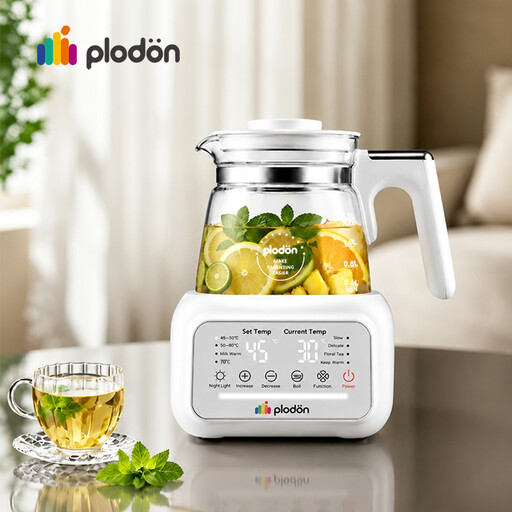
Why This Fits Their Persona: Ideal for parents looking for an all-in-one nighttime solution. The extremely long keep-warm function and integrated night light are specifically designed for the demands of late-night feedings.
The keep-warm function of up to 72 hours completely solves the problem of short-lived features. Precise temperature modes and a borosilicate glass body address the pitfalls of inaccuracy and material risks.
Multi-functional modes (including dechlorination, milk warming) and an integrated night light offer maximum convenience in a single device.
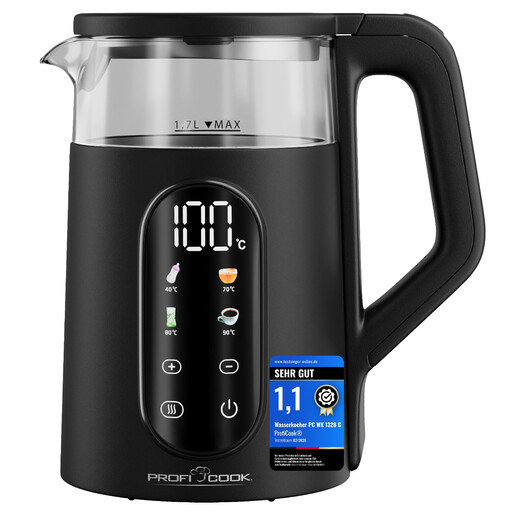
Why This Fits Their Persona: For families seeking a reliable and straightforward appliance that handles the core functions for baby food and also performs well in everyday kitchen use.
It offers clear temperature settings (40-100°C) with a real-time display and a solid keep-warm function. The heat-insulated glass body and BPA-free construction ensure the necessary safety.
Focuses on essential functions with proven technology. The large 1.7-litre capacity and high 2200W power output also make it very practical for general household use.
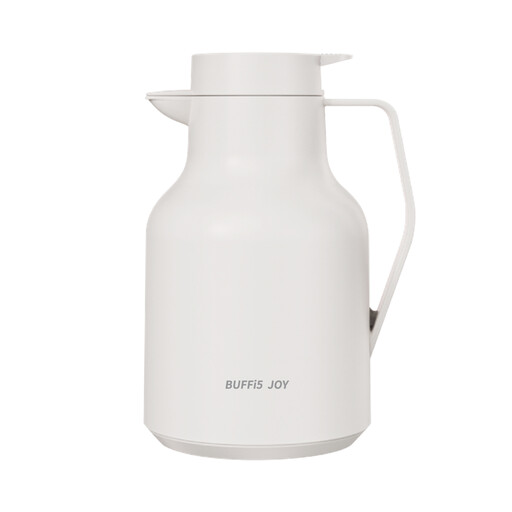
Why This Fits Their Persona: Perfect for parents who want to boil water once and then have it ready to use throughout the day or night. This device is a thermal carafe, not an electric kettle, and is designed for storing hot water.
This device is the ultimate solution to the problem of short keep-warm times. It maintains the temperature for up to 24 hours. The touch display shows the exact internal temperature, eliminating any guesswork.
The double-walled red glass liner provides excellent insulation and is odour-neutral. The push-button operation is simple and can be done with one hand.
While the right kettle simplifies preparation, storing and serving drinks—for both you and your baby—is also an important consideration. High-quality, insulated vessels can be a valuable addition here.
We have compiled a complete, up-to-date list of products that fully meet these strict selection criteria and German safety regulations.
1. How often should a kettle for baby food be descaled? The frequency depends on the water hardness in your area. You should descale the appliance when you see visible deposits, or at least every four to six weeks. Use diluted citric acid or a special descaler for household appliances, and then rinse the device thoroughly with clean water several times.
2. Is a glass kettle really safer than a stainless steel one? Both materials have their advantages. Glass kettles made of borosilicate glass are taste-neutral and allow for easy visual inspection of cleanliness. High-quality stainless steel kettles (made of 304 or 316 grade stainless steel) are also safe and more resistant to impact. The decision is often a matter of personal preference. What's more important is that all components that come into contact with water are made of food-grade materials.
3. What is the dechlorination function and is it necessary in Germany? The dechlorination function boils the water for an extended period (usually 1-3 minutes) to reduce chlorine, which may be used to disinfect tap water. The German Drinking Water Ordinance sets very strict limits for chlorine, which is why tap water is generally safe. However, the function offers an additional layer of safety, especially for very sensitive infants or in areas where the water has a noticeable chlorine smell.