
Lieferung heute & morgen

Qualitätsgarantie

Willkommens-Angebote freischalten: KOSTENLOSE Lieferung | Bis zu 80 % RABATT | Kostenlose 30-Tage-JoyPlus-Testphase
App herunterladen
As a Joybuy Product Recommendation Officer, I see every day how parents strive to make the right nutritional choices for their children. The search for baby food with no added sugar is often a top priority. However, the market is confusing, and many products don't deliver on the promises made on their packaging. This guide will help you recognise marketing traps and make an informed decision.
The biggest challenge is that the claim "no added sugar" doesn't necessarily mean a product is low in sugar. Many parents invest in supposedly healthy baby food, only to discover later that it has a high sugar content from other sweetening ingredients.
Common Traps When Buying Baby Food:
To make a good choice, you shouldn't rely solely on the front of the packaging. The following three parameters are crucial for selecting the right baby food.
The ingredients are listed in descending order by weight. Ensure that ingredients like sugar, glucose syrup, maltodextrin, concentrated juices (e.g., concentrated apple juice), or fruit juice concentrates do not appear at all or are listed far down. Pure fruit purées naturally have a higher sugar content. For a balanced meal, combinations of vegetables, grains, and a small amount of fruit are often the better choice.
Your child's needs change over time. Therefore, selecting the right type of food is important.
The crucial value in the nutrition facts table is the "of which sugars" line. This value indicates the total sugar content per 100 grams, including naturally occurring sugars from fruit or milk (lactose). Compare this value between different products. A pure vegetable purée will have a significantly lower value than a pure fruit purée. A value below 5g per 100g is a good benchmark for mixed meals, while pure fruit purées often exceed 10g.
Based on the criteria above, we have compiled a selection of products suitable for different requirements and life stages.
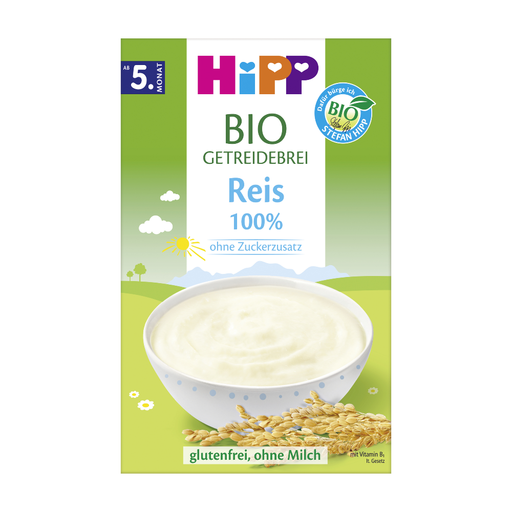
Why this product is a good fit: Ideal for parents who are starting to introduce solid foods. The flakes consist of 100% rice, are gluten-free, and can be prepared flexibly—with milk, water, or in combination with homemade vegetable purée. This allows the baby to be gently introduced to solid food.
The product contains no sweetening additives and consists of only one ingredient. It avoids conditioning the palate to a sweet taste, which can be a problem with pure fruit purées when starting solids.
100% organic rice flour, with no added sugar and naturally gluten-free. Versatile as a base for various porridge meals.
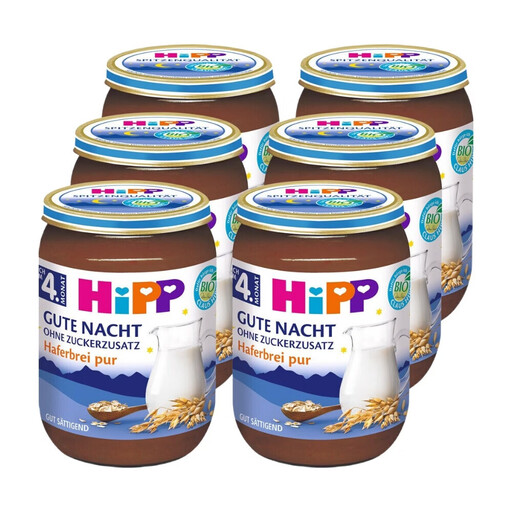
Why this product is a good fit: For parents looking for a ready-to-eat, filling evening meal. This porridge in a jar combines an age-appropriate milk formula with oats and has no added sugar. It's convenient as it doesn't need to be mixed and can be eaten cold or warm.
The product completely avoids added sugar and sweetening concentrates. Satiety comes from the grain (oats) and milk, not from sugar.
A complete organic evening meal in a jar that is very filling. Fortified with calcium and vitamins in accordance with legal requirements.
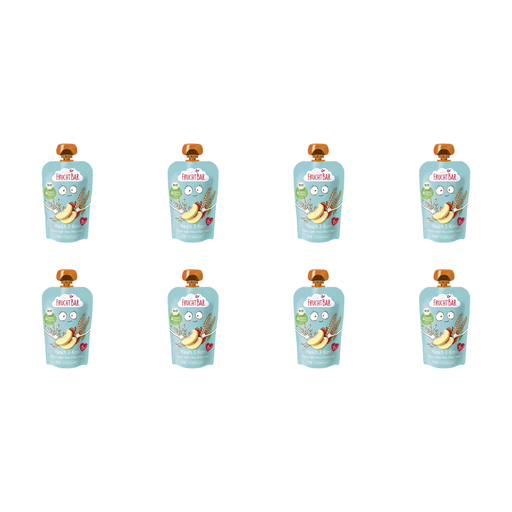
Why this product is a good fit: For active families who need a practical and balanced snack for on the go. This pouch combines fruit with grains (oat, spelt, millet), making it more nutritious than a pure fruit pouch.
By adding grain, the pure fruit content and thus the relative sugar content are reduced. It is a more balanced alternative to pure fruit pouches, which are often very sweet.
Practical, resealable pouch in organic quality. The combination of fruit and grain provides better satiety.
We have compiled a complete, up-to-date list of products that fully meet these strict selection criteria and all regulatory standards.
The surest way is to check the ingredients list and the nutrition facts table. Avoid products containing terms like syrup, dextrose, maltodextrin, or fruit juice concentrate. Compare the 'of which sugars' value per 100g. A low value (ideally under 8g for mixed porridges) is a good sign.
A simple cereal from 6 months (or from 5 months, after consulting with your paediatrician) is a common way to start introducing solid foods. It's best to begin with gluten-free varieties like rice or millet flakes that you mix yourself. This gives you full control over the ingredients.
Pouches can be a practical solution for on the go. To make them a healthier choice, you should look for products with no added sugar and a balanced ratio of vegetables, grains, and fruit. It is also important to follow manufacturers' advice not to let the child suck on the spout continuously, to protect their teeth. Spoon-feeding should be preferred whenever possible.