
Lieferung heute & morgen

Qualitätsgarantie

Willkommens-Angebote freischalten: KOSTENLOSE Lieferung | Bis zu 80 % RABATT | Kostenlose 30-Tage-JoyPlus-Testphase
App herunterladen
Baby food and toddler milk vary considerably depending on age, intended use and composition. A product designed for a child aged 12 months or over is not automatically suitable for a baby who has started weaning. Terms such as “no added sugar”, “with vitamins” or “100% fruit” should not be considered in isolation.
For parents in Germany, three common purchasing misconceptions are particularly relevant:
The age recommendation on the packaging is the first non-negotiable criterion. Bebivita Follow-on Milk 3 is stated to be suitable for babies from 10 months as part of a mixed weaning diet. Toddler milk from 1 year, on the other hand, is intended for young children who are already eating a varied family diet.
When choosing milk drinks for toddlers, parents should also check whether the product is intended as an addition to meals or as a standalone source of nutrition. Toddler milk from HiPP, Aptamil, Bebivita or Nestlé BEBA Junior is formulated for specific age ranges and should be used according to the instructions on the packaging.
For babies from 5 months, baby drinks such as mild apple juice or baby tea are not automatically necessary. Water is usually the simpler everyday choice. For babies and toddlers, individual recommendations from a paediatrician or midwife should also be taken into account.
“100% juice” describes the fruit content, not a low sugar content. Bebivita Mild Apple Juice contains 10.4 g of sugar and 46 kcal per 100 ml, according to the stated nutrition information. The sugar comes from the apple juice, according to the product description, but it remains relevant when choosing everyday drinks.
Fruit purée for babies with no added sugar also contains naturally occurring fruit sugars. Bebivita Multifruit Squeezy contains 12.7 g of sugar per 100 g. The product is suitable from 1 year; once opened, it should be refrigerated and consumed within one day. For good dental health, it is advisable not to let children suck continuously from pouches and to offer the purée with a spoon whenever possible.
Also look out for:
When buying organic baby food, check for the EU organic logo or the corresponding certification on the packaging. Brands such as Bebivita and HiPP offer both organic products and conventional alternatives.
Powdered products are often prepared using different amounts of water. This means that information per 100 ml of prepared product and per serving is more useful for comparison than the pack price alone.
For example, according to the product information, Bebivita Growing Up Milk 1+ contains 50 kcal, 102 mg of calcium and 1.2 mg of iron per 100 ml of prepared drink. Bebivita Growing Up Milk 2+ is intended for children from 2 years and provides 50 kcal per 100 ml. Aptamil Pronutra Toddler Milk 1+ contains 65 kcal and 130 mg of calcium per 100 ml.
The preparation instructions are also important:
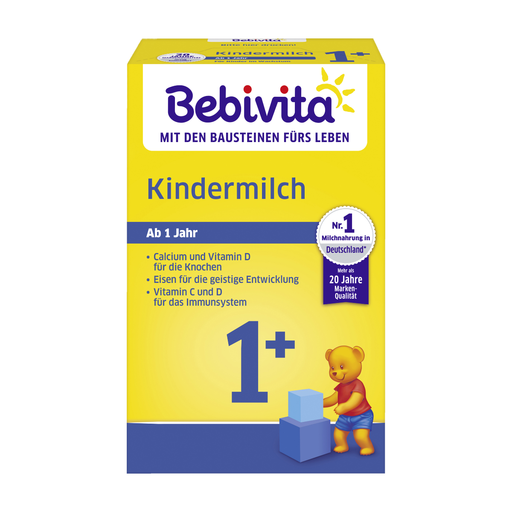
Why this product suits this profile: The powdered format is ideal for families who want to prepare individual servings and compare the cost per pack. It is intended for children from 1 year.
The age group, serving size and nutritional values are clearly stated. This makes it easier to distinguish the product from follow-on milk from 10 months or toddler milk from 2 years.
Each 100 ml of prepared drink provides 102 mg of calcium and 1.2 mg of iron. The product is gluten-free and comes with a measuring scoop.
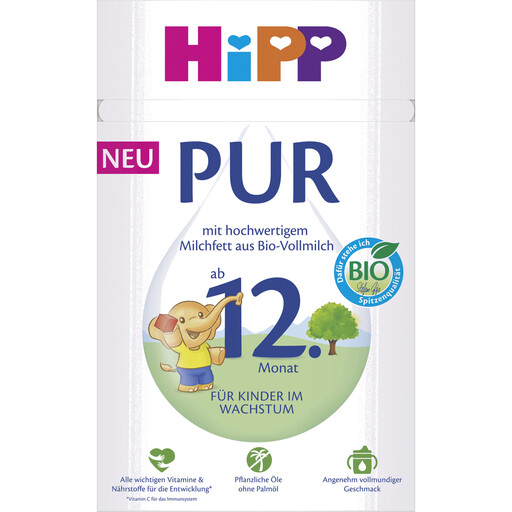
Why this product suits this profile: Suitable for parents looking for a milk drink made from certified organic farming and supported by detailed nutritional information.
The ingredients list clearly identifies milk, lactose, fish oil and soya. Allergens can be checked specifically before purchase.
The product is intended from the 12th month and, according to the product information, contains calcium, iron, iodine, vitamin D and DHA, among other nutrients.
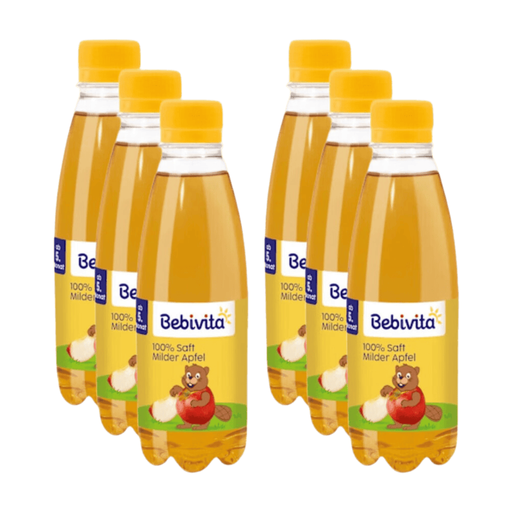
Why this product suits this profile: This multipack is ideal for households that occasionally need baby drinks from 5 months and want to keep several bottles in stock.
The nutrition table makes the naturally occurring sugar content clear. According to the product information, the juice can also be diluted with water at a ratio of 1:2.
100% apple juice according to the product description, with no added preservatives. Opened bottles should be refrigerated and consumed within three days.
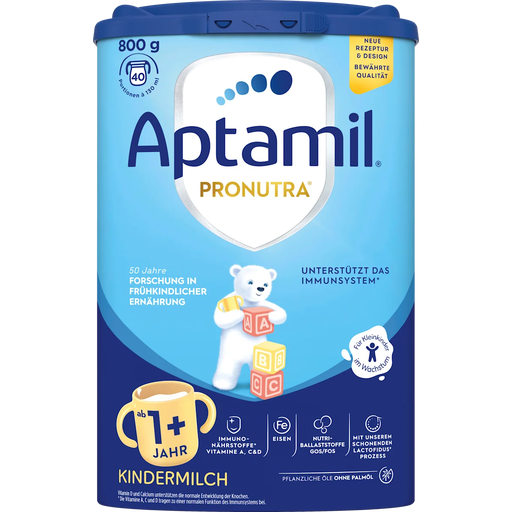
Why this product suits this profile: The 800 g pack is designed for regular use during the toddler years and can be served warm or cold in a cup.
The recommended preparation, four-week consumption period and allergens contained are documented in the product information.
Suitable from 1 year; according to the product information, it contains no palm oil and includes vitamins A, C and D. Each serving provides stated amounts of calcium and iron.
We have put together a complete, regularly updated list of products that fully meet these strict selection criteria and the safety regulations applicable in the EU.
Toddler milk from 1 year is intended for young children from the completion of their 12th month. It should be considered as part of a varied diet. The age recommendation, preparation instructions and serving guidance on the relevant packaging should always take precedence.
Follow-on milk from 10 months is an option for babies as part of a mixed weaning diet. Whether it is suitable for your own child depends on their overall diet and development. If you are unsure about the amount of milk your child needs or the transition to family food, you can consult a paediatrician or midwife.
This depends on the type of product. Once opened, powdered products such as toddler milk are often recommended by manufacturers to be used within three to four weeks. Opened baby juice should be refrigerated and consumed within two to three days for the products mentioned. For fruit purée in a pouch, the recommended period is sometimes one day. The information on the current packaging always takes precedence.