
Lieferung heute & morgen

Qualitätsgarantie

Willkommens-Angebote freischalten: KOSTENLOSE Lieferung | Bis zu 80 % RABATT | Kostenlose 30-Tage-JoyPlus-Testphase
App herunterladen
Baby fruit purée is convenient, easy to portion, and for many families a simple way to offer fruit on the go or as a dessert. However, there are clear differences between fruit purée for babies, organic baby porridge and squeezy baby pouches when it comes to ingredients, age recommendations, packaging and portion sizes. If you only look for “no added sugar” or a prominent organic label, you might miss important details.
This buying guide from the Joybuy Product Recommendation Officer shows what parents and guardians should look for when buying baby fruit purée, and which products suit different everyday situations.
Fruit naturally contains sugar. A fruit purée with no added sugar can therefore still have a relatively high sugar content per 100 grams. What matters is checking the ingredients list and the nutritional information panel.
A product labelled “100 % fruit”, for example, contains no added sucrose, but can taste naturally sweet thanks to apple, pear, banana or grape juice. Particularly with multi-pack fruit purées, it is worth comparing ingredients, sugar values and portion sizes.
Fruit purée from 4 months, fruit purée from 5 months, fruit purée from 6 months and products from 1 year are not automatically interchangeable. The age stage depends on factors including consistency, ingredient combination and the manufacturer’s labelling.
Parents should check the age recommendation on the current packaging and introduce new foods in line with their child’s individual developmental stage. If you are unsure, your paediatrician or midwife can offer advice.
A 190 g jar is ideal for home, while a 90 g or 100 g pouch can be more convenient for on the go. However, a squeezy baby pouch should not be sucked directly from the pouch for extended periods. For dental care and learning to eat with a spoon, feeding from a bowl or off a spoon is often more appropriate.
Once opened, storage times vary depending on the product. These instructions are binding and should not be replaced by general rules of thumb.
Look for a short, clear ingredients list. A pure pear purée for babies might simply state “Pears 100 %”. Blends such as apple-pear-banana purée, on the other hand, contain several types of fruit and usually taste noticeably sweeter.
“No added sugar” does not mean “sugar-free”. So check the following:
For well-known brand claims, always cross-check the information against the product packaging. The values below are based on the product data provided.
A finely puréed fruit purée can be suitable for introducing fruit, provided the manufacturer’s labelling matches the relevant developmental stage. Products containing oats, wheat or wholegrain should be categorised differently from pure fruit purée. They may also contain gluten.
If you are specifically looking for a gluten-free and lactose-free baby fruit purée, check the allergen labelling. “No allergens declared” is not the same as individual medical tolerance.
Individual jars are useful if you want to try different varieties. A multi-pack can be more practical for regular use. So compare the price not just per pack, but also per 100 grams.
Once opened, leftovers must be refrigerated according to the manufacturer’s instructions and used within the stated time. Do not use the product if the packaging is damaged, bloated or has an unusual smell.
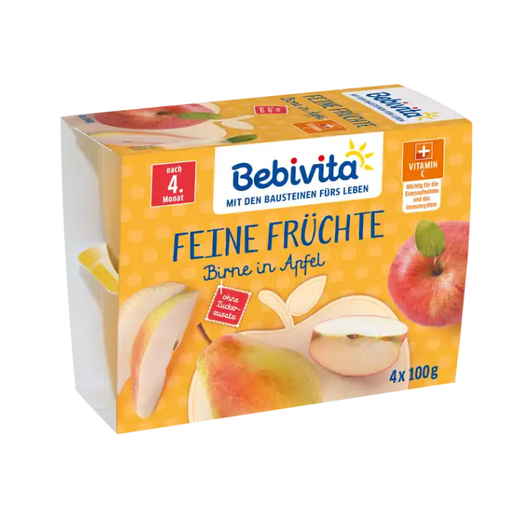
Why this product fits the profile: The four 100 g pots offer a manageable pack size for families wanting to try a mild apple and pear combination.
The product data states 100 % fruit with no added sugar, no flavourings and no thickeners. The age recommendation should be checked against the packaging before purchase.
80 % apple and 20 % pear, finely puréed, gluten-free and lactose-free; according to product data 51 kcal and 11.0 g sugar per 100 g.
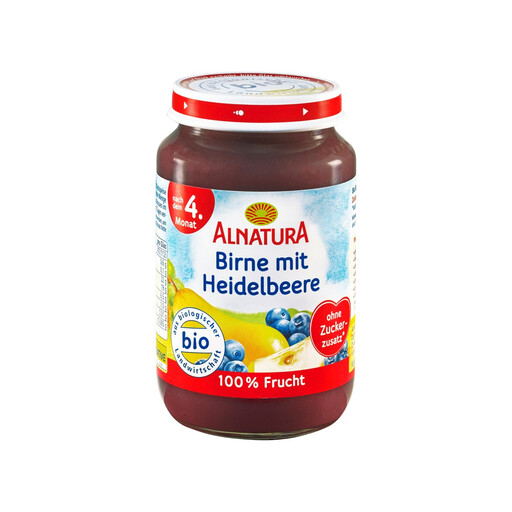
Why this product fits the profile: The jar combines organic fruit with a clear ingredients declaration and is suitable for eating at home.
The information states 100 % organic fruit, no added sugar and a finely puréed consistency. The recommended age from 4 months should be checked on the packaging.
90 % pear and 10 % blueberry from organic farming; gluten-free, 59 kcal and 9.8 g sugar per 100 g according to product data.
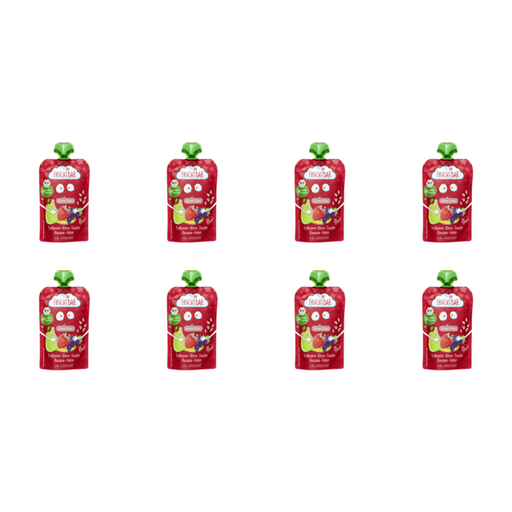
Why this product fits the profile: The multi-pack with resealable pouches is designed for regular use and taking out and about.
The ingredients list shows no added sugar and no additives. Because it contains rolled oats, buyers should check the grain and allergen information.
Organic ingredients, 4 % oats and 8 portions of 100 g each; according to product data, store in a cool place after opening and consume within 2 days.
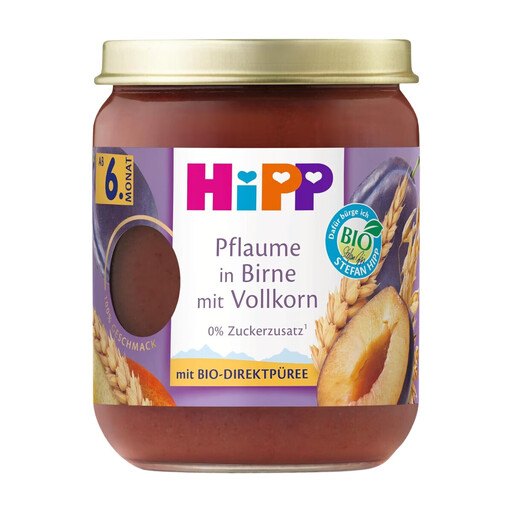
Why this product fits the profile: The combination of fruit and wholegrain is aimed at families looking for an organic baby porridge product from 6 months with grains.
The product data states no added sugar and a clear breakdown of ingredients. At the same time, wheat and oats are listed as contained grains.
75 % fruit, 4 % ground wheat flakes and 1 % oat flour; suitable according to product information from 6 months.
We have put together a complete, regularly updated list of products that fully meet these strict selection criteria and the safety regulations in force in the EU.
This depends on the individual child’s development and the age labelling on the product. Products available in shops range from 4, 5 or 6 months, as well as varieties from 1 year. Check the current packaging and choose a consistency suitable for your child. If you have questions about introducing solid foods, individual advice is recommended.
No. Fruit naturally contains sugar. “No added sugar” means that no extra sugar has been added to the product. The nutritional information panel shows how much sugar is present in total per 100 grams.
The time varies depending on the product. In the product data provided, for example, 12 hours, 2 days or 3 days are stated. Opened pots, jars and squeezy pouches should be covered or sealed, stored in the fridge and used according to the manufacturer’s instructions. Leftovers should not be kept if the packaging states a shorter time.