
Lieferung heute & morgen

Qualitätsgarantie

Willkommens-Angebote freischalten: KOSTENLOSE Lieferung | Bis zu 80 % RABATT | Kostenlose 30-Tage-JoyPlus-Testphase
App herunterladen
Baby grasping toys should encourage little hands to reach, turn and explore. At the same time, parents, grandparents and carers need to consider safety, age recommendations and cleaning. An eye-catching design alone says little about whether a product is practical and suitable for everyday use.
A baby grasping toy for newborns has different requirements from a baby motor skills toy for a one-year-old child. Large buttons, rings or puzzle handles may be useful for older toddlers, but could still be difficult for a baby to use. Conversely, very lightweight toys may quickly lose their appeal for an older child.
So always check the minimum age specified by the manufacturer. “Baby toys from 3 months” or “baby toys from 6 months” are not merely marketing claims. They provide important guidance on size, weight and possible small parts.
Lights, music and sounds can attract a child’s attention. However, they often make cleaning more time-consuming and require batteries. For electronic educational baby toys, the battery compartment, volume control and automatic switch-off should be clearly explained.
A traditional grasping toy, baby rattle or baby teething ring may be more practical in everyday life if the child mainly wants to grip, shake and feel different textures. The key question is whether the toy suits its intended environment: a pushchair, play mat, changing bag or quiet play at home.
Saliva, milk residue and contact with the floor are all part of normal use when it comes to baby toys. Before buying, check whether the product can be wiped clean, machine washed or put in the dishwasher. Cleaning instructions vary considerably: a fabric toy may be washable at 30 °C, while a teething ring may only be cleaned with a damp cloth.
For toys intended for children under 36 months, warnings, material details and manufacturer information should also be fully available. A toy must not be used if you can see cracks, loose parts, sharp edges or damaged seams.
A good baby grasping toy should be easy for little hands to reach and hold without unnecessary effort. Lightweight shapes, rounded edges and textured surfaces make those first grasping movements easier. With rattles and balls, it is also important that the child cannot accidentally put the entire toy in their mouth.
Large handles, such as those on the HABA Grasping Puzzle, can be suitable for children from 12 months. Younger babies often benefit from soft, flat or ring-shaped models with a range of textures.
Silicone, plastic, wood and textiles each have their own care requirements. Silicone toys may be dishwasher-safe, depending on the manufacturer’s instructions. Wooden toys should generally only be wiped with a damp cloth and not immersed in water. Textile sensory baby toys are particularly practical when they are machine washable.
Look for clear manufacturer labelling, an age recommendation and safety information on the product page or packaging. For electronic products, a secure battery compartment and clear information about the batteries required are important buying criteria.
Gripping, shaking, feeling, rolling and chewing each focus on different types of play. A baby teething ring is designed for oral exploration during the teething phase, while a baby grasping toy mainly supports holding and turning. A ball can also encourage rolling and crawling after it.
Phrases such as “supports fine motor skills” should be understood as descriptions of the intended play activity, not as medical or therapeutic claims. When choosing, focus on which movements the toy actually enables.
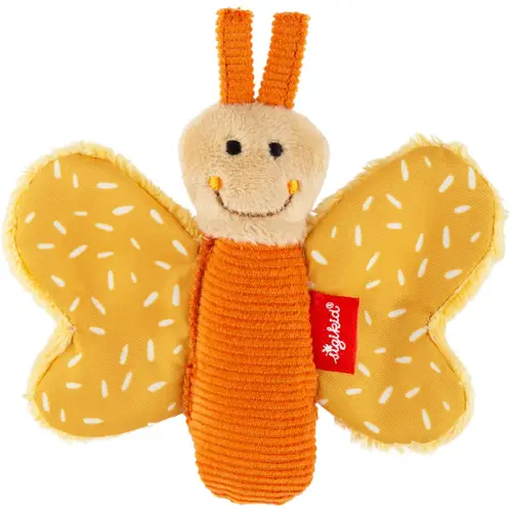
Why this product suits this profile: The soft butterfly design is suitable from birth and requires no batteries. This makes it a straightforward first grasping toy or a thoughtful new-baby gift.
No complex electronics and a compact shape reduce maintenance and operating effort. Even so, the seams should be checked regularly.
Crinkle paper in the wings, a mix of materials offering different surfaces and machine washing at 30 °C.
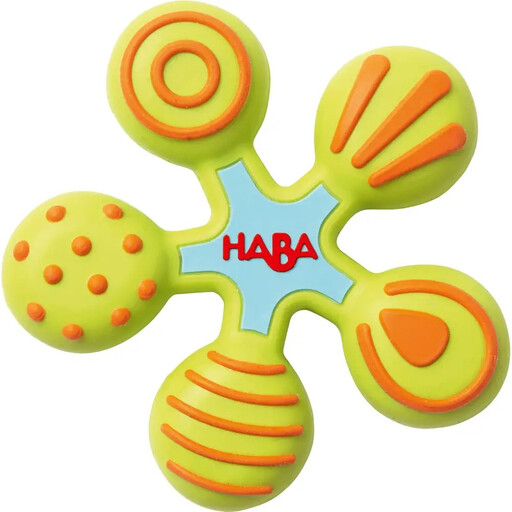
Why this product suits this profile: This silicone toy is suitable from 6 months and combines easy gripping with textured surfaces for oral exploration.
The textured, one-piece design avoids unnecessary small parts. It is still essential to check for cracks or damage before every use.
Silicone construction, a range of surface textures and, according to the product description, dishwasher-safe.

Why this product suits this profile: This lightweight ball is suitable from 3 months to 3 years and can be used on a play mat, while out and about or in shallow bath water.
The possible uses are clearly explained. In water, the ball should only be used in a shallow area and under constant supervision.
Transparent ball with a moving duck, confetti inside, waterproof construction and a diameter of approximately 10 cm.
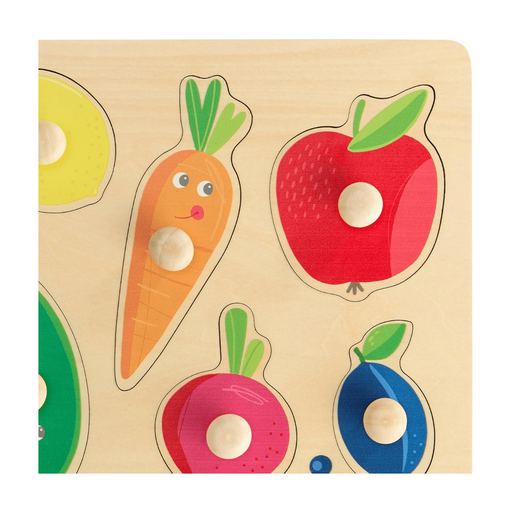
Why this product suits this profile: This wooden puzzle is designed for children from 12 months and offers a focused activity involving shapes, colours and large grasping knobs.
The 12-month age recommendation is clearly stated. This helps prevent a toddler’s puzzle from being chosen for a much younger baby.
Solid wood, a 30 × 21 cm puzzle board and large wooden knobs to remove and put back in place.
We have put together a complete, regularly updated list of products that fully meet these strict selection criteria and the safety regulations applicable in the EU.
That depends on the individual model. Some soft grasping toys are suitable from birth, while other products, such as a baby rattle, are suitable from 3 months, or a baby teething ring from 6 months. The manufacturer’s age recommendation, warnings and specific design are always the decisive factors.
A grasping toy can remain interesting for as long as the child can safely grip, turn or shake it. As children grow, grasping toys can be complemented by baby motor skills toys and baby educational toys. Wear and tear is most likely to affect textiles, crinkle elements, seams and teething surfaces. It is therefore advisable to check the toy before every use.
The price should be assessed in relation to the materials, construction, care requirements and expected lifespan. A simple fabric toy without batteries may be enough to get started. For electronic toys, you should also consider battery costs, volume and cleaning options. When buying a new-baby gift, a clear age recommendation is more important than having the greatest possible number of features.