
Lieferung heute & morgen

Qualitätsgarantie

Willkommens-Angebote freischalten: KOSTENLOSE Lieferung | Bis zu 80 % RABATT | Kostenlose 30-Tage-JoyPlus-Testphase
App herunterladen
A baby high chair should make mealtimes safer and everyday life around the family table easier. In practice, however, some promises can lead to a disappointing purchase: a model may look sturdy in product photos but be difficult to clean or not fit under the dining table. Other high chairs may grow with your child, yet offer limited support during the baby stage.
This buying guide explains which details really matter and which high chair for children may suit different homes and ways of using it.
A high chair that grows with your child can be used over several years. However, the specific weight limits for each type of use are what matter. A product with a maximum weight capacity of 70 kg isn’t automatically intended to be used as a baby high chair up to that weight. Baby high chairs usually have their own age, seating and weight guidance.
So, check:
A double tray, padding and fabric covers are handy if they’re easy to remove. Narrow gaps and permanently stitched covers, on the other hand, can make daily cleaning take longer. For a high chair with a removable tray, the product details should clearly explain how to clean the tray, cover and safety harness.
Wipe-clean surfaces made from lacquered wood, plastic or faux leather are usually easier to manage day to day. Don’t soak wood in water, and avoid abrasive cleaners, which can damage the finish.
A high chair with a safety harness must be placed on a flat, stable surface. Even a 5-point harness can’t prevent every risk if your child pushes off the table, climbs onto the tray or the chair isn’t fully locked into place. Adult supervision is still essential.
The European standard EN 14988 sets requirements for children’s high chairs. Product details may refer to EN 14988:2017+A1:2020 or earlier versions of the standard. This is a useful point of reference, but it doesn’t replace checking the chair before every use.
Check:
A height-adjustable seat makes it easier to fit the chair to different dining tables. An adjustable footrest can support your child’s sitting position, but it should be set so they can’t stand up or climb out.
When choosing an ergonomic high chair, don’t rely on the marketing term alone. Look for specific details:
A wooden high chair for children can be a durable choice if its construction and finish are suitable for everyday use. FSC or other sustainability claims should relate to the specific materials used. “Sustainable high chair” isn’t a single, recognised technical standard.
A folding high chair can be a good option for smaller homes. Before buying, measure the chair both when open and when folded. Wheels, glides and a carry handle make it easier to move, but should be checked regularly for dirt and damage.
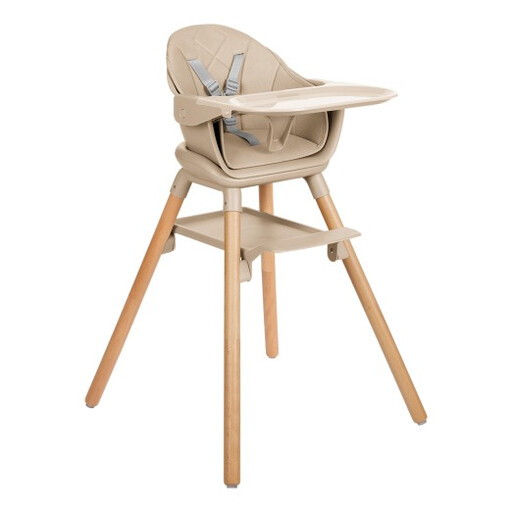
Why this product suits this profile: Its 6-in-1 design offers several ways to use it, making it a flexible choice for families looking for a high chair for the early years. It’s rated for up to 15 kg as a high chair and up to 25 kg as a junior chair.
The 5-point harness, removable double tray and wipe-clean cover make the safety and cleaning details clear and easy to check.
6 ways to use it, a footrest, non-slip feet and dimensions of 61 × 57,5 × 89 cm.

Why this product suits this profile: Made from European beech, this wooden high chair is designed to grow with your child and be used at the family table for years to come. The seat and footrest can be adjusted.
The product details specify FSC-certified beech, adjustable components and a maximum weight capacity of 90 kg. The 5-point harness is included.
European beech, adjustable seat and footrest positions, and a stated weight capacity of up to 90 kg.

Why this product suits this profile: This folding high chair is designed for families who want to put it away, transport it or use it in a smaller space on a regular basis.
The chair is supplied folded and has a cut-out handle. Before every use, check that it is fully unfolded and securely locked into place.
Space-saving folding design, wipe-clean tray, 3-point harness and a stated weight capacity of up to 70 kg.
We’ve put together a complete, regularly updated list of products that meet these strict selection criteria and fully comply with the safety regulations in force across the EU.
Many models are intended for use from 6 months, but only once your child can sit unaided and steadily. Your child’s stage of development matters more than the age stated on the packaging. Use the harness as instructed and never leave your child unattended.
A high chair with a recline function isn’t automatically suitable for feeding newborns. Always check that the manufacturer specifically approves it for this use and that you have the right accessories.
It depends on the model. A basic high chair is often designed for use up to around 15 kg or approximately three years of age. Depending on their design and accessories, high chairs that grow with your child may be used for longer. A stated capacity such as high chair up to 70 kg often refers to later use as a chair, not use as a baby high chair.
Lacquered wooden surfaces can usually be cleaned with a damp cloth. Wipe up spills promptly. Don’t use abrasive cleaners or immerse wooden parts in water. Follow the manufacturer’s care instructions for harnesses and padding.
A folding high chair is a good fit for smaller homes, regular transport or occasional use at the grandparents’ house. A wooden high chair that grows with your child is better suited to long-term use at a permanent place at the dining table. The key factors are storage space, how long you’ll use it, seating comfort and which accessories you actually need.