
Lieferung heute & morgen

Qualitätsgarantie

Willkommens-Angebote freischalten: KOSTENLOSE Lieferung | Bis zu 80 % RABATT | Kostenlose 30-Tage-JoyPlus-Testphase
App herunterladen
For many families, a baby high chair becomes part of the dining area from around six months of age. However, not every model suits every home, table or intended period of use. Marketing terms such as “grows with your child”, “ergonomic” or “space-saving” reveal little on their own. What matters are specific details about age, weight capacity, harness system, adjustment options and cleaning.
A high chair rated for 70 kg, 90 kg or even 110 kg is designed for long-term use. However, this does not mean it is suitable for a baby without additional equipment. Check whether a safety harness, seat insert, safety bar and, where applicable, tray are included. With some grow-along wooden high chairs, accessories such as a dining tray or seat cushion are available separately.
A grow-along high chair may have height-adjustable seat and foot plates, or it may convert into a child’s or adult’s chair. These concepts are not identical. Pay attention to the individual usage stages and their respective weight limits. For example, one model may be used as a high chair up to 15 kg and later as a child’s chair up to 25 kg.
A foldable high chair saves storage space, but when assembled it still requires a stable footprint. Before buying, compare the dimensions when open and folded. Secure locking mechanisms are also important, as is a folding system that cannot be released by the child’s movements.
A high chair recommended from 6 months is generally intended for children who can already sit independently and without support. Age alone is therefore not a sufficient selection criterion. Read the manufacturer’s guidance on posture and do not use the chair prematurely.
A children’s high chair should also provide an appropriate seat width and sufficient back support. With an adjustable high chair, the position can often be adapted more precisely to the child’s height.
For babies and younger toddlers, a 5-point safety harness is particularly practical, as it secures the shoulders, hips and crotch area. Some wooden high chairs use a 3-point harness or crotch strap. The key consideration is that the intended restraint system is adjusted correctly.
Check the following before every use:
Models with floor runners or a wider construction can better absorb movement when a child pushes away from the table. Nevertheless, the chair is not intended for unsupervised use.
An ergonomic high chair should provide more than an upright back position: it should also include a properly positioned footrest. Ideally, the child’s feet should rest securely rather than swing freely. With a wooden high chair, height-adjustable seat and foot plates are therefore an important feature.
For everyday care, smooth, wipe-clean surfaces make a real difference. Removable covers are convenient if the product specifications confirm that they are machine washable. Plastic trays can usually be cleaned with a damp cloth and mild detergent. Wood should not be soaked in water.
Also check the stated standard. Several of the following models list EN 14988:2017+A1:2020 or EN 14988-1:2006+A1:2012. Always verify the specific conformity information and included accessories on the relevant product page and in the instruction manual.
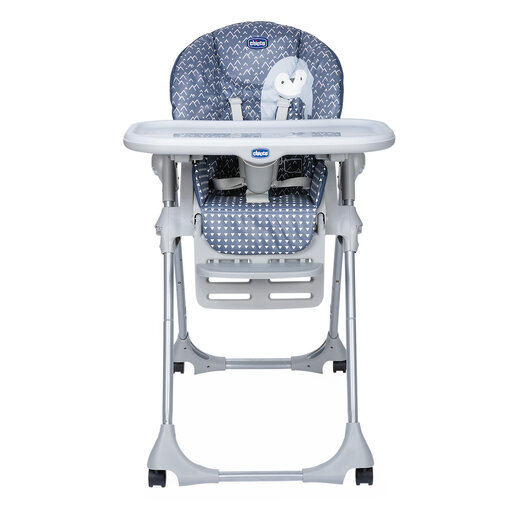
Why does it suit this profile? This classic baby high chair is ideal for families looking for a height-adjustable mealtime solution from six months onwards.
The product details clearly specify the recommended age, weight limit and safety equipment. The 5-point harness is included.
Three backrest and footrest positions, seven seat heights, four wheels and a cover that is machine washable at 30 °C.

Why does it suit this profile? Made from European beechwood, this grow-along high chair is designed for long-term use at the dining table.
The seat and foot plates are adjustable. This makes the chair’s versatility tangible through specific adjustment options rather than relying solely on a high maximum weight capacity.
FSC-certified beechwood according to the product description, a 5-point harness and a stated weight capacity of up to 90 kg. The tray is available separately.

Why does it suit this profile? This foldable high chair is well suited to homes where storage space and occasional transport are important considerations.
The specifications state the folding mechanism, the maximum load of 15 kg and the requirement to use the chair on a stable surface.
Height-adjustable seat, XL tray with cup holder, 5-point harness, storage basket and a cover that is machine washable at 40 °C.
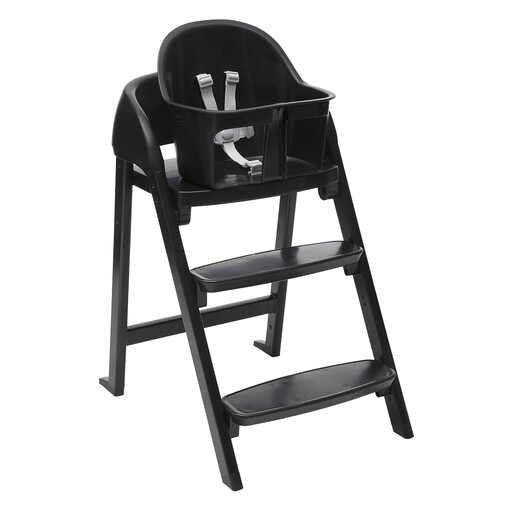
Why does it suit this profile? This model is aimed at families looking for a high chair rated up to 110 kg and designed to cover several stages of use.
The three modes have separate age and weight limits: high chair up to 36 months, child’s chair up to 40 kg and adult chair up to 110 kg.
Folds compactly, offers two footrest positions and converts into a child’s or adult’s chair.
Our complete selection includes more baby high chairs with different safety features, materials, adjustment options and weight limits.
Most models in this selection are intended for use from around six months. However, the decisive factor is whether the child can sit upright independently. Always follow the age and weight recommendations provided by the respective manufacturer.
That depends on the model. A classic baby high chair with a 15 kg limit is generally used until around three years of age. A wooden grow-along high chair with adjustable plates can remain suitable through the school years. Models such as the Chicco Crescendo Lite specify different usage stages up to 110 kg. The weight limit always applies only to the configuration intended for that particular stage.
In addition to the purchase price, you may need to budget for accessories, replacement harnesses, seat cushions or a separate tray. Check what is included as standard. For maintenance, wipe-clean surfaces usually require little effort. Washable covers are convenient but should be cleaned according to the manufacturer’s instructions. Regularly inspect screws, harnesses, locking mechanisms and wooden surfaces so that damaged parts can be replaced promptly.