
Lieferung heute & morgen

Qualitätsgarantie

Willkommens-Angebote freischalten: KOSTENLOSE Lieferung | Bis zu 80 % RABATT | Kostenlose 30-Tage-JoyPlus-Testphase
App herunterladen
A baby highchair should make mealtimes easier, stand securely and last for as long as possible. In practice, though, you may not notice the differences until after you’ve bought one: the tray is difficult to clean, the chair takes up a lot of space all the time or the stated period of use doesn’t fit your family’s day-to-day needs.
That’s why it’s worth looking beyond marketing claims before you buy. Key factors include the recommended age, weight limit, harness, stability, adjustment options and how much care it needs.
A highchair that grows with your child may offer different seat heights, footrests or configurations. But that alone doesn’t tell you how long it can actually be used. Check:
A highchair with a 70 kg weight limit is designed and used differently from one approved for up to 15 kg. The maximum weight limit is no substitute for supervision and must not be exceeded.
A highchair with a tray, padding, wheels or several components isn’t automatically more practical for everyday use. Food can get trapped between the seat, harness and tray. So look for:
A damp cloth is usually enough to clean wooden surfaces. Don’t soak the material in water. Treat fabric covers according to the care instructions.
A foldable highchair saves storage space, but that doesn’t automatically make it suitable for transport or frequent changes of location. Check its folded dimensions, weight, carry handle and stability when set up. For travel, a compact seat that attaches to a suitable chair may be an alternative. These models always need a suitable, stable chair and correctly secured straps.
A highchair suitable from 6 months is generally intended for children who can already sit up unaided. The age guidance alone isn’t enough. Read the safety instructions and only use the chair once your child has the physical abilities required.
For younger children, a highchair with a safety harness, a suitable backrest and a stable base are particularly important. A 3-point harness typically secures the pelvis and crotch area; a 5-point harness also includes the shoulders. The harness must be adjusted correctly and should never be considered a substitute for supervision.
Check the stated standard, such as EN 14988 for traditional highchairs. This standard is an important guide to the design and safety requirements. You should also check the following before each use:
Wheels can make the chair easier to move, but they mean you need to carry out extra checks. On models with wheels, the brakes must be engaged during use.
A wooden highchair or sustainable bamboo highchair may have a sturdy construction and a long useful life. Even so, check the specific material details. “Wood” doesn’t automatically tell you the type of wood or whether it is certified. Bamboo models may have an FSC claim; any certification should relate to the specific product.
A height-adjustable highchair with an adjustable footrest can adapt the seating position to different table heights. With a chair that grows with your child, removable seat boards, harnesses and feeding trays are also worth considering. The more components can be adjusted, the more important clear assembly and safety instructions become.

Why this product suits this profile: This wooden highchair is a good fit for families who prefer a simple design and space-saving storage. It arrives folded and can be moved using the handgrip.
The folding design addresses limited storage space. The permanently attached feeding tray and wipe-clean care instructions mean fewer separate parts to deal with.
Three-point harness, maximum recommended weight of 70 kg and foldable design.

Why this product suits this profile: This model combines bamboo construction with a removable feeding tray and, according to the manufacturer, can be used from 6 months through to adulthood.
The material and standard are clearly specified. Wipe-clean surfaces make regular care easier.
100% FSC-certified bamboo according to the product details, three-point harness and weight capacity of up to 70 kg.
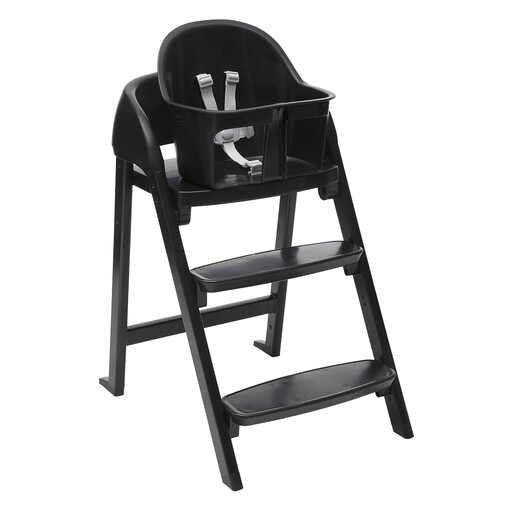
Why this product suits this profile: The 3-in-1 design is ideal for households looking for one piece of furniture to use through several stages, as well as a folding function.
Age and weight limits are specified for each configuration, making it easier to plan how the chair can be used than with blanket figures.
Highchair mode from 6 to 36 months, child’s chair up to 40 kg, adult chair up to 110 kg and a footrest with two adjustment positions.
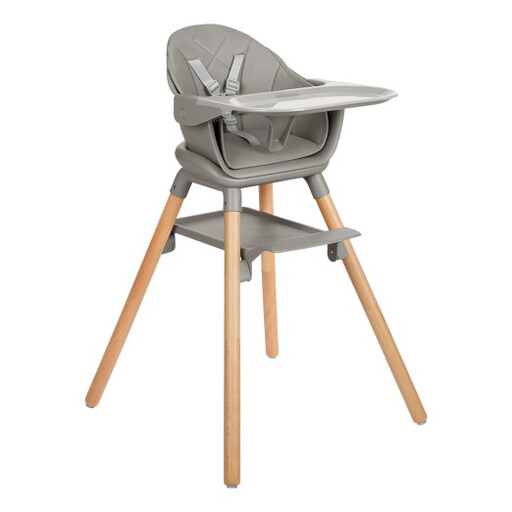
Why this product suits this profile: This 6-in-1 highchair offers several set-up options for families who want to switch between a highchair, child’s chair and low seat.
The product description lists the different ways to use it, along with separate weight limits for highchair and junior chair modes.
Six ways to use it, 5-point safety harness, double feeding tray and wipe-clean cover; weight limit of 15 kg in highchair mode and up to 25 kg as a junior chair.
We’ve put together a complete, regularly updated list of products that meet these strict selection criteria and fully comply with the safety regulations in force in the EU.
A baby highchair is usually suitable from 6 months. The key is that your child can sit unaided and without support. You must follow the manufacturer’s specific age and weight guidance. Your child must be supervised directly whenever they are using the chair.
That depends on the model and its configuration. Some versions are designed for up to 15 kg, while others can support 25, 50 or 70 kg. For some chairs, the manufacturer says they can also be used as an adult chair. Always check whether the weight limit applies to highchair mode or a later seating configuration.
Both materials can be easy to care for if their surfaces are smooth and easy to reach. Clean wood with a damp cloth, then dry it. Plastic parts can often be wiped clean too; depending on the model, fabric covers may be removable and machine washable. Don’t forget to clean the harness, gaps and underside of the tray as part of your daily routine.