
Lieferung heute & morgen

Qualitätsgarantie

Willkommens-Angebote freischalten: KOSTENLOSE Lieferung | Bis zu 80 % RABATT | Kostenlose 30-Tage-JoyPlus-Testphase
App herunterladen
Baby learning toys should spark curiosity, encourage movement and suit your child’s age. In practice, though, choosing one isn’t always easy: many products promote Montessori principles, sensory development or a host of features. What matters isn’t the number of buttons, but thoughtful design, safe materials and how well the toy fits into everyday life.
Lights, music, animal sounds and moving parts can look appealing in product photos. But too many stimuli at once can be confusing for a six-month-old baby. A good learning toy should encourage individual actions, such as grasping, pressing, sorting or rolling. Activities can gradually become more challenging for older toddlers.
A toy marked “from 6 months” isn’t automatically suitable for every baby in that age group. Development, ability to sit safely and enthusiasm for movement all vary. Pay particular attention to small parts, cords and detachable components. For products intended for children under three, check the warning about small parts that could be swallowed.
The CE mark indicates that the manufacturer declares the product complies with the relevant EU legal requirements. It is not an independent quality mark. Information about EN 71, BPA-free materials or rounded edges should be clearly stated in the product description. Before buying, it’s also worth checking the manufacturer, the responsible person in the EU, battery information and care instructions.
For babies aged six months and over, simple sensory toys are often suitable for tummy time, grasping and exploring cause and effect. An activity table with detachable legs can be used on the floor at first, then while standing as your child gets older.
Montessori toys for babies should offer more than just the Montessori label. Look for clear activities such as inserting, sorting, turning and grasping. For children aged 12 months and over, motor skills toys for ages 1+ are another option, including shape sorters, push-along toys and soft movement blocks.
Look for:
Cleaning is particularly important for bath toys. Water can collect inside hollow parts. Toys should be left to dry after use and always used under supervision.
A baby walker or push-along trolley needs a stable design and enough room to move around. With musical toys for toddlers, volume control is useful, especially in flats or shared spaces. Music and sounds shouldn’t be played directly next to your child’s ear for long periods.
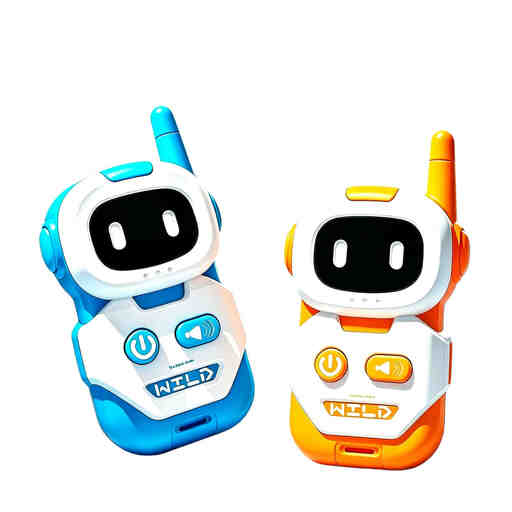
Why this product suits this profile: This compact play centre combines drumming, lights, animal sounds and shape sorting. It’s suitable for babies from six months through to toddlerhood, and can be used on the floor.
The features are grouped into clearly defined play areas. The product information also mentions a stable base and rounded edges.
Five shape pieces, drumming surfaces, lights and animal sounds; batteries not included.
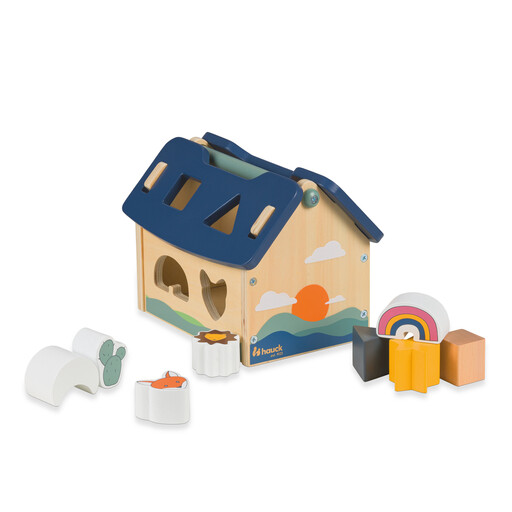
Why this product suits this profile: Made from FSC-certified wood, this shape sorter is designed for children aged 12 months and over. It focuses on a simple activity, without electronic distractions.
The eight blocks and removable roof are clearly described. Take note of the warning about small parts for children aged 12 months and over.
FSC-certified wood, integrated storage and a carry handle; suitable for sorting and stacking.
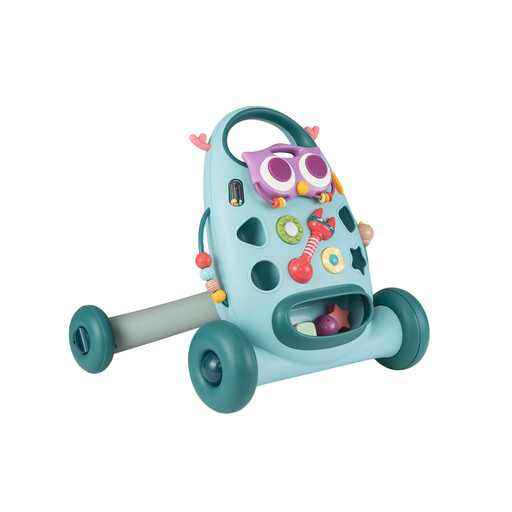
Why this product suits this profile: Designed for children aged 12 to 36 months, this push-along trolley combines walking with sorting, turning and bead activities.
According to the product information, the rear wheels have two settings to control speed. The play board can be removed.
Triangular frame, removable play surface and a stated load capacity of up to 25 kg.
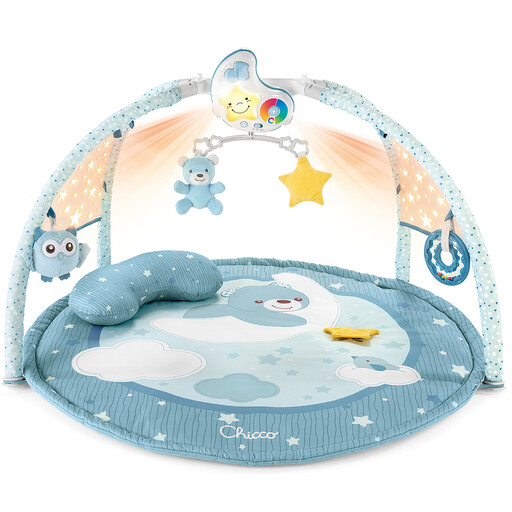
Why this product suits this profile: Designed for use from birth, this play mat combines tummy time, grasping toys, projection and music. The projector can also be used separately as a night light.
Timers set for 15 or 30 minutes limit how long the lights and music stay on. According to the product information, the mat and cushion are machine washable at 30 °C.
83 cm play mat, removable projector and several grasping and rattling toys.
We’ve put together a complete, regularly updated list of products that meet these strict selection criteria and the safety regulations in force in the EU.
Look for products that encourage grasping, pressing, observing and sorting. A toy should sit securely on the floor and have no small parts that can come loose easily. For electronic products, moderate volume and an easy-to-reach off switch are useful.
Lifespan depends on the materials, how often the toy is used and how well it is cared for. Plastic toys with smooth surfaces are usually easy to clean. With wooden toys, parents should regularly check for splinters, cracks and loose parts. Electronic products can be subject to more wear and tear because of their batteries, switches and speakers. Using toys in an age-appropriate way helps reduce unnecessary wear.
Many musical and light-up toys need batteries, which have to be bought separately. Before buying, check the battery type and quantity, and whether there’s an automatic shut-off. Volume control and a quiet mode make toys easier to use day to day, but won’t affect battery consumption. Rechargeable batteries can be a practical option if the toy is used frequently.