
Lieferung heute & morgen

Qualitätsgarantie

Willkommens-Angebote freischalten: KOSTENLOSE Lieferung | Bis zu 80 % RABATT | Kostenlose 30-Tage-JoyPlus-Testphase
App herunterladen
Baby learning toys should entertain while also providing age-appropriate play opportunities. In practice, however, the choice can be overwhelming: music, lights, sensors and numerous learning modes may sound convincing, but they say little on their own about everyday practicality and safety. What matters is whether the toy suits your child’s stage of development, your living situation and how you intend to use it.
A toy with lots of buttons, melodies and play modes may seem versatile. For younger babies, however, too many stimuli can be confusing. With a sensory toy for babies, it should be clear which action triggers which response. Large, easy-to-reach elements are generally more practical than small buttons with complicated controls.
“From 6 months” or “for 1- to 3-year-olds” is not enough to make a fully informed buying decision. A six-month-old baby needs different play opportunities from a two-year-old child. You should also check:
A toy from 6 months should primarily offer large, easy-to-grasp elements. Toys for 1-year-olds can also include sorting, turning and fitting activities.
Information such as BPA-free materials, rounded edges, CE marking or EN71 compliance is important to check. However, the CE mark is not an independent quality seal and does not replace adult supervision. With every motor skills toy for babies, parents should check for cracks, loose parts, sharp edges and damaged cables before first use and regularly thereafter.
For plastic toys, information about the material, such as ABS or BPA-free construction, is helpful. This should be accompanied by clear manufacturer identification. With wooden toys, a smooth surface, sturdy connections and traceable provenance are important. According to the product information, the Hauck sorting toy is made from FSC-certified wood; nevertheless, parents should regularly check the components for splinters or loosened parts.
The age warning is particularly important: the Hauck toy contains eight shape blocks and, according to the product information, is intended for children aged 12 months and over. It is not suitable for younger children because of the potential small parts.
Music toys for babies should have volume control or the option to switch the sound off. This makes them easier to use at home, in the car or during quiet periods. Battery compartments should be securely closed. Also check whether batteries are included: they are not included with several of the products listed.
A baby activity centre must stand firmly and should not tip over easily when your child grasps, presses or turns its elements. Compact cubes or floor play boards are practical for smaller homes. A wipe-clean surface makes daily cleaning easier. A play gym should only be used on a level surface; suspended elements must be firmly attached and checked regularly.
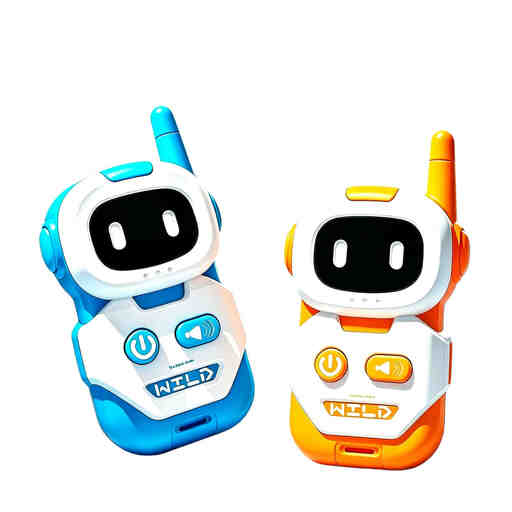
Why this product suits this profile: This 4-in-1 toy combines drum surfaces, lights, animal sounds, and shape and colour sorting in one compact design. It is suitable for families looking for several types of play in one product.
According to the product information, the recommended age range is 6 to 36 months; the relevant warning still applies to the small shape pieces. A stable base and rounded edges are also specified.
Shape and colour buttons, two drum surfaces, light effects and animal sounds; according to the product information, batteries are not included.
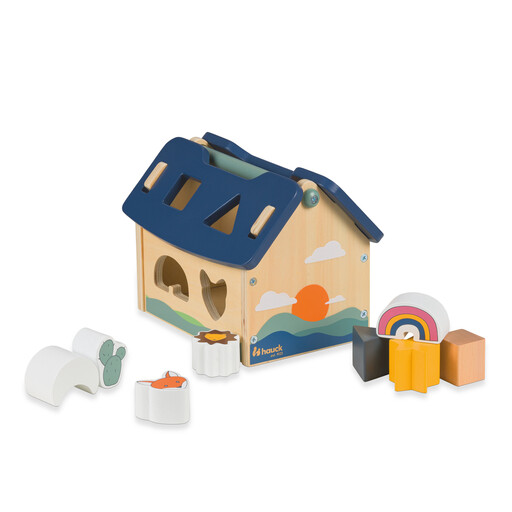
Why this product suits this profile: This wooden toy focuses on sorting, stacking and recognising shapes and colours. It is an option for households that prefer a minimalist Montessori toy without music or lights.
It is clearly intended for children aged 12 months and over. The shape blocks can be stored inside the house; damaged or loose parts must be removed immediately.
FSC-certified wood according to the product information, eight components, removable roof and carry handle.
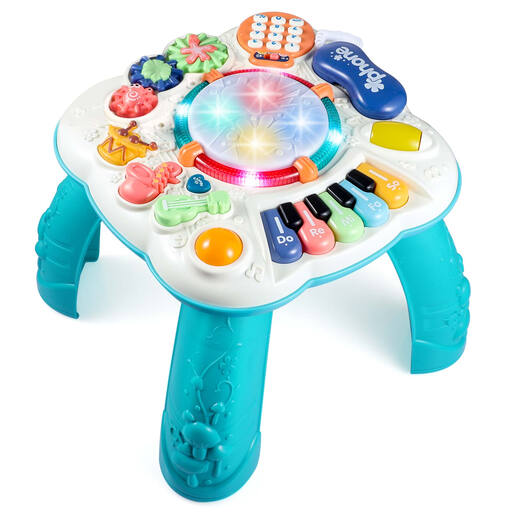
Why this product suits this profile: The six play areas and removable legs allow for both floor and standing play. This can be practical for families who want to use one learning toy across several developmental stages.
The volume can be adjusted according to the product description, which also mentions a quiet mode. Before buying, check the dimensions of 11.8 × 11.8 × 12.2 inches and the available space.
Piano, drum, telephone, cogs and instrument buttons; can be used as a floor play board or activity table.
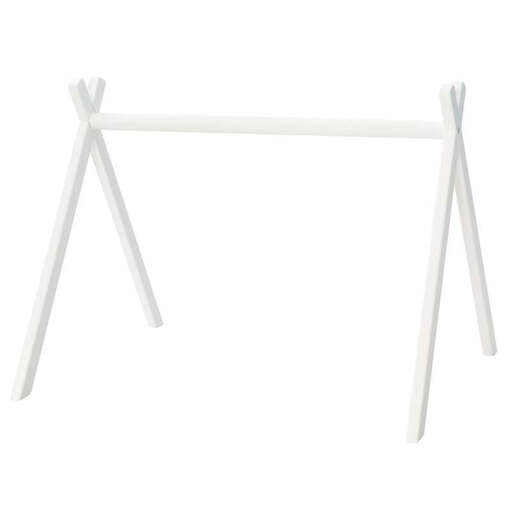
Why this product suits this profile: This wooden play gym is designed for babies who enjoy reaching, looking and exploring while lying down. It does not require batteries and suits families who prefer a simple sensory play option.
It does not rely on electronic effects. According to the product information, the play gym must stand on a level surface and should be checked for damage before every use.
Painted wood, wipe-clean surfaces, dimensions of 52 × 70 × 50.5 cm and separately available play sets according to the product description.
We have put together a complete, regularly updated list of products that fully meet these strict selection criteria and the safety regulations applicable in the EU.
Products with large, securely connected elements that can be reached while lying down or sitting are suitable. A play gym or floor play board can provide visual and tactile play opportunities. Small sorting shapes and removable parts should only be used at this age if they are explicitly designed for it.
Lifespan depends on the materials, construction and frequency of daily use. Electronic products can wear out through their battery contacts, speakers or switches. With wooden toys, the connections and surfaces are key. Regular checks for cracks, loose parts and splinters are essential regardless of the product.
This depends on how often the toy is played with, the volume and any automatic light or sound functions. Volume control and an on/off switch help reduce power consumption. Remove the batteries if the toy will not be used for an extended period and check the battery compartment regularly for corrosion.