
Lieferung heute & morgen

Qualitätsgarantie

Willkommens-Angebote freischalten: KOSTENLOSE Lieferung | Bis zu 80 % RABATT | Kostenlose 30-Tage-JoyPlus-Testphase
App herunterladen
Baby learning toys should entertain while supporting a child’s first learning experiences. At the same time, parents, grandparents and other family members face a huge choice: Montessori toys, sensory activities, musical toys, motor skills toys or a baby activity cube. However, not every product suits the child’s age, living situation or actual stage of development.
The following selection criteria will help you assess marketing claims and avoid unsuitable purchases.
Lights, melodies, buttons and moving elements may seem versatile at first glance. For a baby, however, too many stimuli can be confusing. What matters is whether the functions are easy to use and suitable for the child’s age. A toy with just a few easily accessible elements may be more practical for everyday use than a product with numerous complicated modes.
A toy suitable from 1 year is not automatically suitable for a six-month-old baby. Small parts, powerful movements or an unstable construction may be unsuitable for younger children. Even with products for older children, the age recommendation should only be used as a guide. The child’s development, ability to grasp objects and ability to understand instructions are also important.
Statements such as ‘BPA-free’, ‘rounded edges’ or ‘CE’ are useful indications, but they do not replace checks before purchase and during use. The CE mark is a manufacturer’s declaration of conformity, not an independent quality seal. The EN 71 standard sets out toy safety requirements in the European Union. For battery-powered products, you should also check the battery compartment, volume control and any small parts.
First, consider where and how the child will play:
Look for smooth surfaces, rounded edges and clear material information. For plastic toys, details such as ABS or BPA-free materials are helpful, but they should always be considered alongside the age recommendation and safety instructions. Wooden toys should have no splinters, loose joints or sharp edges.
For toys with shape sorters, blocks or accessories, the size of the parts is particularly important. Products containing small parts that could be swallowed must not be given to children below the stated age limit. Packaging, cable ties and plastic film must be removed immediately.
Musical toys for children are more pleasant to use every day when the volume can be adjusted. For electronic products, check the following:
These points affect not only running costs, but also how practical the product is for everyday use.

Why this product suits this profile: This compact cube combines eight types of activity in a 23 × 23 × 24 cm format and is suitable for children aged 1 to 3 years. It can be a practical choice when storage space is limited.
The age limit is clearly stated. According to the product information, the surfaces are made from BPA-free ABS with rounded edges; nevertheless, all elements should be checked before use.
A piano, guitar, telephone activity, gears and windmill provide a range of grasping and twisting movements in a portable format.
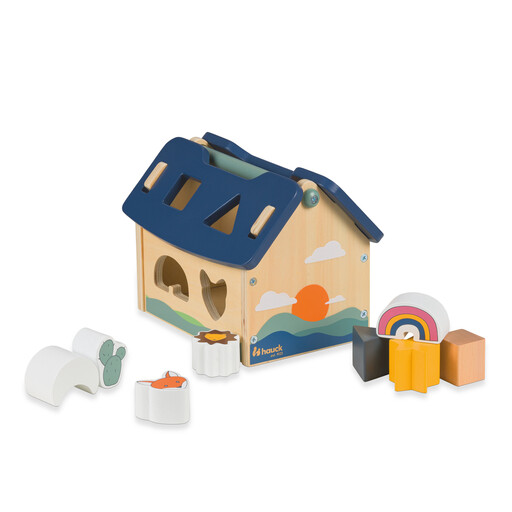
Why this product suits this profile: This wooden toy is suitable for children aged 12 months and over and includes eight blocks for sorting and stacking. The removable roof makes it easier to store.
The product information specifies FSC-certified wood. Because it contains small blocks, this toy is expressly unsuitable for children under 12 months.
Shape and colour recognition, hand-eye coordination and space-saving storage in a wooden house.
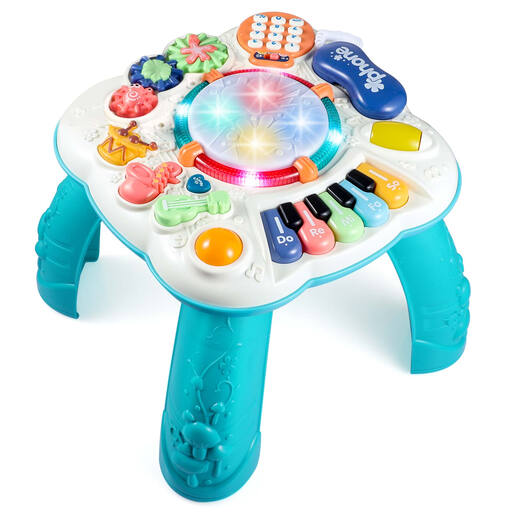
Why this product suits this profile: According to the product description, the activity table can be used as a floor play panel once its legs have been removed. This makes it suitable for households where the toy is intended to be used across several stages of development.
Volume control and a quiet mode address the common noise pitfall associated with electronic toys. The age range of 6 to 36 months should be considered in relation to the intended use.
Six play areas with a piano, drum, gears and telephone activity; according to the product information, batteries are not included.
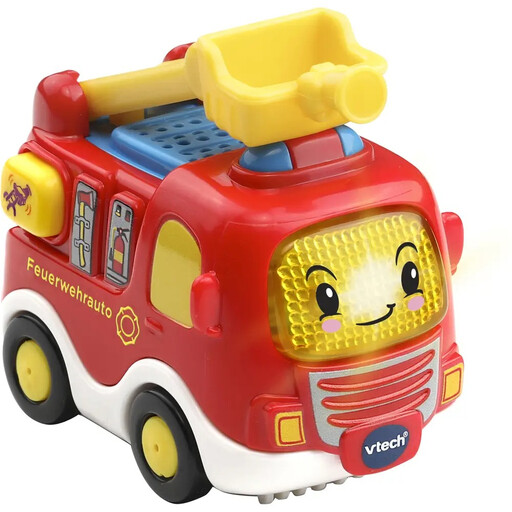
Why this product suits this profile: This compact vehicle is suitable for children aged 1 year and over and is ideal for short play sessions on the floor or while out and about. It requires two AAA batteries, which are included according to the product information.
The age recommendation and battery requirements are clearly stated. The battery compartment should be checked regularly to ensure it is securely closed and undamaged.
Moving fire ladder, light effects, three songs and six melodies; according to the product information, compatible with other Tut-Tut-Baby-Flitzer playsets.
We have put together a complete, regularly updated list of products that fully meet these strict selection criteria and the safety regulations applicable in the EU.
Even a carefully selected product cannot replace spending time together. With babies, parents can first show them how to press a button, turn a cube or fit a shape into place. The child should then be given plenty of time to explore independently.
When using electronic learning toys, it is a good idea to alternate them with quieter options such as wooden building blocks, picture books or simple motor skills toys. This keeps play varied. Toys should also be checked regularly for cracks, loose parts, sharp edges and leaking batteries.
From around 6 months, large, easy-to-grip and easy-to-clean toys are suitable. These include simple rattles, soft grasping elements or a flat play panel. Products with small shape-sorter pieces or parts that could be swallowed should only be used from the age recommended by the manufacturer.
The service life depends on the materials, workmanship and level of use. Plastic products can often be wiped clean with a damp cloth, while wooden toys should be cleaned with a dry or slightly damp cloth. Electronic versions also require working batteries and an intact battery compartment. Regular visual checks make it easier to remove damaged parts at an early stage.
Running costs mainly come from batteries or recharging a rechargeable battery. Before buying, check the required battery size, whether batteries are included and whether an automatic shut-off is available. Volume control can also make the toy easier to use in everyday family life.