
Lieferung heute & morgen

Qualitätsgarantie

Willkommens-Angebote freischalten: KOSTENLOSE Lieferung | Bis zu 80 % RABATT | Kostenlose 30-Tage-JoyPlus-Testphase
App herunterladen
Baby learning toys should do more than entertain: they should suit your child’s age and stage of development, as well as your family’s everyday routine. But with everything from flashing activity centres to musical toys and Montessori toys, choosing the right one can feel overwhelming. Some products offer lots of features but are unnecessarily complicated. Others seem sturdy, yet are difficult to clean or need batteries and have no volume control.
This buying guide explains what parents, grandparents and other family members should look for, and which products may suit different situations.
A toy with lights, music, buttons and several play modes can offer plenty of variety. But for babies and toddlers, what matters most is whether the features are easy to understand and reach. A few well-placed elements may encourage independent play more effectively than an overloaded control panel.
Toys from 6 months aren’t automatically suitable for every six-month-old baby. Grasping toys and rattles support different abilities from a baby activity centre with a stand function. Small parts, battery compartments and detachable components need to be suitable for your child’s age. Check the information on the packaging and product page before you buy.
Electronic baby activity toys can become disruptive in everyday life if they don’t have volume control or a mute function. For grasping toys and teething toys, it’s important to check whether they can be wiped clean or machine-washed. A product that’s difficult to clean may end up being used less often.
For babies under one, look for large, easy-to-grasp elements with different textures, gentle rattling or crinkling sounds and clear contrasts. A soft grasping toy with crinkly wings is one example. From around six months, you can introduce shapes, colours, simple buttons and cause-and-effect play.
For toddlers aged 12 months and over, sorting games, twisting and slotting elements, and simple musical instruments for children can be appealing. Even toys with several features should be easy to use and understand.
Look for:
The CE marking is a legally required declaration of conformity made by the manufacturer or person placing the product on the market for certain product groups. It isn’t an independent quality mark, and it doesn’t replace checks on construction, warnings and suitability for use.
For wooden toys, additional information such as FSC-certified wood may be relevant. For electronic sensory toys, also consider whether they have volume control, how they’re powered and whether they switch off automatically.
A large baby motor skills toy needs enough clear space and should be set up securely. Compact activity cubes and portable toys are more suitable for smaller homes or travel. Several volume settings or a quiet mode are especially useful for musical toys. Batteries aren’t always included, so remember to factor them into the ongoing cost.
The recommendations below group specific products by everyday situation and verifiable features.
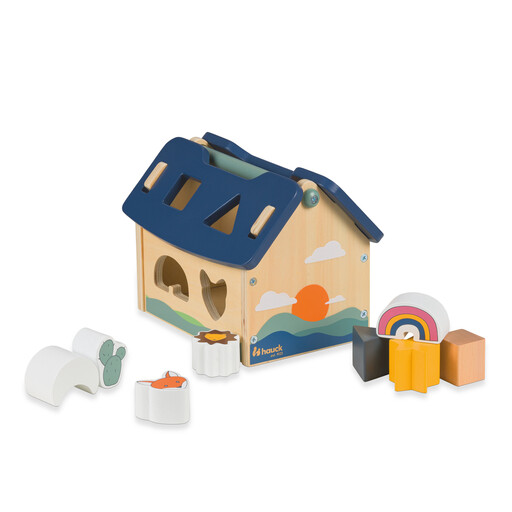
Why this product suits this profile: This wooden toy for children aged 12 months and over focuses on shapes, colours and slotting, and doesn’t need batteries.
Its features are straightforward, so there are no batteries, extra noises or unnecessary controls to contend with.
FSC-certified wood according to the product description, eight blocks and storage space inside the playhouse.
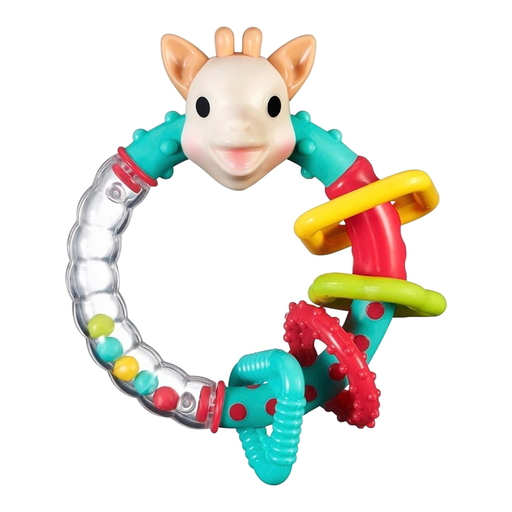
Why this product suits this profile: This grasping toy combines different textures and moving rings, and is suitable from three months.
The product information clearly states the age guidance and says to clean the toy with a damp cloth.
Rattle and grasping functions, four moving rings, and a combination of firm and softer textures.
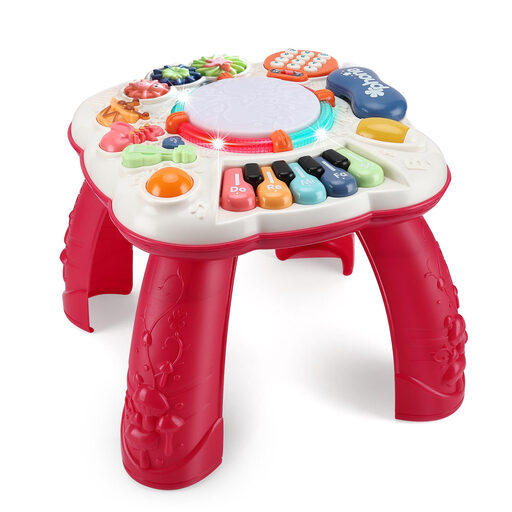
Why this product suits this profile: This baby activity centre has six play areas and can be used as a floor play panel by removing the legs.
The product description mentions volume control and a quiet mode, making it easier to plan for use at home.
Piano, drum, gears, telephone function and instrument buttons; suitable for ages 6 to 36 months.
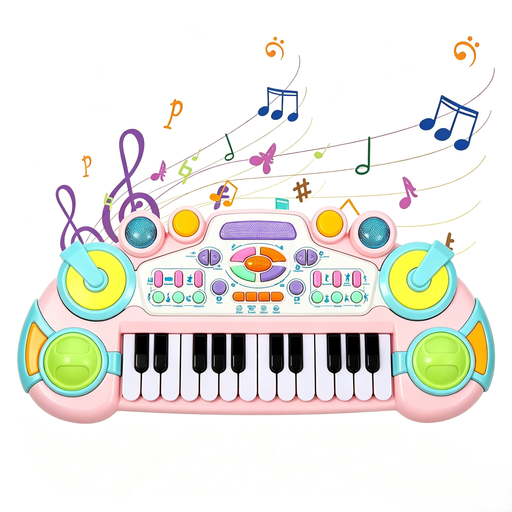
Why this product suits this profile: According to the product information, this keyboard is designed for children aged 1 to 5 and combines keys with light and sound effects.
The product description specifically lists volume control and a mute mode.
24 keys, several sound modes and details of BPA-free ABS plastic with rounded edges.
We’ve put together a complete, regularly updated list of products that meet these strict selection criteria and the safety regulations in force across the EU.
Before ordering learning toys for toddlers, ask yourself:
A suitable gift for babies and toddlers doesn’t need to have as many features as possible. What matters is whether it’s safe, easy to understand and practical enough to use regularly as part of family life.
From six months, grasping toys, rattles, crinkle toys and simple activity toys may be suitable. For products with small shapes or detachable parts, age guidance and warnings are especially important. An activity centre with a floor-play function may be a good option if your baby is still playing while lying down.
There’s no set time. Short, regular play sessions often suit a baby’s attention span better. Look out for signs such as turning away, becoming unsettled or getting tired, and pause the play. For musical toys, keep the volume moderate and leave plenty of space around your baby’s ears.
Ongoing costs depend mainly on batteries or rechargeable batteries and how often the toy is used. Before buying, check whether batteries are included, what size is needed and whether the toy switches off automatically. Volume control and a quiet mode also make it easier to use in a shared household.