
Lieferung heute & morgen

Qualitätsgarantie

Willkommens-Angebote freischalten: KOSTENLOSE Lieferung | Bis zu 80 % RABATT | Kostenlose 30-Tage-JoyPlus-Testphase
App herunterladen
Baby learning toys should entertain, spark curiosity and provide age-appropriate activities. At the same time, parents and grandparents face a huge choice: interactive baby toys with lights and music, Montessori wooden toys, baby motor-skills toys or versatile activity toys.
As a Joybuy Product Recommendation Officer, I filter the most important product details and assess them in the context of everyday situations. After all, a toy with lots of features is not automatically suitable for a child’s age, home or stage of development.
A toy with numerous buttons, songs and light effects may seem versatile at first glance. However, if all the elements are activated at once, a child can quickly lose track. For younger babies, individual, clearly recognisable responses are often more useful: pressing produces a sound, turning moves a part or shaking creates a noise.
So, check whether the toy allows different play modes to be used separately and whether it is easy to operate without complicated instructions.
“From 6 months” or “for 1 to 3 years” provides guidance, but does not replace adult supervision. Depending on the product, small parts, battery compartments, cords or detachable accessories may present a risk.
The key points are the age recommendation on the packaging, the safety instructions and whether the child can already operate the toy in line with their motor skills.
Musical toys for children can quickly become disruptive in everyday life if they do not have volume control. Battery-powered products also involve ongoing costs and maintenance. Before buying, check the following:
For babies from around 6 months, toys that can be reached while lying down or during tummy time are often suitable. Rolling objects can encourage babies to grasp and observe them, but should only be used on safe, clear surfaces.
For toys from 1 year, shape sorters, rotating elements, simple buttons and sliding functions are suitable when they are sturdily made. Baby walkers require sufficient space and must be positioned securely so that they cannot tip over.
Look for details such as ABS plastic, the type of wood, rounded edges and care instructions. Terms such as “BPA-free” may provide additional information about the material, but they do not replace checking all the safety information.
The CE marking indicates that the manufacturer declares the product meets the applicable EU requirements. It is not an independent quality seal. The EN 71 standard relates to toy safety requirements. Nevertheless, parents should check the product before every use for cracks, loose parts, sharp edges and damaged battery compartments.
A compact learning toy is easier to store and take on trips. With activity tables or baby walkers, however, the base area, weight and available space for movement are particularly important.
Smooth surfaces that can be cleaned with a slightly damp cloth are practical. Electronic toys should generally not be immersed in water. For plush or wooden products, follow the manufacturer’s care instructions.
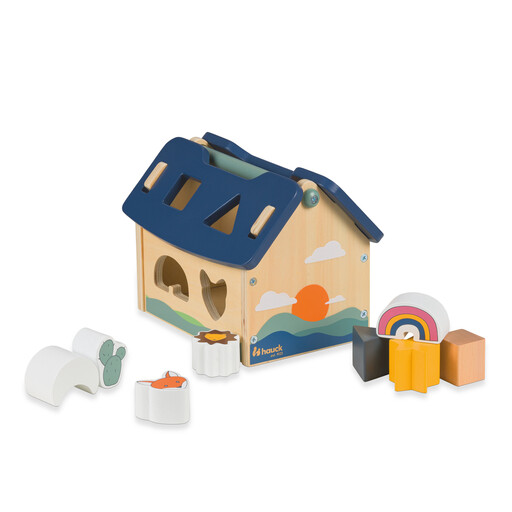
Why this product suits this profile: This wooden toy for children from 12 months focuses on shapes, colours and placing pieces rather than batteries or electronic effects.
It offers one clearly defined task and avoids ongoing battery costs. Small components require compliance with the stated age recommendation and supervision.
FSC-certified wood according to the product information, 8 shapes and a carry handle.

Why this product suits this profile: This compact cube is designed for children aged 1 to 3 years and combines several manual and musical ways to play.
The age recommendation, BPA-free ABS and rounded edges are clearly specified. Electronic functions should nevertheless only be used at a suitable volume.
8 play modes, dimensions of 23 × 23 × 24 cm and an integrated carry handle.
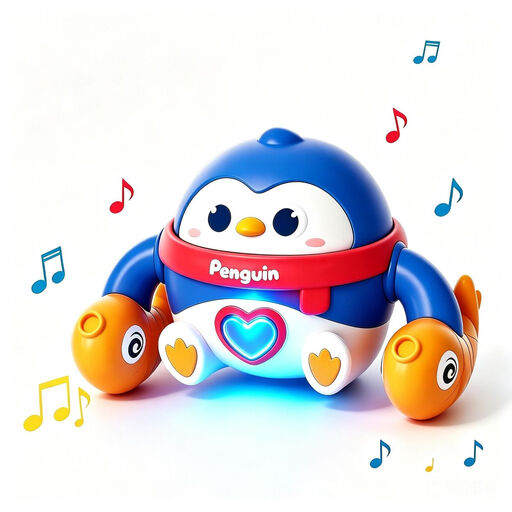
Why this product suits this profile: For babies aged 6 to 36 months who enjoy watching and following moving objects during tummy time or while crawling.
The product information specifies the age range, BPA-free ABS and rounded edges. As the toy moves, clear floors and close supervision are required.
360-degree rolling movement, light function and response to clapping or touch; batteries are not included.
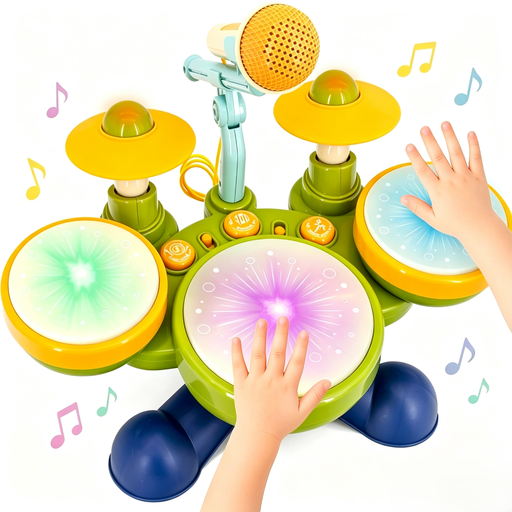
Why this product suits this profile: This set is designed for children aged 1 to 3 years and is suitable for musical play with adult supervision.
The volume can be adjusted according to the product description. Before use, check the stand, cable connections and battery compartment.
Volume control, removable stand, illuminated drum surfaces and microphone; batteries are not included.
We have put together a complete, regularly updated list of products that fully meet these strict selection criteria and the safety regulations applicable in the EU.
From around 6 months, toys that are easy to grasp, simple to use and clearly visible are a good choice. These include rattles, simple sensory toys or a moving crawling toy. A suitable age recommendation, no accessible small parts and use on a safe, level surface are essential.
Lifespan depends on the material, construction, use and care. Electronic products need new batteries regularly and should be protected from moisture. Wooden toys can remain usable for a long time when stored in a dry place, but they should also be checked for cracks, splinters and loose parts. Damaged toys should no longer be given to children.
Battery-powered toys incur ongoing costs for replacement batteries. Actual battery life depends on volume, frequency of play and automatic shut-off. Products with volume control and an automatic shut-off may be more practical for everyday use. Before buying, also check whether batteries are already included in the delivery.