Families considering the way nuts are served
You’d like to include nuts in baby-led weaning, but don’t want to offer whole pieces. What matters is whether you can stir in a nut butter or mix finely ground nuts thoroughly into a moist dish.


For baby-led weaning, nut butter or very finely ground nuts mixed into a moist dish are more suitable than whole nuts. The Gesund ins Leben network recommends nut butter or finely ground nuts for young children to avoid the choking risk posed by whole nuts. In any case, check the organic labelling, ingredients and allergen information on the specific product; an organic certification does not tell you anything about the form in which it is served.
You’d like to include nuts in baby-led weaning, but don’t want to offer whole pieces. What matters is whether you can stir in a nut butter or mix finely ground nuts thoroughly into a moist dish.
You want to check the product’s organic status and choose a straightforward recipe. The term ‘nut cream’ alone doesn’t tell you whether it contains ingredients other than nuts.
If your child has a medically confirmed allergy or is following an individual introduction plan, the information on the current packaging is what counts. You should also take account of any warnings about possible traces of other allergens.
First, decide how you plan to serve the nuts. Organic labelling and the ingredients list can then help you choose a product. If you have a known allergy, follow your individual medical advice.
| Criteria | What to check | Who it matters most to |
|---|---|---|
| Form | Choose nut butter rather than whole nuts. Use ground nuts only if they are very fine and mixed into a moist dish. The Gesund ins Leben network recommends nut butter or finely ground nuts instead of whole nuts for young children. | I want to avoid hard pieces of nut and be able to stir the product into a moist dish. Around 50% of consumers are likely to consider form their top buying priority. |
| Organic status and ingredients | Check the organic labelling on the packaging and read the ingredients list. Distinguish nut butter made with a single nut ingredient from nut creams and snacks containing other ingredients. | I want to be able to check the organic status and recipe on the specific jar. For around 30% of consumers, this is likely to be a top priority when buying. |
| Allergens | Read the ingredients and any warnings about possible traces on the current packaging. If you have a known allergy, follow your individual medical advice. | If I have a confirmed allergy, I need to know which allergens and possible traces are listed for this product. Around 20% of consumers are likely to see this check as a priority. |
An organic whole nut is still a hard piece. The Gesund ins Leben network highlights the choking risk posed by whole nuts for young children.
For your intended use, choose nut butter or very finely ground nuts mixed into a moist dish. Don’t serve dry nut flour loose.
Product names alone don’t tell you what the ingredients are or what the texture is like. Creams, bars and mixes aren’t automatically comparable to nut butter made with a single nut ingredient.
Read the ingredients list and check the form of the specific product instead of making assumptions based on its name or organic labelling.
Ingredient and possible trace information applies to the individual product. An organic label or a short ingredients list doesn’t replace checking this information.
Read the current packaging before serving the product. If your child has a medically confirmed allergy, discuss your choice with their healthcare professional.
These examples can help you compare product types and ingredients. For baby-led weaning, always check the form and information for the individual product.
REWE lists organic nut butters made from different types of nuts on its product pages, including almond, peanut and cashew butter.
EDEKA describes its organic peanut butter as being made from 100% peanuts from certified organic farming.
Lidl describes an organic range in Germany. You’ll need to check the individual product to see whether it includes a suitable nut butter.
ALDI SÜD also sells broken cashew pieces under ALDI BIO. Broken nuts are not the same as smooth nut butter for the use discussed here.
Seeberger describes an almond butter made from 100% roasted almonds. The ingredients information alone doesn’t confirm organic status.
These two smooth nut butters may be suitable for stirring into a moist dish. Compare the type of nut used in each one, and check the organic labelling, ingredients and allergens on the packaging before use.
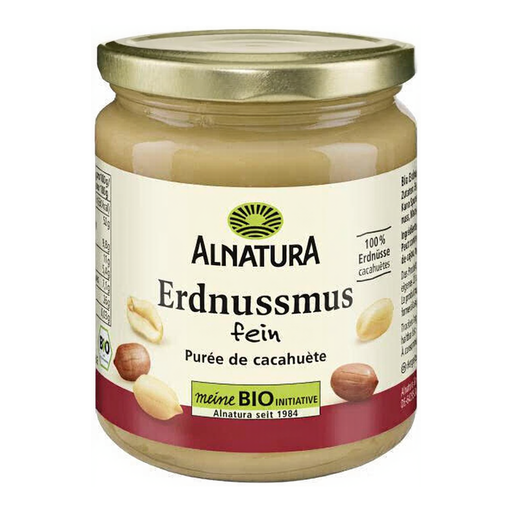 Image unavailable
This smooth peanut butter may be suitable for stirring into a moist dish instead of offering whole peanuts. Before use, check the ingredients, organic labelling and allergen information on the packaging; don’t offer thick nut butter on its own by the spoonful.
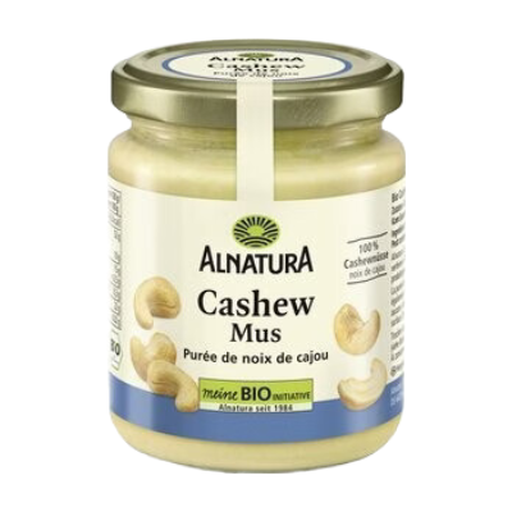 Image unavailable
This smooth cashew butter may be suitable for stirring into a moist dish instead of offering pieces of cashew. First, check the current packaging for ingredients, organic labelling and possible allergen information; don’t offer thick nut butter on its own by the spoonful.
No. Organic labelling doesn’t change the fact that they are hard pieces. For young children, the Gesund ins Leben network recommends nut butter or finely ground nuts instead of whole nuts. The latter should be mixed into a moist dish.
The ingredients list on the packaging is what matters, not just the product name. If it lists only the relevant nut, you can clearly distinguish the recipe from a cream containing other ingredients.
No. Organic labelling doesn’t tell you whether the texture and form are right for how you plan to use the product. Check the form separately from its organic status, and stir the nut butter into a moist dish for this use.
Use online information to help you shortlist products, then read the current packaging before serving one. If your child has a medically confirmed allergy, your choice must also follow their individual medical guidance.