
Lieferung heute & morgen

Qualitätsgarantie

Willkommens-Angebote freischalten: KOSTENLOSE Lieferung | Bis zu 80 % RABATT | Kostenlose 30-Tage-JoyPlus-Testphase
App herunterladen
Finding the right baby milk and growing-up milk powder may seem straightforward at first. However, shop shelves and online stores offer products for different age groups, with varying sources of fat, vitamins, minerals and preparation instructions. A striking product name alone therefore says little about whether the pack is suitable for your child’s age and your family’s daily routine.
Infant formula from birth, follow-on milk and growing-up milk are not interchangeable. Formula intended for the first days of life is designed to meet different requirements from follow-on milk from 10 months or growing-up milk from 1 year. The clear age information on the packaging is what matters – not just the product name or a marketing claim.
DHA, GOS/FOS, HMO, vitamins and lactic acid cultures can all be relevant selection criteria. However, they do not replace checking the full ingredients list, allergens, nutritional information and preparation instructions. For example, DHA growing-up milk is not automatically suitable for every age group.
Depending on the product, opened packs must be used within around three to four weeks. A large 800-g tin can be practical for regular use, while a 500-g pouch may be enough for occasional milk drinks. Before buying baby milk online, it is therefore worth comparing the fill weight, portioning instructions and shelf life after opening.
First, assign the product to a specific age group:
If you are looking for palm-oil-free growing-up milk, check the ingredients list for the specific product. In the product data available, Milupa Milumil, Nestlé BEBA Junior 1+ and Aptamil Pronutra 1+ and 2+ are described as palm-oil-free. Bebivita Growing-Up Milk 1+ and 2+, on the other hand, contain palm oil from sustainable cultivation. HiPP Combiotik from 1 year lists palm kernel oil from sustainable sources.
When choosing organic growing-up milk, look for the relevant certification and check the origin of the ingredients. According to the product information, HiPP Pur Organic Children’s Milk from 1 year contains, among other ingredients, 19% whole milk powder from certified organic farming. The recipe also contains fish oil and soya or lecithins. Allergens such as milk, fish, soya and lactose must be taken into account before buying.
Nutritional values are generally stated per 100 ml of the prepared drink. This makes it easier to compare energy, protein, fat, calcium, iron and vitamins. Growing-up milk may list calcium and vitamin D, while iron is also often added. Such information describes the product’s composition but does not constitute an individual nutritional guarantee.
Also look out for:
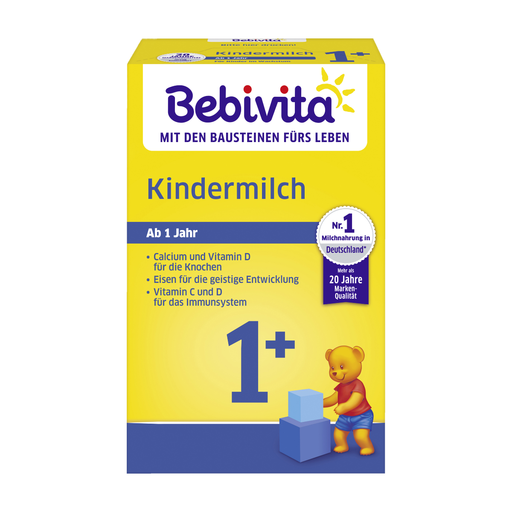
Why this product suits this profile: The 500-g pack is suitable for families who want to introduce milk powder for toddlers in a manageable quantity to begin with.
The age recommendation from 1 year is clearly stated. This helps prevent follow-on milk from being used accidentally as growing-up milk.
With calcium, iron and vitamins C and D; gluten-free according to the product information.
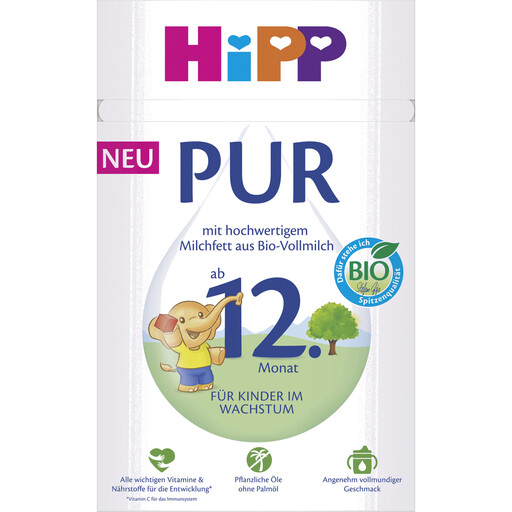
Why this product suits this profile: An option for parents who prefer organic ingredients and detailed nutritional information including DHA.
The choice is based on the stated organic origin and clearly listed allergens, rather than on the packaging design alone.
From certified organic farming; according to the product data, it contains DHA, iron, calcium, iodine and vitamins.
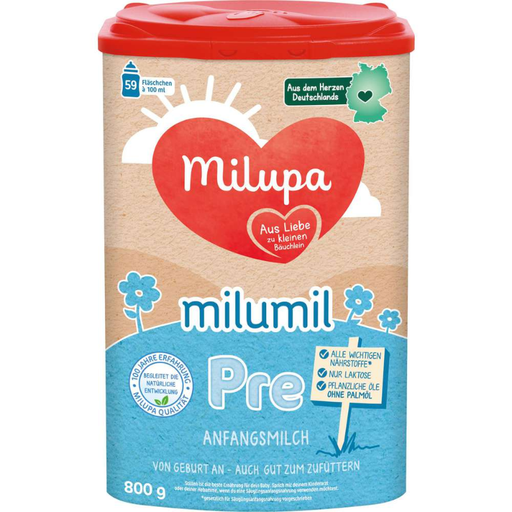
Why this product suits this profile: The 800-g tin is designed for households that regularly need milk powder for babies.
The from-birth labelling helps prevent confusion with later follow-on milk. The palm-oil-free recipe and clear storage instructions make it easier to narrow down your options.
With DHA and a GOS/FOS fibre blend according to the product description; practical tin with scoop holder and levelling edge.
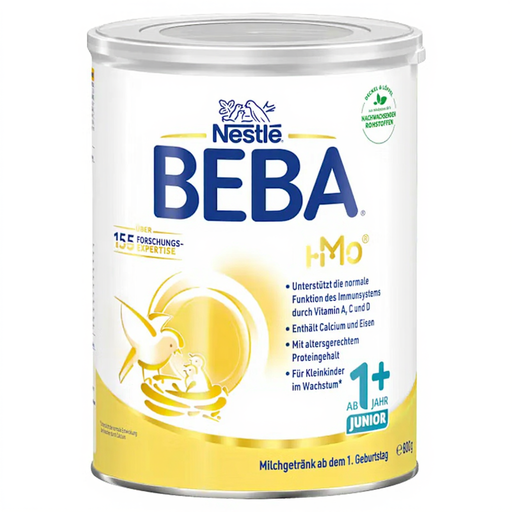
Why this product suits this profile: Suitable for parents looking for a larger pack, palm-oil-free vegetable oils and an age-specific recipe from 12 months.
The age limit from 12 months is clearly highlighted. The preparation quantity, recommended daily amount and usage period after opening are also stated.
According to the product information, with 2’-FL HMO, vitamins A, C and D, and 127 mg of calcium per 100 ml of prepared drink.
We have put together a complete, regularly updated list of products that fully meet these strict selection criteria and the safety regulations applicable in the EU.
Use only the measuring scoop supplied and follow the stated water-to-powder ratio. Prepare the water according to the instructions on the pack and allow it to cool to the recommended temperature. Prepare the drink fresh and offer it immediately. Leftovers should not be used again.
Opened packs should be stored in a dry, cool place or at room temperature, and kept tightly sealed. Depending on the product, the contents should be used within three or four weeks. The specific time limit stated on the pack takes priority over general guidelines. Microwaves are not suitable for warming the drink, as the liquid may heat unevenly.
With infant formula, hygienic preparation and correct storage are particularly important. Breastfeeding is one possible way of feeding your baby; if infant formula is needed, parents who are unsure should discuss their choice with a healthcare professional involved in their care.
The time limit depends on the product. In the information available, recommendations range from around three to four weeks. The pack should be resealed immediately after each use and stored in a dry place. The manufacturer’s instructions always take precedence.
Infant formula is formulated for babies at a specific early stage of life. Depending on the product, it may be intended from birth or as follow-on milk from a later age. Growing-up milk from 1 year or growing-up milk from 2 years, on the other hand, is intended as part of a mixed diet. The products differ in their approved age range, nutritional values and intended use.
Organic certification describes the origin or production method of certain ingredients. It is not a general indication of individual tolerance. If your child has allergies or specific dietary requirements, check the ingredients list and allergen declaration and seek medical advice if necessary.