
Lieferung heute & morgen

Qualitätsgarantie

Willkommens-Angebote freischalten: KOSTENLOSE Lieferung | Bis zu 80 % RABATT | Kostenlose 30-Tage-JoyPlus-Testphase
App herunterladen
Baby milk and toddler milk differ significantly in terms of age suitability, purpose and composition. If you focus only on the brand name, packaging design or advertising claims, you can quickly end up buying an unsuitable product stage or an unnecessarily large pack. Three common pitfalls are particularly likely to result in the wrong purchase:
The age indication on the packaging is the most important selection criterion. It should match your child’s stage of development and the advice of your paediatrician or midwife.
When changing products, if you are unsure about the amount your child drinks or if they have particular dietary needs, it is advisable to consult a healthcare professional.
With lactose-based infant formula, check whether lactose is genuinely the only carbohydrate source or whether starch has also been added. In HA baby formula, the protein is usually partially hydrolysed, meaning it has been broken down into smaller components. However, HA formula is not suitable for infants with an existing or suspected cow’s milk protein allergy, unless the manufacturer explicitly states otherwise.
It is also worth checking the ingredients list for organic baby milk. The organic certification applies to the ingredients labelled accordingly and does not replace the need to check allergens, carbohydrates or the protein source.
The number on the pack must match how you intend to use the product. Pre milk from birth is different from follow-on milk 2 from 6 months or toddler milk 1+.
Also check whether the product is intended for exclusive feeding, as a supplement to breastfeeding or only as part of a mixed diet. The information on the packaging, preparation chart and the manufacturer’s usage recommendations take precedence over general advertising claims.
Typical allergens in baby milk include milk, fish and soya. DHA Omega-3 often comes from fish oil or algal oil and is legally regulated in infant and follow-on milk. This means that its inclusion alone is not a sufficient reason to choose one brand over another.
Also compare the amount of powder with your expected usage. A 500-g pack may be more practical for occasional supplementary feeds, while 800 g needs to be replenished less often if you regularly prepare bottles. The applicable usage period after opening must always be observed.
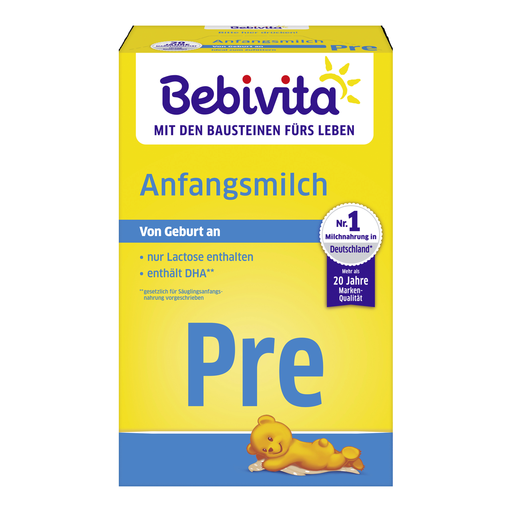
Why this product suits this profile: The 500-g pack is suitable for families who want to try Pre milk from birth as a supplement initially or prefer to keep a manageable supply. According to the product information, it contains lactose as its only carbohydrate source, as well as DHA.
The clear from-birth age indication and stated carbohydrate source make it easier to compare with other Pre products.
500 g contents, a preparation chart for different age ranges and DHA information in the nutritional profile.
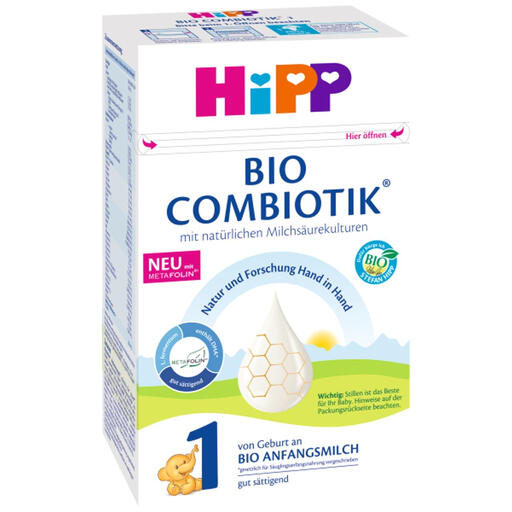
Why this product suits this profile: HiPP Combiotik is aimed at parents who want to compare organic origins, natural lactic acid cultures and a documented ingredients list.
The pack clearly states the age range, allergens, preparation temperature and legally required DHA component.
Organic ingredients, a 600-g pack, lactose as the stated carbohydrate source and natural lactic acid cultures according to the product description.
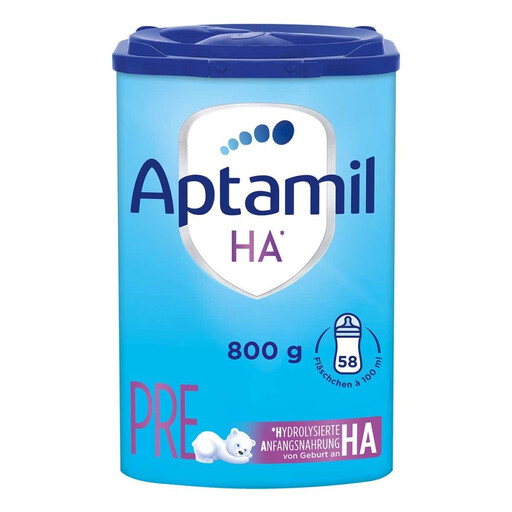
Why this product suits this profile: The 800-g pack is designed for regular use. The product information lists hydrolysed whey protein, lactose as the carbohydrate source and suitability from birth.
The clear warning regarding cow’s milk protein allergy prevents HA formula from being mistaken for an allergy product without medical advice.
800 g contents, hydrolysed whey protein and a four-week usage period after opening according to the product information.
For older toddlers, options include Aptamil Toddler Milk 1+, HiPP Kindermilch Combiotik, Nestlé BEBA Junior 1+ and Bebivita Toddler Milk 2+. Here, pay particular attention to the age stage, daily milk intake, sugar and lactose information, and the recommendation to serve the drink from a cup.
We have put together a complete, regularly updated list of products that fully meet these strict selection criteria and the safety regulations applicable in the EU.
Always follow the preparation chart for the specific product. Usually, fresh drinking water is boiled, allowed to cool to the stated temperature and poured into the clean bottle or cup first. The powder is then measured using the enclosed scoop. The prepared feed should be allowed to cool to drinking temperature and given to your baby immediately.
Do not keep or reheat leftovers. Microwaves can cause uneven temperatures. Opened packs should be stored in a dry place, securely closed and at room temperature. The specific usage period – often three or four weeks – is stated on the packaging.
Pre milk and first infant milk 1 are available as infant milk from birth. The key factors are the age indication, ingredients list and whether the product is intended as the sole source of nutrition or as a supplement. If you are unsure, parents should consult a paediatrician or midwife.
This depends on the product. The product information available here usually states three or four weeks. The information on the individual pack is always decisive. Moisture, heat and a bag that has not been closed properly can affect the product’s quality.
Toddler milk from 1 year is a milk drink for a varied diet, but it is not essential. When choosing a product, parents should consider the age recommendation, total daily intake, nutritional information and dental care. Also make sure that your child does not continuously suck on a bottle containing a carbohydrate-based drink.