
Lieferung heute & morgen

Qualitätsgarantie

Willkommens-Angebote freischalten: KOSTENLOSE Lieferung | Bis zu 80 % RABATT | Kostenlose 30-Tage-JoyPlus-Testphase
App herunterladen
Buying a baby monitor with a camera is meant to give parents one thing above all else: security and peace of mind. But the market is overwhelming, filled with marketing claims that often fail to deliver in practice. Before you make a decision, it's crucial to understand the common pitfalls that can lead to frustration and unnecessary expense.
As your Joybuy Product Recommendation Officer, I'm here to help you separate fact from marketing fiction. In this guide, we'll focus on the critical technical features and show you what to look for to find a reliable device for your family.
Many products advertise impressive features, but their weaknesses often show up in daily use. These three points are especially common sources of disappointment:
baby monitor with an app often seems affordable at first. However, you may later discover that key features like video storage, extended recording history, or advanced AI notifications (e.g., distinguishing between crying and other sounds) require a paid monthly subscription. These recurring costs are rarely communicated clearly upfront.Wi-Fi baby monitor connected to the internet is a potential gateway into your private network. Models with weak encryption, insecure default passwords, or poorly protected cloud servers can compromise your family's privacy.To avoid the problems mentioned above, you should focus on the technical fundamentals. These three parameters are decisive when choosing the right device.
The type of connection is the most fundamental decision. Both systems have clear advantages and disadvantages.
Non-Wi-Fi Baby Monitor (FHSS Technology): These devices use a direct radio connection between the camera and the parent unit (monitor). FHSS (Frequency-Hopping Spread Spectrum) technology constantly changes frequencies to create a private, hack-proof connection that operates independently of your home network. It is generally very stable and not susceptible to Wi-Fi interference or external hacking attempts. The downside is its limited range and lack of remote access when you're away from home.Baby Monitor with App and Monitor (Wi-Fi or Hybrid): A pure Wi-Fi baby monitor sends the signal via your router. The major advantage is potentially unlimited access through a smartphone app from anywhere in the world. This is ideal for parents who want to check in from work. However, stability heavily depends on the quality of your Wi-Fi network. Hybrid models offer the best of both worlds: a direct FHSS connection for use at home and an additional Wi-Fi option for remote access.A clear picture is the main reason for getting a video baby monitor. Pay attention to the following features:
Baby Monitor with Night Vision: Good infrared night vision is essential. It should provide a clear, evenly lit black-and-white image without overexposing the baby's face or leaving the edges of the picture too dark.Many extras sound appealing, but only a few are truly essential for daily use.
Two-Way Talk: Allows you to speak to your baby through the parent unit to soothe them with your voice. This is a standard feature that no model should be without.Baby Monitor with Temperature Sensor: Monitors the room temperature and sends an alert if it gets too warm or too cold. This is an important safety feature for your child's well-being.360-Degree Pan-Tilt Baby Monitor: A remote-controlled pan, tilt, and zoom (PTZ) function is especially useful once your child becomes more mobile and starts moving around the crib or room. This allows you to always keep them in view.Baby Monitor with Battery: A powerful battery in the parent unit is crucial for flexible use around the house. Some cameras also have a built-in battery, which simplifies placement and makes them ideal for travel.Based on the criteria above, we have identified a few models that are suitable for different needs and budgets.
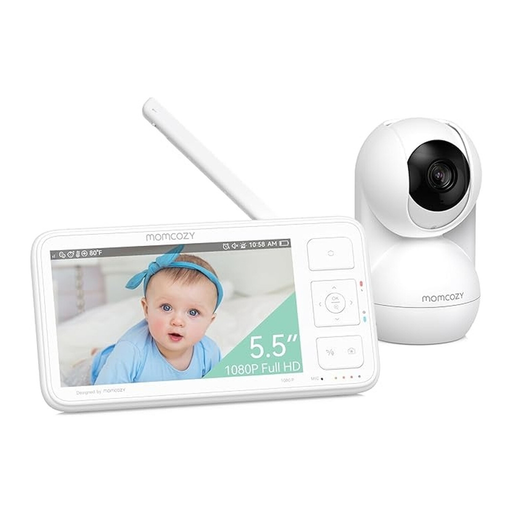
Why This Fits Their Persona: Ideal for parents who prioritise a stable, private connection that is independent of external networks. It's straightforward to use (plug-and-play) and requires no app installation or Wi-Fi configuration.
This model completely bypasses the "data security trap" because, as a pure `non-Wi-Fi baby monitor`, it operates on a closed radio connection (FHSS). There is no internet connection and therefore no attack surface for hackers.
Stable Direct Connection: Independent of your Wi-Fi quality. Large 5.5" Monitor: Provides a clear 1080p image without needing a smartphone. The 5800 mAh battery ensures long runtime for the parent unit.
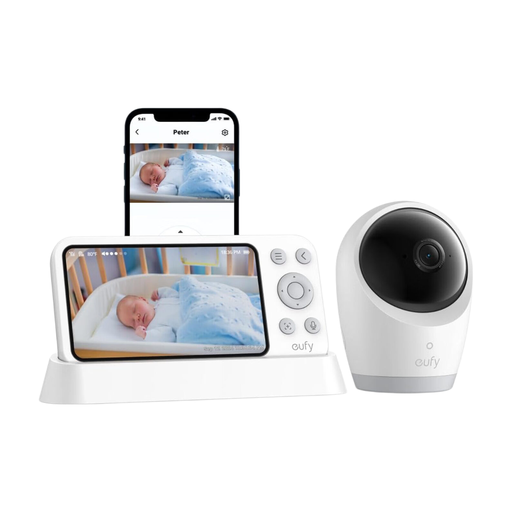
Why This Fits Their Persona: Perfect for parents who want maximum flexibility. They can use the dedicated monitor at home and access the camera via an app while on the go. The battery in the camera makes the system ideal for travel or use in the garden.
It bypasses the "subscription trap" as eufy relies on local storage and does not charge monthly fees for core functions. The hybrid mode with a selectable offline option also addresses the "data security trap".
Hybrid Functionality: Offers both a secure direct connection and remote access via app. High 4K UHD Resolution: Allows for detailed zooming. The camera is portable thanks to its 5,000 mAh battery.
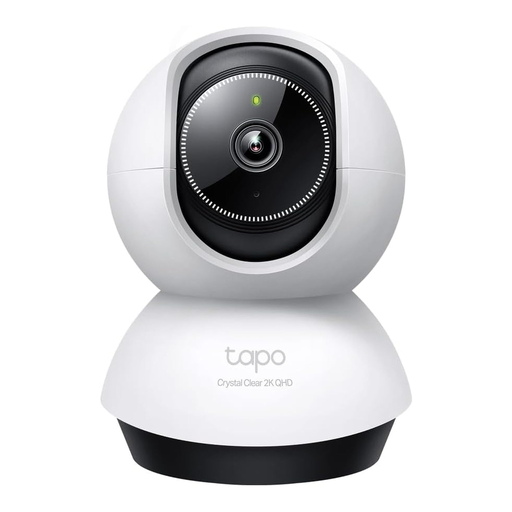
Why This Fits Their Persona: A cost-effective solution for parents looking for a flexible `baby surveillance camera` and who use their smartphone as the monitor. It offers advanced features often found only in more expensive devices.
The camera supports local storage on a microSD card up to 512 GB. This avoids "hidden subscription costs" for video storage, as mandatory cloud use is not required.
360° Pan-Tilt Function: The camera covers the entire room. 2K QHD Resolution: Delivers sharp images. The smart AI detection distinguishes relevant events and reduces false alarms.
We have compiled a complete, up-to-date list of products that fully meet these strict selection criteria.
The security of a Wi-Fi baby monitor depends on two factors: the manufacturer's security measures and your own network settings. Look for models that use strong encryption like AES-128 or higher. Additionally, you should always change the device's default password and use a strong password for your home Wi-Fi network. For maximum security, some hybrid models offer a pure offline mode, or you can choose a non-Wi-Fi baby monitor based on FHSS technology.
For a newborn who doesn't move much, a fixed camera is often sufficient. However, a 360-degree pan-tilt baby monitor becomes very useful once your child starts to roll over in the crib, crawl, or move around the room. It's a future-proof investment that saves you from having to buy a new camera later to cover a larger area.
A baby monitor with a temperature sensor is a very useful feature. The ideal room temperature for a baby is between 16°C and 20°C (61°F and 68°F). A sensor that notifies you if the room becomes too warm or too cold directly contributes to your child's safety and sleep comfort. It saves you from having to constantly keep an eye on a separate room thermometer.