
Lieferung heute & morgen

Qualitätsgarantie

Willkommens-Angebote freischalten: KOSTENLOSE Lieferung | Bis zu 80 % RABATT | Kostenlose 30-Tage-JoyPlus-Testphase
App herunterladen
A baby monitor with camera should reliably show you what’s happening in the nursery, day in and day out. At the same time, pet owners and flat-dwellers are also interested in a Wi-Fi indoor camera that can be operated via an app. However, there are important differences between a baby monitor, a pet camera and a general indoor security camera.
Many poor purchases happen not because of missing features, but because of unsuitable technology. High resolution is of little use if your Wi-Fi is unstable. A 360° camera offers no practical advantage if it’s awkwardly positioned. And a seemingly cheap cloud service can end up increasing your ongoing costs.
Labels like 2K or 4MP describe the image resolution, not automatically the quality of the entire monitoring system. For a nursery, you also need to consider night vision, image lag, viewing angle and performance in changing light conditions. A 1080p camera can be sufficient for a single sleeping area, while a 2K security camera delivers more image detail in larger rooms.
Many Wi-Fi indoor cameras transmit the image wirelessly, but still require a mains power adapter. This is standard for devices intended for permanent room monitoring. A true baby monitor with a separate parent unit, on the other hand, can operate independently of your home network. So check whether the product uses Wi-Fi, a direct radio connection, or both.
Motion detection, person and pet recognition can reduce the number of unnecessary alerts. Nevertheless, detection zones, sensitivity and notification types should be adjustable in the app. Otherwise, moving curtains, changing light or pets can still trigger alerts. When monitoring a baby, a notification is no substitute for personal supervision.
A fixed camera is suitable for a clearly defined cot or an entrance area. For living rooms, playrooms or pets, a pan and tilt function offers more flexibility. With a 360° camera, you should also check how far it tilts vertically and whether the automatic tracking can be switched off.
On devices with two lenses, one lens can provide a fixed wide-angle view while the second, movable lens tracks people or pets. This can be practical for comprehensive room monitoring, but it is not the same as completely uninterrupted coverage.
Infrared night vision usually shows dark rooms in greyscale. Range specifications should be understood as a technical guide, because walls, furniture and room size all affect the result. Also look for a switchable status light and a position where the infrared light is not directed straight at the baby’s face.
A camera with an app typically requires a compatible Wi-Fi network and a smartphone. 2.4 GHz Wi-Fi often offers greater range, while 5 GHz Wi-Fi can enable higher transmission rates at a suitable distance. Dual-band models support both frequencies.
Check before you buy:
A baby monitor with a separate parent unit can be a good choice if you don’t want to use an account, an app or a cloud service. The range is often affected by walls and the construction of your home.
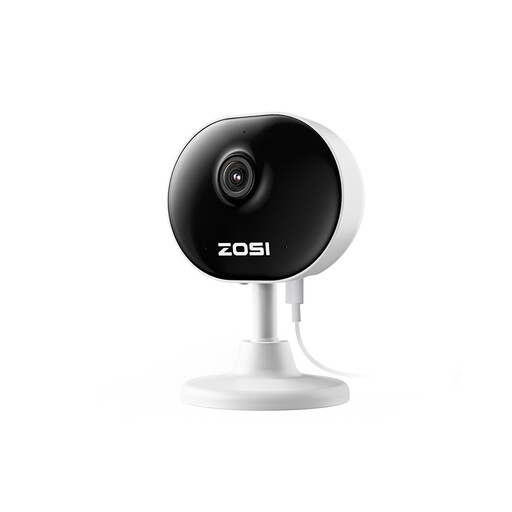
Why this product fits the profile: This compact indoor camera is designed for single rooms, pets or a manageable observation area, and offers app access without complicated installation.
The specifications state 1080p resolution, 33 ft night vision, adjustable motion zones and both local and optional cloud storage.
Compact design, two-way audio, app notifications and adjustable motion zones.
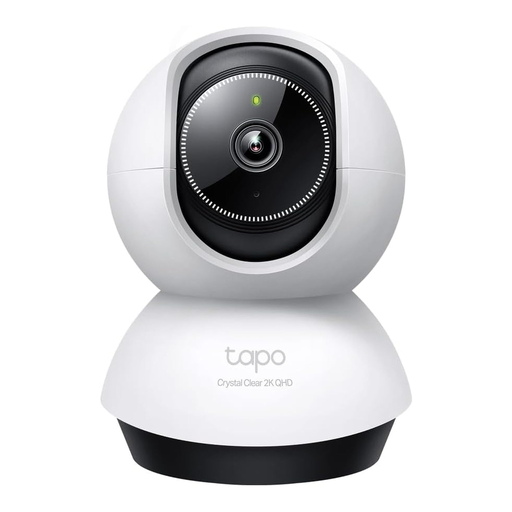
Why this product fits the profile: This model combines 2K 4MP resolution with a horizontal 360° and vertical 114° movement range, making it suitable for larger indoor spaces as well as baby and pet monitoring.
The technical data specifies the viewing range, night vision up to 30 ft, microSD storage up to 512 GB and configurable AI detection.
Large pan range, two-way audio, local storage and compatibility with Google Assistant and Amazon Alexa.
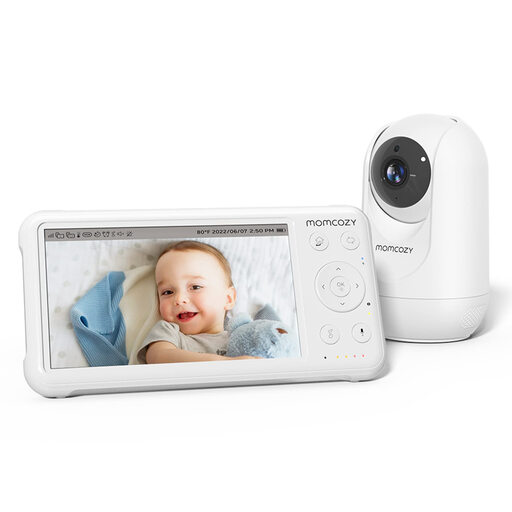
Why this product fits the profile: The separate 5-inch screen is ideal for parents who prefer a classic baby monitor without constant smartphone use.
The product specifications highlight 1080p, infrared night vision, VOX mode, temperature measurement and a battery life of up to 11.5 hours.
Separate display, 360° view, two-way communication and built-in temperature display.
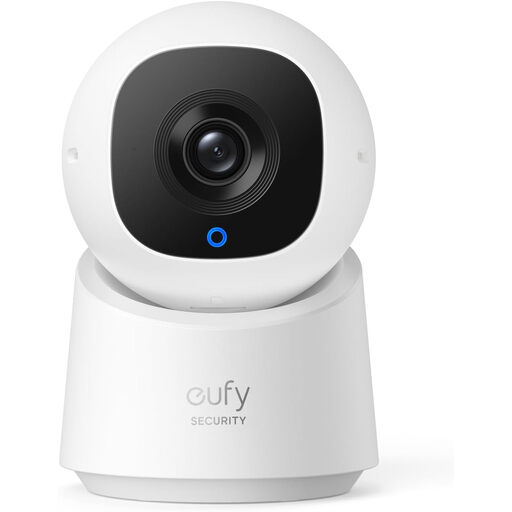
Why this product fits the profile: This camera is aimed at users looking for a Wi-Fi indoor camera for baby, pet or home monitoring with a local storage option.
According to the product specifications, this model supports local recording via microSD card up to 128 GB and features a privacy mode.
2K resolution, 360° pan and tilt function, person detection and storage without a mandatory monthly fee according to the product description.
We have put together a complete, regularly updated list of products that fully meet these strict selection criteria and the safety regulations in force in the EU.
A baby monitor is a technical aid and does not replace responsible supervision. With pets, you should also bear in mind that sounds from the speaker can irritate animals.
Yes, some models use a direct radio connection between the camera and the parent unit. Devices such as Wi-Fi indoor cameras with app access, on the other hand, require a compatible home network. Check the range, frequency and structural conditions of your home.
With local microSD storage, there are normally no cloud fees. Cloud recordings, additional storage periods or extended notification features, however, may incur charges. Read the terms and conditions before setting up.
The service life depends on the power supply, battery, software support and mechanical wear. On devices with a battery, the capacity decreases over time. For permanent room monitoring, mains-powered models are suitable, while a baby monitor with a parent unit can offer more flexibility within the specified range.