
Lieferung heute & morgen

Qualitätsgarantie

Willkommens-Angebote freischalten: KOSTENLOSE Lieferung | Bis zu 80 % RABATT | Kostenlose 30-Tage-JoyPlus-Testphase
App herunterladen
Buying a baby monitor with a camera is meant to provide peace of mind. However, the market is flooded with devices boasting long feature lists and tempting marketing claims. Many parents discover after purchase that their device is impractical or unreliable in daily use. Before you make a decision, it's crucial to understand the most common pitfalls that can lead to frustration and unnecessary expense.
To make an informed decision, you should focus on the technical fundamentals that ensure secure and stable monitoring.
The signal transmission method is the heart of any video baby monitor. There are two fundamental approaches:
A clear picture is the primary reason for choosing a video baby monitor.
Additional features are only worthwhile if they offer real-world value.
Instead of presenting an overwhelming list, we have selected models tailored to the specific needs of parents.
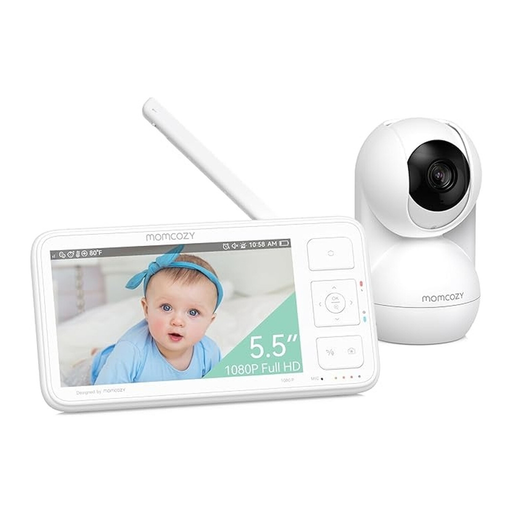
Why It's a Match: Ideal for parents who want maximum privacy and reliability. Since it operates without an internet connection, there are no concerns about network security or hacking attempts. It's a plug-and-play solution that works instantly in any living situation.
This device completely bypasses the Wi-Fi trap by using a closed radio connection. The stated range of up to 500m (in an open field) is often more stable in practice than Wi-Fi models in homes with thick walls, thanks to the dedicated connection.
1080p HD Display: Delivers a clear picture on the 5.5-inch monitor. Strong Battery: The 5800 mAh battery in the parent unit ensures long operating times, even overnight.
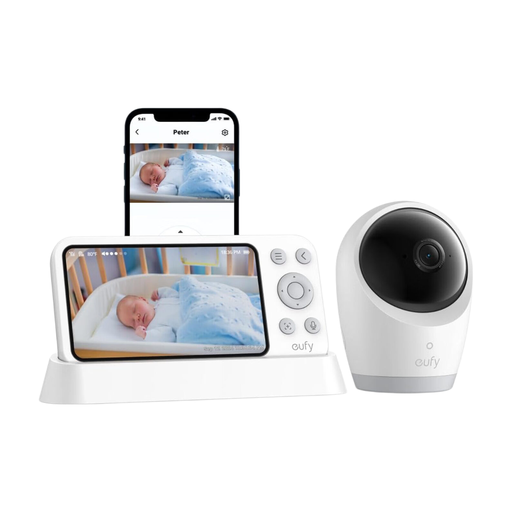
Why It's a Match: For parents who want both the security of a local connection and the convenience of remote access via an app. The high image quality and pan-tilt function make it a future-proof solution that grows with your child.
The hybrid mode is the solution to the Wi-Fi trap. At home, the secure direct connection can be used, while the app function can be activated when needed (e.g., while traveling or from the office). The focus is on useful features like the pan and tilt function.
Hybrid Mode: Works with and without Wi-Fi for maximum flexibility and security. Pan & Tilt Function: The camera can pan 330° to cover the entire room.
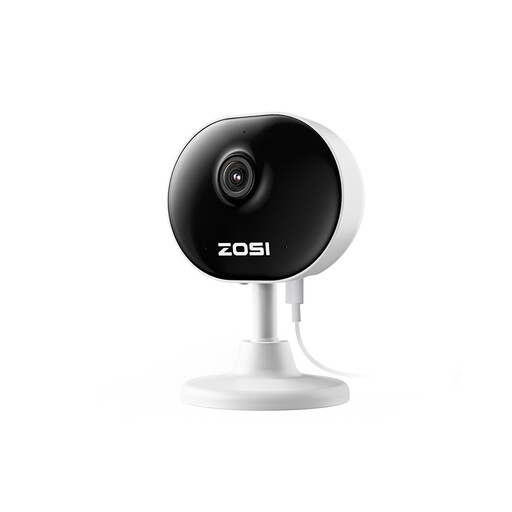
Why It's a Match: A cost-effective solution that meets the basic requirements for a baby monitoring camera. It's suitable for parents looking for simple video monitoring via an app who can do without a separate parent unit.
This model focuses on the core functions of a Wi-Fi camera, avoiding costly, unnecessary extras. By forgoing a dedicated parent unit, it achieves an attractive price point. The motion detection is customisable to reduce false alarms.
1080p HD Resolution: Provides clear images for monitoring. Compact Design: The small camera can be placed discreetly in the room. Two-Way Audio: Allows you to communicate with your baby.
We have compiled a complete, up-to-date list of products that meet these strict selection criteria and security requirements.
The security of a Wi-Fi-based baby monitor depends on several factors. Look for models from established manufacturers that use strong encryption (e.g., AES-128 or higher). Secure your own home network with a strong WPA2/WPA3 password and change the device's default password. Features like two-factor authentication (2FA) provide an additional layer of security. For maximum privacy, a Wi-Fi-free baby monitor with a direct radio connection is a very secure alternative.
For a newborn who barely moves, a static camera is often sufficient. However, a pan-tilt baby monitor becomes very useful once your child becomes more mobile and starts to turn over or stand up in the crib. With a pan-and-tilt function, you can adjust the viewing angle remotely and keep an eye on your child without having to enter the room and potentially wake them.
The range stated by the manufacturer is measured under ideal conditions without obstacles. In practice, walls, ceilings (especially those made of reinforced concrete), and other electronic devices significantly reduce signal strength. Consider where you will primarily use the parent unit (e.g., on a different floor, in the garden). Look for user reviews that describe performance in real-world living situations similar to your own. For greater distances or through solid walls, an app-based baby monitor using Wi-Fi is often the more reliable solution, provided that Wi-Fi coverage is good throughout the house.