
Lieferung heute & morgen

Qualitätsgarantie

Willkommens-Angebote freischalten: KOSTENLOSE Lieferung | Bis zu 80 % RABATT | Kostenlose 30-Tage-JoyPlus-Testphase
App herunterladen
A baby monitor with camera needs to do one thing above all in daily life: deliver a clear picture, stay reliably connected, and be easy to use without unnecessary fuss. However, there are important differences between a classic video baby monitor, a Wi-Fi baby camera and a versatile indoor security camera.
Many purchasing decisions fail not because of missing features, but because of incorrectly assessed specifications. High resolution alone doesn't guarantee good night vision. The stated range often only applies in open conditions. And a camera with motion detection can send more notifications than you'd want in everyday life.
Manufacturers often state the range under optimal conditions. Walls, ceilings, furniture and other radio sources reduce the practical distance. With the VAVA VA-IH006 PRO, for example, up to 300 metres is stated in open areas; indoors, the range can be lower.
For a flat or a detached house, you should therefore check:
A Wi-Fi baby camera enables remote access via an app, but requires a functioning network and usually a user account. With a baby monitor without Wi-Fi, the connection is made directly between the camera and monitor. This can be appealing for families who don't want cloud connectivity or who prefer to glance at a separate display quickly at night.
With Wi-Fi models, you should also pay attention to app permissions, password protection, privacy options, storage costs and firmware updates. Local storage on a microSD card can avoid ongoing cloud costs, but doesn't replace secure network setup.
A camera with motion detection reacts differently depending on the model to people, pets or general movements. Curtains, changes in light and shadows can trigger false alarms. Features such as person detection, automatic tracking and adjustable activity zones are therefore more relevant in daily use than the mere label 'AI'.
For a baby monitor with camera, resolution, field of view and behaviour in the dark are crucial. 1080p is suitable for basic observation, while 2K or 4MP models can display finer image details. The actual picture quality also depends on the lens, lighting, compression and screen size.
Infrared night vision typically switches on automatically in low light. Check whether the manufacturer states a specific night vision distance and whether the image remains black and white or in colour. Colour night vision usually requires additional ambient lighting.
A 360-degree camera can cover the room horizontally to a large extent. For monitoring a fixed cot, this feature isn't essential, but it's practical for siblings, pets or larger rooms. Also pay attention to the vertical tilt range and whether the position can be adjusted via the parent unit or app.
Directly connected systems usually require a camera plugged into the mains and a rechargeable parent unit. Wi-Fi cameras also often need a permanent power cable. For ongoing use, you should therefore plan the cable routing, socket position and mounting height.
For recordings, there are three options:
A room temperature display can offer additional guidance. However, it doesn't replace a tested thermometer and shouldn't be understood as a medical or safety-relevant measurement.
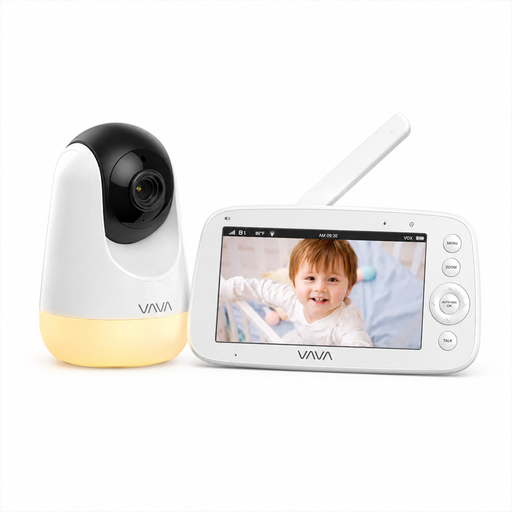
Why this product fits the profile: The system works with a direct 2.4 GHz connection and, according to the product description, requires neither Wi-Fi nor an app, account or cloud service.
The open-range specification is explicitly distinguished from the indoor range. This allows you to assess your home situation more realistically.
5-inch display, 720p resolution, infrared night vision, two-way talk function and room temperature display. The parent unit offers up to 10 hours of screen operation according to the manufacturer.
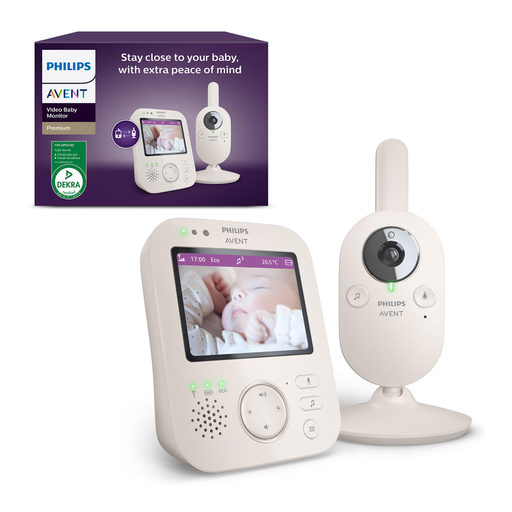
Why this product fits the profile: A separate parent unit with a 3.5-inch screen and direct radio connection is ideal for households that prefer a standalone system.
The range is stated separately for indoor and outdoor use: up to 50 metres indoors and up to 300 metres outdoors according to the product description.
Infrared night vision, two-way talk function, vibration alert, six melodies and a temperature sensor. The battery life of the parent unit is stated as up to 10 hours.
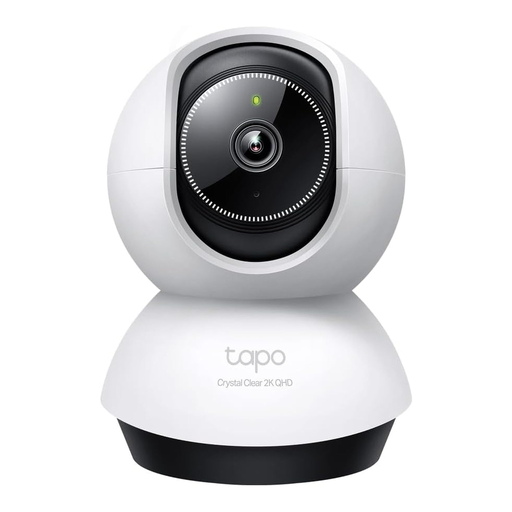
Why this product fits the profile: This model can be used as a baby monitor, pet camera or indoor security camera, and is managed via Wi-Fi and an app.
The technical specifications state specific pan ranges of 360 degrees horizontally and 114 degrees vertically, as well as a maximum microSD capacity of 512 GB.
2K or 4MP resolution, night vision up to 30 feet according to the product description, two-way audio and AI-powered detection.
We've put together a complete, regularly updated list of products that fully meet these strict selection criteria and the safety regulations in force in the EU.
A baby monitor supports supervision but doesn't replace it. Place the camera and power supply out of your child's reach. Cables must not hang near the cot, playpen or any other accessible areas. Mount the device securely and avoid direct sunlight, moisture and heat sources.
With a Wi-Fi camera, use a unique password, disable unnecessary permissions and only install the app from official sources. Also check regularly whether you can adjust privacy settings, activity zones and storage options.
A baby monitor without Wi-Fi reduces reliance on a router, app and cloud service. However, this doesn't automatically mean that every direct connection is fundamentally safer. What matters is the radio technology used, the device settings and safe placement. For access from outside the home, you'll usually need a Wi-Fi model.
The lifespan depends on the battery, power supply, display, software and mechanical wear. With directly connected devices, the camera is usually designed for continuous mains operation. The battery life of the parent unit should be understood as operating time per charge, not overall lifespan. A replaceable or long-lasting battery can be relevant for regular use.
Not necessarily. Some models offer live view and local storage via microSD card without a monthly fee. However, cloud recordings, longer storage periods or additional app features may be chargeable. Before buying, you should check which functions are available without a subscription.