
Lieferung heute & morgen

Qualitätsgarantie

Willkommens-Angebote freischalten: KOSTENLOSE Lieferung | Bis zu 80 % RABATT | Kostenlose 30-Tage-JoyPlus-Testphase
App herunterladen
A baby monitor with camera is designed to support parents in their daily routine, but it does not replace adult supervision or a safe sleeping environment. There are clear differences between a classic baby monitor, a Wi-Fi baby monitor and a flexible indoor camera. If you only focus on high resolution or terms like "360 degrees", you often overlook important details about power supply, data protection and storage.
A camera with 2K or 4K certainly delivers more image detail than a 1080p model. However, in a darkened nursery, night vision, infrared range and lighting conditions can be far more decisive. Additionally, Wi-Fi baby monitors often compress the image in the app. So check whether the stated resolution applies to the live view, recording or only to specific platforms.
With a 360-degree baby monitor camera, you are usually looking at a pan-and-tilt camera head. The actual coverage depends on the mounting height, the viewing angle and any potential blind spots. A dual-lens model can combine a fixed overview with a movable close-up view, whereas a single PTZ camera moves to different areas one after another.
Baby monitoring via an app is convenient when you want to access the live stream from outside the home. However, recordings often require a microSD card or a paid cloud storage subscription. Before you buy, you should clarify:
For most nurseries, Full HD at 1080p is a practical baseline. Also crucial are the frame rate, the size of the display and the night vision technology. Infrared night vision usually produces a black-and-white image and should ideally work without visible red glow. With colour night vision, a switchable light can improve the image, but it may also disturb a sleeping child.
Pay attention to the specific range. Figures such as 6, 10 or 30 feet or metres refer to manufacturer conditions and can change due to walls, ceilings and Wi-Fi interference.
A separate parent unit with a direct connection works independently of your home Wi-Fi. This can be an advantage in flats with a weak signal. A Wi-Fi baby monitor, on the other hand, allows remote access via smartphone but requires a stable connection and a user account.
The power supply also affects everyday usability:
A baby monitor with two-way talk transmits your voice via microphone and speaker. This can be useful for short instructions or soothing words, but it is not a substitute for direct care.
With motion detection and sound alerts, it is worth looking at the adjustment options. Activateable activity zones help to reduce false alarms from windows, curtains or pets. A baby monitor temperature display should ideally have a properly described temperature sensor. Do not rely solely on the app display for room temperature and check the manufacturer's details carefully.
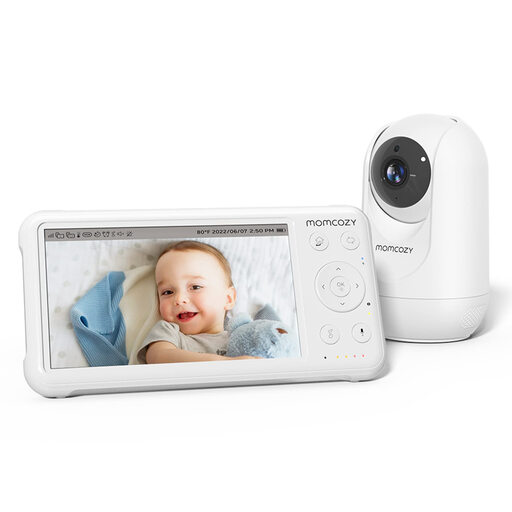
Why this product fits the profile: The set combines a camera and a 5-inch parent unit without complicated app setup. It is suitable for families who want to monitor around the house and do not need a cloud account.
The product specifications mention 1080p, infrared night vision, VOX mode and a battery life of up to 11.5 hours. A temperature sensor is also listed.
1080p camera, 360-degree field of view, two-way communication, 5000 mAh battery and built-in lullabies according to the product description.
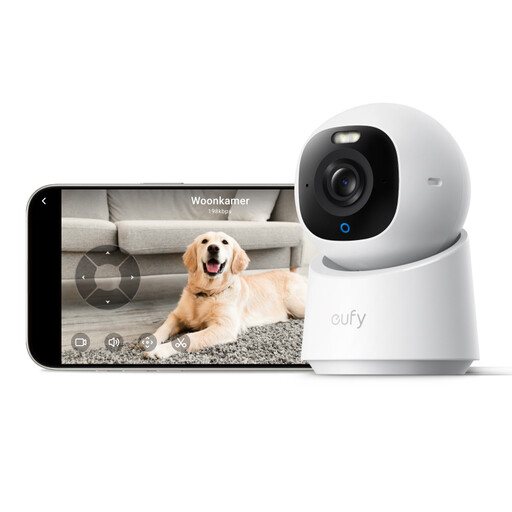
Why this product fits the profile: This indoor camera is aimed at users who want high image resolution, smartphone access and local storage for monitoring babies, pets and rooms.
Recordings can be stored locally on a separately available SD card according to the provider. This means an ongoing cloud subscription is not necessarily required.
4K UHD, 360-degree pan and tilt function, two-way audio and detection of people, pets and sounds according to the product description.
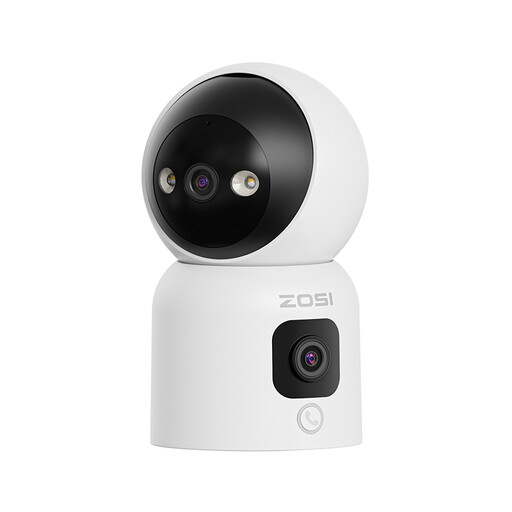
Why this product fits the profile: Two lenses and app features make this model interesting for households that want to monitor children, pets and multiple room areas with one camera.
The specifications mention 2.4 and 5 GHz Wi-Fi, local storage up to 256 GB and a privacy mode. This allows you to configure the connection and recording more precisely.
Dual-lens design, 360-degree pan range, colour night vision, motion detection and two-way audio according to the product description.
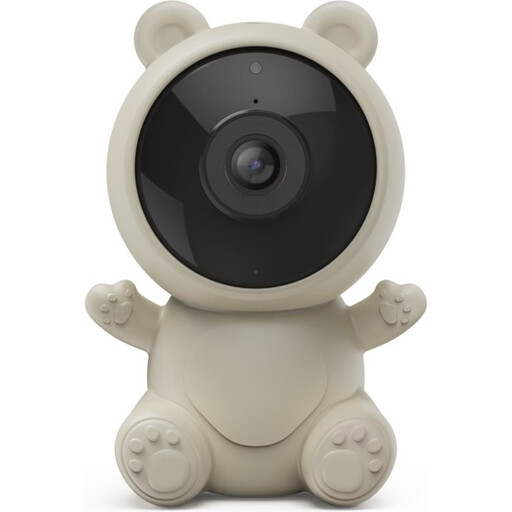
Why this product fits the profile: This Hama model combines a compact indoor camera with app access, smart home integration and flexible power supply for use at home.
The product data explicitly mentions Full HD, 2.4 GHz Wi-Fi, night and sound detection. A temperature function should be checked against the current item details before purchase.
1080p resolution, two-way audio, night vision, push notifications and compatibility with Amazon Alexa, Google Assistant and Apple Siri according to the provider.
We have put together a complete, regularly updated list of products that fully meet these strict selection criteria and the safety regulations in force in the EU.
Change the preset password, use a current Wi-Fi password and activate any available security or privacy options. Position the camera out of the child's reach and do not run cables along the cot. With cloud services, you should check permissions, storage periods and shared access.
The battery life depends on display brightness, VOX mode, transmission quality and the age of the battery. For the Momcozy BM01, up to 11.5 hours is stated. This figure is a manufacturer value and may differ in daily use. A mains adapter should be placed so that cables and the plug connection are out of reach.
With a device that has a parent unit and direct connection, there are usually no cloud fees. With a baby camera that uses an app, costs for an SD card, cloud storage or additional services may arise. So compare not only the purchase price, but also the desired storage duration and the ongoing subscription costs.