
Lieferung heute & morgen

Qualitätsgarantie

Willkommens-Angebote freischalten: KOSTENLOSE Lieferung | Bis zu 80 % RABATT | Kostenlose 30-Tage-JoyPlus-Testphase
App herunterladen
Baby motor skills toys should do more than hold a little one’s attention for a few moments. Parents, grandparents and other family members often look for products that suit a child’s age, are well made and are easy to use as part of family life. At the same time, terms such as “Montessori”, “Early Education” and “sensory” can make it harder to compare products when details about materials, age suitability and how to play are missing.
Lights, music, animal sounds and lots of buttons may look versatile at first. But an overloaded toy can be difficult for a baby to understand. A clear link between an action and its result is more useful: pressing a button makes a sound, sliding moves a part, or grasping changes an object’s position.
The label “for babies and toddlers” doesn’t tell you much. A baby shape sorter with small pieces, for example, isn’t suitable for a child who still puts everything in their mouth. Conversely, a simple grasping toy may soon be too limited for a two-year-old. What matters is the minimum age, small-parts warnings and intended way of playing.
When choosing learning toys for babies, look for smooth surfaces, sturdy connections and clear care instructions. For electronic products, also check the battery compartment, volume control and protection from moisture. A CE mark is important, but it doesn’t replace your own checks before each use.
For babies aged 0 to 6 months, the focus is on grasping, following things with their eyes and early tummy-time activities. A sensory toy for babies, such as a play mat or water play mat, should sit securely on a flat surface and only be used under supervision.
From around 6 months, many children become interested in cause-and-effect play. Buttons, drum surfaces, moving parts and simple shape sorters can all be suitable options. Baby toys for 6 months+ should still be free of accessible small parts if the manufacturer advises against them or your child is still exploring things with their mouth.
For toddlers aged 12 months and over, toys that develop fine motor skills and early sorting or stacking activities are worth considering. Motor skills toys for toddlers can be more challenging, but should still suit your child’s size, strength and attention span.
The term Montessori toys for babies isn’t a consistent quality standard. So, check what the product actually does rather than relying on the wording in its title.
For plastic products, details such as ABS or BPA-free construction are relevant if the supplier provides them. For wooden toys, FSC-certified materials and water-based paints may be important factors in your choice. Also check for:
Electronic and musical baby toys need batteries. Check whether they’re included, what size is required and whether the toy has a volume control.
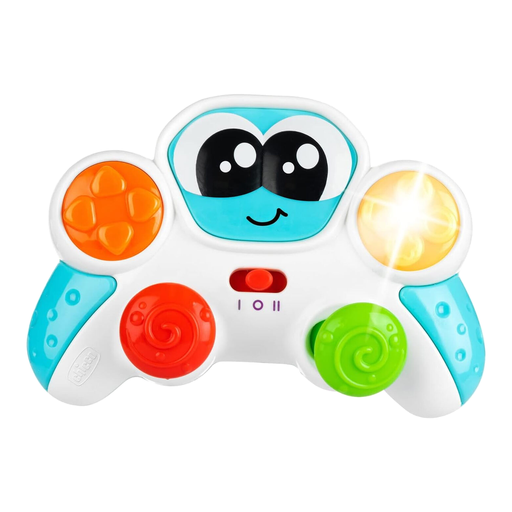
Why this product suits this profile: The controller is easy to grasp and keeps things simple, with just a few easy-to-understand controls. According to the product description, it’s suitable for children aged 6 months to 3 years and features two buttons, two moving levers and a volume control.
Its features are clearly explained, rather than being wrapped up in a vague list of learning claims. The volume control makes it easier to adjust the sound for different situations.
Two handles, lights and sound effects, plus more than 20 sounds and melodies listed by the manufacturer.
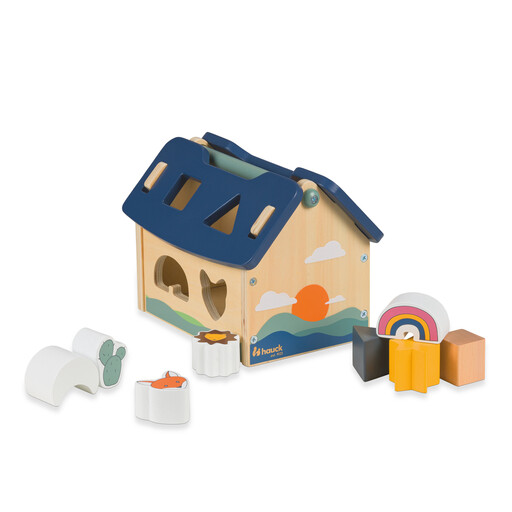
Why this product suits this profile: According to the product details, this wooden house with a removable roof includes eight blocks and is suitable from 12 months. It’s a good choice for families who prefer a sorting and stacking toy that doesn’t need batteries.
The age limit and small-parts warning are clearly stated. The play focuses on sorting, recognising shapes and stacking.
FSC-certified wood according to the product description, storage inside the house and no batteries required.
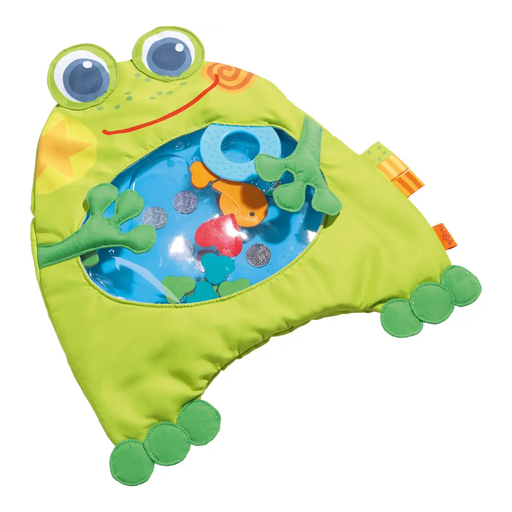
Why this product suits this profile: According to the supplier, this water play mat is suitable from 6 months and designed for tummy time. Little ones can explore moving features such as a mirror, leaves and a fish with their hands.
Its intended use is clearly stated. Before use, parents can check the valve, surface and that the mat is watertight.
Soft fabric cover, moving water features and no batteries required.
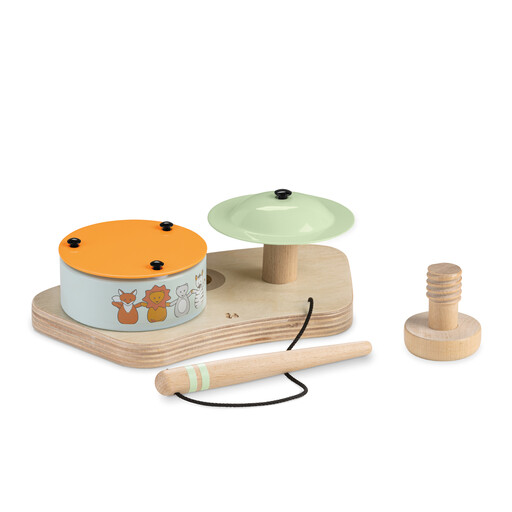
Why this product suits this profile: According to the product description, this drum toy is suitable from 10 months and can be used on a compatible Hauck play tray or on the floor. It’s a good fit for families who want to bring musical activities into everyday life.
Play is centred on one specific instrument. The safety guidance covers attaching it to the play tray and supervising your child closely.
FSC-certified wood according to the supplier, can be used with or without a Play Tray, and no batteries required.
We’ve put together a complete, regularly updated list of products that meet these strict selection criteria and the safety regulations in force across the EU.
From 6 months, choose sturdy toys that are easy to grasp and have simple cause-and-effect features. Options include a water play mat, a musical toy with large controls or a grasping toy. Always check the specific age recommendation and whether the toy contains small parts.
That depends on how the toy works and its age recommendation. A product with a clear minimum and maximum age may suit several developmental stages if the way it’s used changes as your child grows. Check its condition regularly and remove any damaged or loose parts straight away.
Battery-operated products can provide sound and light feedback. However, they add the ongoing cost of replacement batteries and should have a volume control. For a quiet, low-maintenance alternative, consider wooden toys, sorting shapes or soft motor skills toys without electronics.